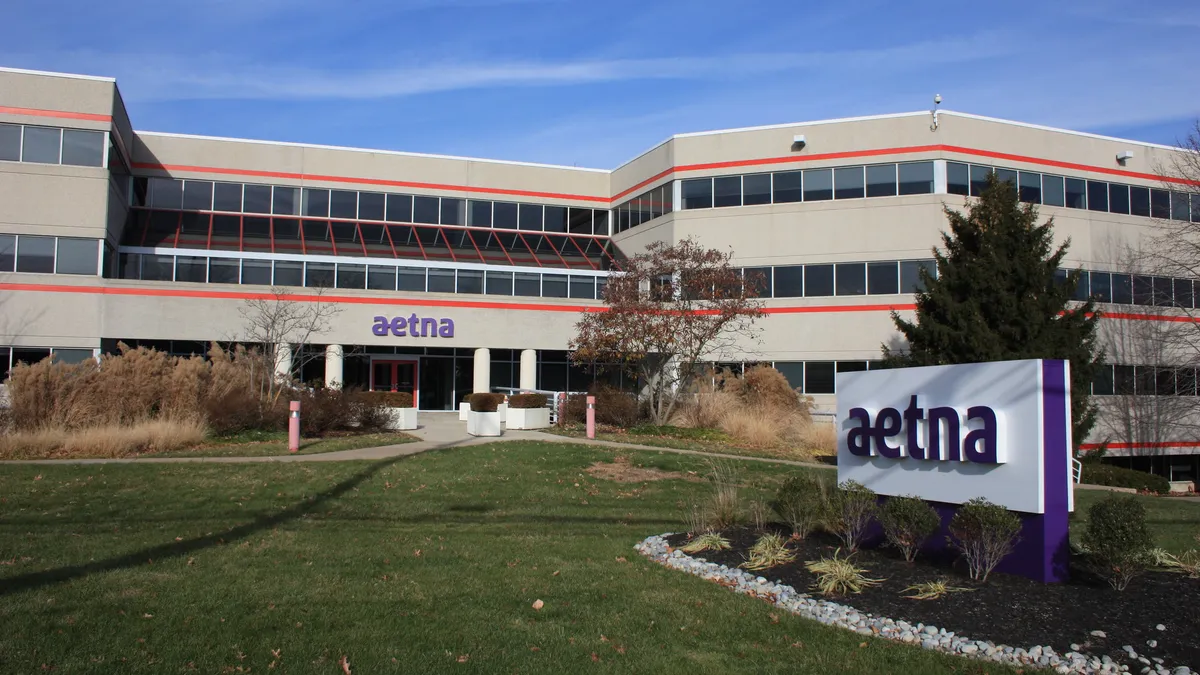
Profits in CVS Health’s insurance division Aetna soared in the second quarter, driving the Rhode Island-based healthcare giant’s net income to almost $3 billion — roughly triple the $1 billion CVS posted the same time last year.
Income growth blew past that of revenue, which increased 7% year over year to $106.1 billion. The results illustrate how insurers are eking higher profits out of fewer members this year. Medicare Advantage, which has been a particular stressor for Aetna, actually drove the company’s performance in the quarter, after the insurer cut benefits and exited unprofitable markets, executives said.
CVS’ results handily beat Wall Street’s expectations. Though Aetna drove the majority of the outperformance, CVS’ health services division and its chain of pharmacies and retail stores also performed better than expected.
“There’s not much more to say for CVS’ 2Q other than... wow,” Leerink analyst Michael Cherny wrote in a Wednesday note.
CVS raised its 2026 earnings outlook for the second time this year on the back of the results. The company now expects adjusted earnings per share of $7.90 to $8.10, up from its previous guidance of between $7.30 and $7.50.
CVS is the latest insurer to post a beat-and-raise in the second quarter as insurers make progress on margin recovery, following UnitedHealth Elevance, Centene, Molina and Cigna. Humana was the lone holdout, leaving its 2026 guidance unchanged.
Aetna, the third-largest health insurance company in the U.S., ended the second quarter with 26 million members, down about 600,000 people from the end of 2025 after the company left the Affordable Care Act exchanges.
But the CVS segment doubled its operating income year over year, after wrestling its medical loss ratio — a marker of spending on members’ care — down to 87.4%. Insurers prefer to keep their MLRs below 90% though above a regulatory floor. By comparison, in the third quarter of 2024 before current CEO David Joyner took the reins, Aetna’s MLR topped 95%, mostly due to higher costs for its MA seniors. It was the company’s highest MLR in recent memory.
But CVS’ privatized Medicare business is experiencing a turnaround, according to Steve Nelson, Aetna’s president.
“We’ve made tremendous progress in the geographic footprint, our product mix, our ability to execute during [open enrollment], and we’ve taken a lot of discipline into both previous bid cycles, and that is playing out in 2026,” Nelson said on a Wednesday morning call with investors. “We’ve seen less contraction in our membership than we expected, favorable membership mix.”
“It’s all really coming together,” he added.
Aetna plans to continue the momentum next year, after issuing plan bids for 2027 that the company believes will oil its return to target profit margins in a period of elevated utilization.
“We are seeing significant momentum in Aetna’s margin recovery,” CFO Brian Newman told investors. “We expect this momentum to continue on our pathway back to target margins over the next couple of years.”
CVS’ other two reporting divisions — health services, which includes major pharmacy benefit manager Caremark; and pharmacy and consumer wellness, which includes CVS’ retail stores — also performed well in the second quarter.
Health services posted operating income of $1.6 billion, up 45% year over year, on revenue of $51.8 billion, up 11% year over year.
However, challenges in a major federal drug discount program are pressuring the division’s earnings, Newman said.
CVS makes money from that program, called 340B, by acting as a contract pharmacy for participating providers, and collecting various dispensing and administrative fees. It’s historically been a solid revenue driver.
But pharmaceutical manufacturers are moving to restrict the 340B contract pharmacies that providers can use, and more specialty drugs are becoming cheaper generics — two trends that are pressuring CVS’ 340B earnings, according to Prem Shah, CVS’ executive vice president and group president.
The company’s pharmacy and consumer wellness segment brought in $1.4 billion in operating income in the quarter, almost double the $736 million posted same time last year on roughly flat revenue of $33.8 billion. The division was helped by CVS’ acquisition of Rite Aid’s stores and prescription drug files, which closed late last year.
CVS on Wednesday also announced a new partnership with Eli Lilly to expand Americans’ access to the drugmaker’s GLP-1s Zepbound and Foundayo for weight loss on CVS’ app.
CVS already offers Novo Nordisk’s blockbuster weight loss therapy Wegovy, but the deal with Lilly should make more GLP-1s available directly to consumers, Joyner said.
With the move, CVS is banking that Americans will continue to clamor for GLP-1s even as the drugs become more difficult to access through insurance. Employers and health plans have been restricting GLP-1 coverage for weight loss, unable to absorb the drugs’ exorbitant costs.
However, GLP-1s have driven substantial revenue gains for PBMs like Caremark and been a financial boon for CVS pharmacies.
“The question that we’re dealing with is where we think the obesity category is headed,” Joyner said. “We see a lot of movement back into the cash or the unfunded marketplace, which is why we’re emphasizing the ability to support in our direct consumer platform, the ability to serve both the Lilly and Novo products in that market.”
By the end of this year, patients eligible for Zepbound and Foundayo can pick up the injectable GLP-1s on the same day as they’re prescribed across more than 9,000 CVS outlets, the company said.
CVS also introduced a new model to connect self-paying patients with virtual visits for GLP-1s at its MinuteClinics.