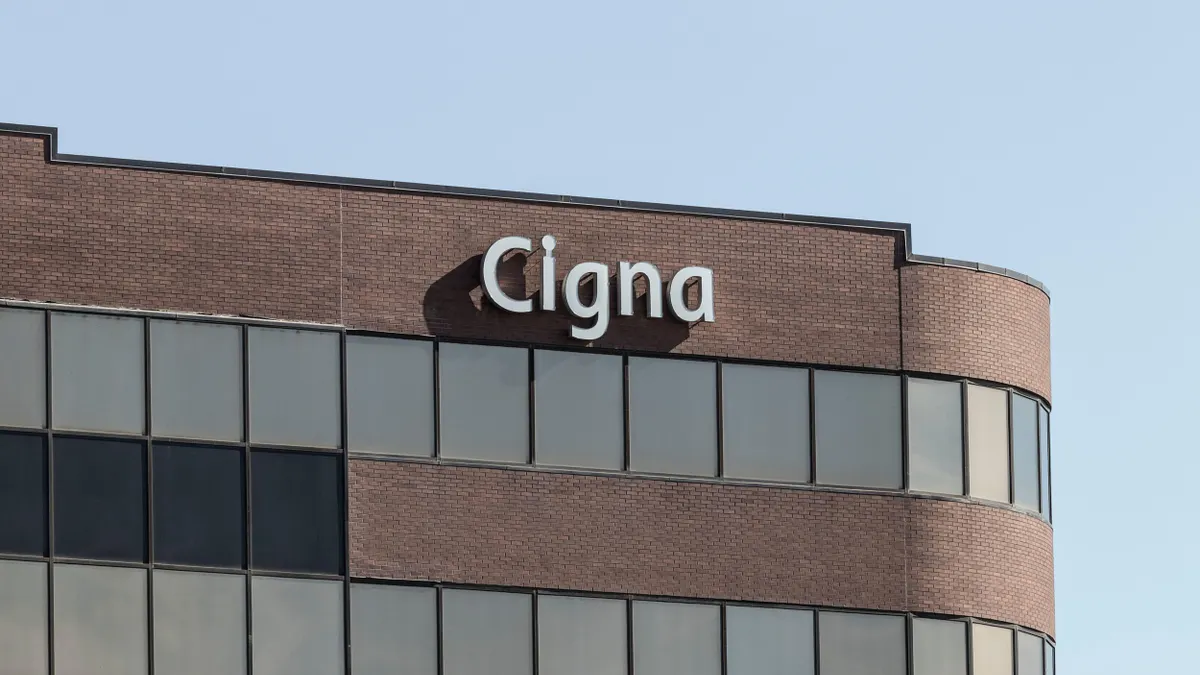
Cigna’s employer-sponsored plans reaped higher profits than expected in the second quarter after hiking premiums, spurring the company to raise its earnings outlook for 2026.
Cigna results released Thursday are a relief for investors worried about broader pressures in the employer-sponsored market, which covers the majority of U.S. adults and has been a buoy for insurers slammed with higher spending in government programs in recent years.
Market watchers have been concerned that margins for employer-sponsored plans could be unreliable, as Americans, even the younger and healthier population covered by their jobs, get sicker — and as the federal process meant to resolve out-of-network bills between payers and providers appears to be inflating spending.
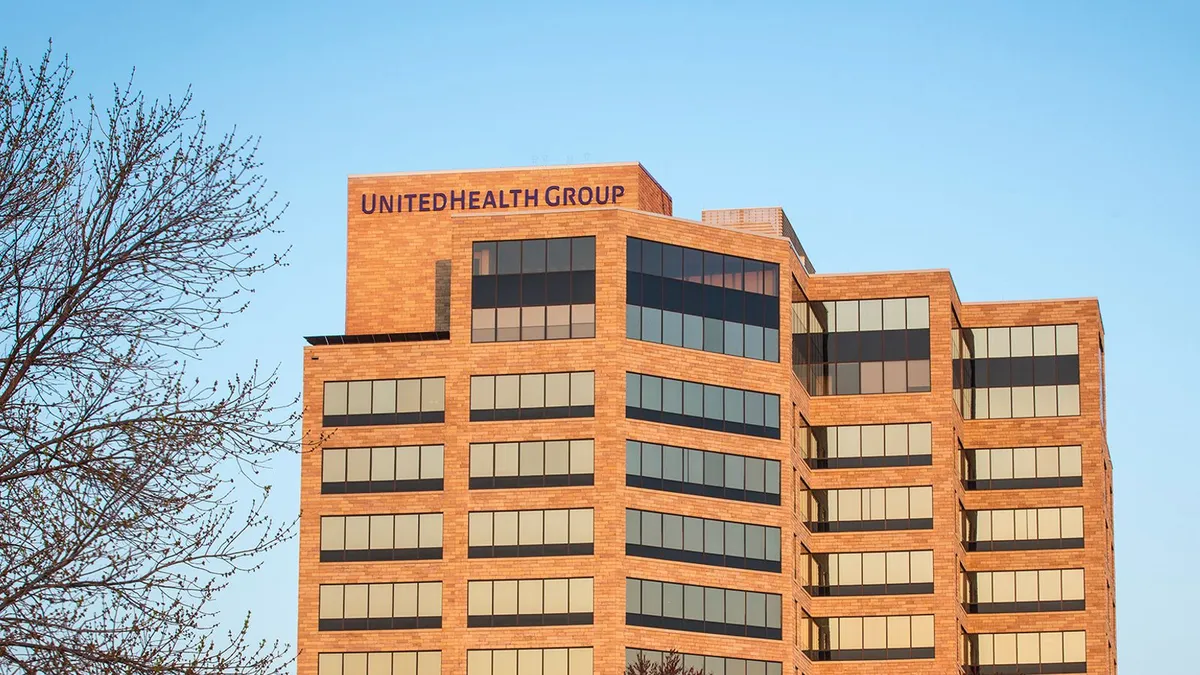
Two weeks ago, UnitedHealth blamed that independent dispute resolution process, or IDR, for unexpectedly high costs in its employer-sponsored plans in the second quarter.
Insurers have been increasingly vocal about their discontent with IDR, which was set up by the No Surprises Act to prevent consumers from being hit with surprise medical bills. Instead of incentivitizing providers to go in-network with insurers, No Surprises has created a burgeoning cottage industry where providers can reap major payouts through out-of-network care, according to insurer groups and outside experts.
“For us specifically, the impact has been manageable within our Cigna Healthcare planning and pricing assumptions,” CEO Brian Evanko said during a Thursday morning call with investors.
Still, the chief executive joined in on the IDR bashing, saying that — while he supports protecting consumers from unexpected out-of-network bills — “we’re seeing some clear abuses of the IDR vehicle.”
According to the most recent federal data, providers are initiating 76% of IDR disputes, with a small group of private equity-backed providers and a controversial billing intermediary responsible for filing the lion’s share. Doctors and medical groups are winning about 85% of cases, and generally nabbing payouts well above in-network rates: Providers’ winning offers for services are higher than the median contracted rate 87% of the time.
“All of this just further exacerbates the affordability challenges for employers and health plans who are ultimately required to pay these outsized settlement amounts,” Evanko said.
Though IDR isn’t threatening Cigna’s bottom line yet, those costs could still bubble up over the year — especially in the fourth quarter, analysts said.
But for now, “we see today's results as reassuring,” J.P. Morgan analyst Lisa Gill wrote in a Thursday note.
Cigna posted net income of $1.7 billion in the second quarter, up 8% year over year, on revenue of $71.7 billion, up 7% year over year.
Net income growth was mostly thanks to the increasing profitability of Cigna Healthcare, the company’s insurance division, executives said.
Cigna Healthcare’s operating income jumped 17% year over year to $1.3 billion — higher than analysts had expected thanks to better margins in its U.S. employer business, which covers the brunt of Cigna’s 18.4 million members.
Costs in the employer plans remain elevated but stable, according to CFO Ann Dennison.
Cigna’s stop loss business, which dealt with spiking costs as 2025 came to a close, is tracking in line with expectations. U.S. employer also benefited from decelerating prescription growth for GLP-1s, expensive medications used to treat diabetes and manage weight, along with lower outpatient spending than expected, including on surgeries.
Declining surgery volume has hit earnings for some major hospital operators in the quarter. But it’s a boon for insurers saddled with less spending on pricey elective services for their members — though it’s “not enough to call it a break in cost trends” overall, Evanko said.
Cigna has been doubling down on its core employer-sponsored business, announcing this spring that it plans to exit the ACA exchanges after this year. The marketplaces set up by the Obama-era law are undergoing significant turbulence as millions of Americans drop off the plans, no longer able to afford the coverage after more generous federal subsidies expired at the end of 2025.
Cigna’s ACA division is yielding positive margins. But the company doesn’t see a path to the scale or profits that would make near-term pain worthwhile, executives said — the same reason Cigna shuttered its Medicare division this year.
The ACA exit will free up some modest capital, which Cigna could reinvest to expand its employer-sponsored business. Growth areas include plans for employers with fewer than 500 employees, and add-on products like special supplemental benefits, Evanko said.
Those benefits are extra insurance policies like accident or hospital indemnity coverage that can cover gaps in employers’ core health insurance offerings. Employers are increasingly interested in the voluntary coverage as they look for ways to move the needle on affordability, according to the CEO.
Cigna also plans to continue scaling its international health business, which is a miniscule slice of the overall company but yields good margins.
“We really like our positioning ... and do not feel any compelling need to enter different end markets at this juncture,” Evanko said. “We’ll continue to invest in our U.S. employer business in the way that we have for many years.”
Cigna’s health services division Evernorth — which includes Express Scripts, one of the largest pharmacy benefit managers in the U.S. — brought in $1.7 billion in operating income in the quarter, down 2% year over year despite revenue growth.
Express Scripts’ income plummeted 27%, due to costs associated with the PBM’s transition to a rebate-less model and decelerating GLP-1 prescriptions, executives said.
Express Scripts’ dragging earnings were offset by income growth in Evernorth’s specialty and care services segment, which rose 22% thanks to higher generic and biosimilar adoption.
Cigna increased its 2026 earnings guidance entirely due to Cigna Healthcare being more profitable than planned. Without the GLP-1 pressures in Evernorth the company probably would have raised the outlook higher, Evanko said.
Cigna now expects adjusted earnings per share of at least $30.45 in 2026, versus at least $30.35 previously.
Insurers have generally met investors’ high expectations for the second quarter, after a difficult year-plus wherein medical spending outpaced revenue and drove down profits. Premium hikes, more aggressive cost controls and other margin recovery efforts are generally bearing fruit: Cigna follows peers UnitedHealth, Elevance, Molina and Centene in posting a beat-and-raise in the second quarter.
Humana is the lone outlier, outperforming second-quarter expectations but holding guidance flat. CVS, which owns Aetna, is set to report second-quarter results this Wednesday.