Dive Brief:
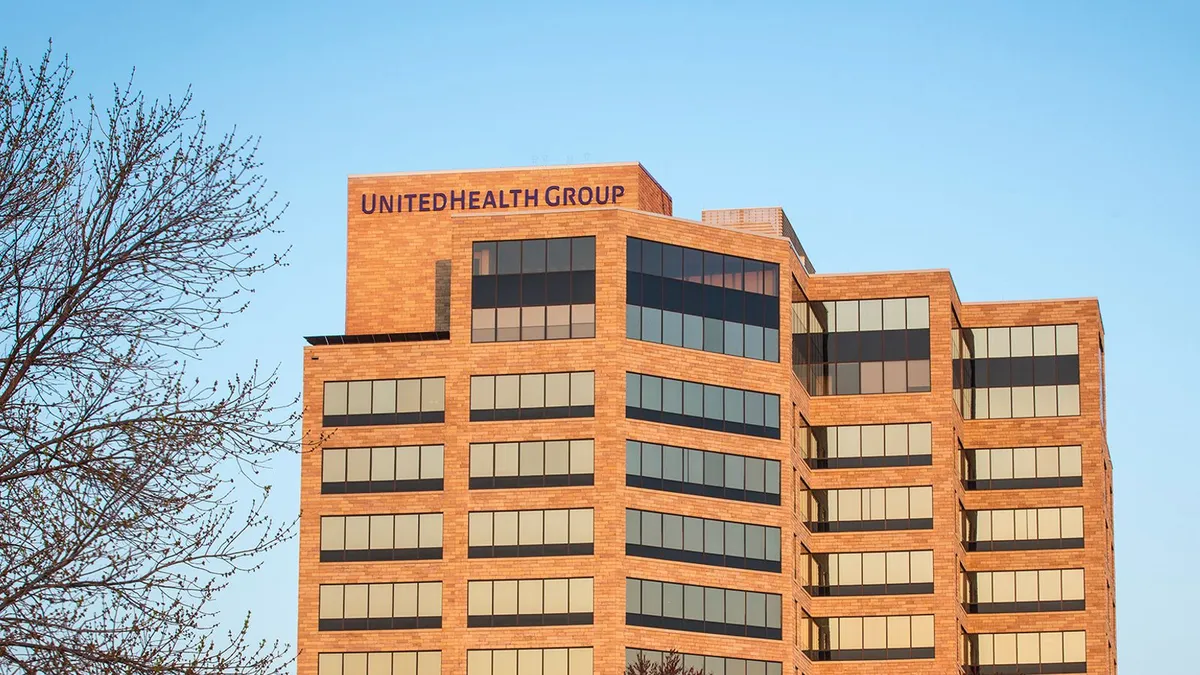
- UnitedHealthcare is still drilling down on actions it can take to make its Medicare Advantage plans more profitable next year, even as the insurer is expected to exit more underperforming geographies. But the company could be poised for growth in the markets where it remains, according to new comments from a top executive.
- “We think we’re going to be very competitive in terms of our pricing next year,” Wayne DeVeydt, the CFO of UnitedHealthcare’s parent company UnitedHealth, said during Wells Fargo’s annual healthcare conference Wednesday morning. “We think our benefits will be competitive ... We still have a few markets where we’re right-sizing some of the products, but I think we’ll be well-positioned for 2027.”
- DeVeydt’s comments come as market watchers try to get a sense of how 2027 open enrollment will pan out, following an especially turbulent sign-up period for 2026 after insurers culled their plans in a bid to resuscitate flagging margins.
Dive Insight:
Once a reliable cash cow for insurers, MA has become significantly less profitable over the past two years as seniors utilized more (and more expensive) medical care than expected and policy changes from Washington pressured reimbursement.
That sparked a broad retreat from the market this year. Carriers exited MA businesses entirely or reworked their plans for 2026: leaving underperforming geographies, cutting benefits, stressing network arrangements with more control over costs or taking other actions meant to boost margins.
Those actions created significant disruption for Medicare seniors. Enrollees in many counties had fewer options for MA plans in 2026, and the options remaining were, in many cases, less generous.
For example, UnitedHealthcare — the largest MA insurer in the U.S. — offered plans in one fewer state and 109 fewer counties this year, cut allowances for certain over-the-counter health and wellness items and prioritized plan designs with more limited provider networks. The company also shifted commissions to brokers to incentivize enrollment in more profitable plans.
The actions ate into UnitedHealthcare’s membership. In the second quarter, the insurer enrolled just shy of 7.6 million MA seniors, down from about 8.4 million MA members at the end of 2025.
UnitedHealthcare expects to end 2026 with up to 1.1 million fewer MA members than it had last year.
But the members remaining have been less expensive to cover, helping boost UnitedHealthcare’s margins this year and driving UnitedHealth’s financial outperformance so far.
The company had a margin target of between 2% and 4% for its MA business in 2026. Now, UnitedHealthcare expects to end 2026 in the upper half of that range, DeVeydt said Wednesday.
“I would say all trends are pointing in the right direction,” the CFO added.
Insurers’ cuts appear to be resuscitating profits, though it’s unlikely that MA margins will return to their historic highs. Before the past few years, gross margins, which can serve as a proxy for profitability, were substantially higher in MA than other insurance markets. In the late 2000s, at the peak of MA profits, margins averaged around 7% to 8%, according to analysts.
Still, 2027 seems poised to be another year of disruption, as major MA carriers signal in comments to investors and early filings with brokers that they’ve embarked on further cuts as they chase their golden goose.
UnitedHealthcare is considering leaving 34 counties in 12 states, according to a preliminary filing with brokers reviewed by Modern Healthcare in August. UnitedHealthcare stressed that the list is not final. But it would represent about 1.2% of the counties where the insurer hosts MA plans, and affect a small slice of its membership — about 20,000 people — some of which could rejoin different UnitedHealthcare policies.
UnitedHealthcare also plans to trim supplemental benefits, CEO Tim Noel said on the company’s second quarter earnings call in July.
Meanwhile, Humana, the second-largest MA insurer, also plans to shut down more MA plans next year, focusing on those with lower capital returns. The insurer expects the exits will impact roughly 600,000 seniors — about 8% of its 7.2 million members in MA.
Executives with CVS’ Aetna, Elevance and Centene also told investors in their own earnings calls this summer that 2027 bids will be focused on margin recovery. Elevance and Centene said they plan to focus on retaining dual-eligible members, while Centene explicitly said it plans to cut additional plans next year.
“Looking ahead to 2027, we plan to further simplify our Medicare Advantage footprint,” CEO Sarah London said.
Insurers submitted their 2027 bids to the CMS in June. Plan changes will be announced in early October, before Medicare open enrollment starts Oct. 15.
Clarification: This story has been updated to clarify Wayne DeVeydt's role at UnitedHealth.