Dive Brief:
- An influential Democrat congressman is investigating a handful of arbiters that decide how much providers should be reimbursed for out-of-network bills under the No Surprises Act, amid mounting evidence of runaway spending from the dispute resolution process set up by the law.
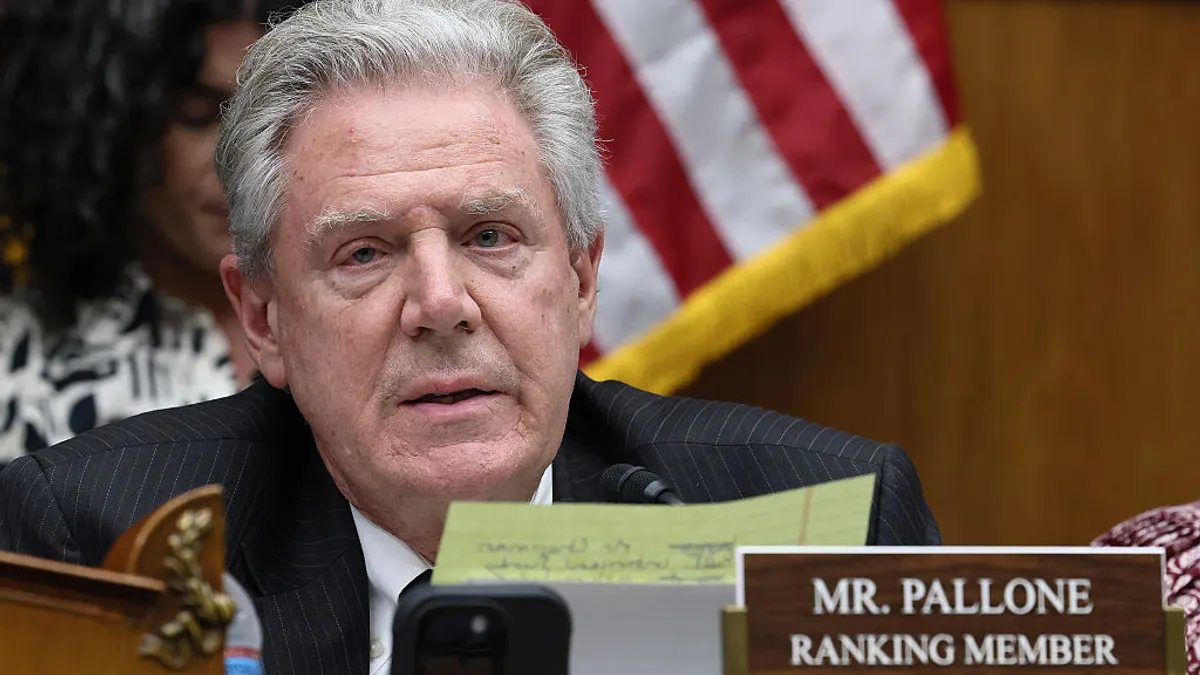
- Late last week, Rep. Frank Pallone, D-N.J., the ranking member of the Energy and Commerce Committee, sent letters to six NSA arbiters asking questions and requesting documents around how they decide claims, including how many disputes they deem ineligible, how frequently they rule in favor of providers, what factors they consider in selecting winning offers and how people involved in decisions are paid.
- Pallone sent the letters to C2C Innovative Solutions, Commence, Dane Street, EdiPhy Advisors, National Medical Reviews and ProPeer Resources. They have until Sept. 24 to respond. The congressman is investigating other arbiters, but they’ve been more responsive to his inquiries, according to Pallone’s office.
Dive Insight:
The NSA was passed in 2020 to shield consumers from unexpected out-of-network medical bills. It’s largely been successful in that goal, preventing nearly 20 million surprise medical bills in 2024 alone, according to research from insurance groups.
But the law has had an unexpected side effect: The NSA’s arbitration process — meant to serve as a backstop for outlier cases when providers and insurers couldn’t decide on a proper reimbursement between themselves — is being packed with significantly more disputes than expected, and appears to be driving up U.S. healthcare spending.
Cases sent to independent dispute resolution, or IDR, have escalated dramatically. Regulators initially expected about 17,000 cases per year. But 2.5 million disputes were filed in 2025, and 1.4 million in the first five months of 2026 alone, according to government data.
The lion’s share of disputes are being filed by a small group of providers backed by private equity companies, a fact that — paired with high provider win rates and outsized awards well above comparable in-network payouts — raises eyebrows for regulators and lawmakers worried about IDR’s price tag.
The arbitration process drove more than $22B in extra spending during the first four years of its implementation, according to recent research from Georgetown University.
Providers argue that estimate is an exaggeration. Still, the report has drawn extra attention to the underlying financial incentives of the law — including how arbiters, meant to serve as neutral referees, may be motivated to accept ineligible disputes and rule in favor of providers.
That’s because arbiters are paid by dispute, and receive no reimbursement if a dispute is deemed ineligible. As a result, they’re incentivized to find disputes eligible, and rule in favor of providers so that providers keep filing them.
Concern about arbiters’ skewed incentives has been exacerbated by the existence of egregiously high awards: In one example, a plastic surgeon received $440,000 for a breast reduction that normally costs around $20,000.
“I am concerned that the independent dispute resolution (IDR) process is not functioning as Congress intended and is resulting in increased out-of-pocket costs and higher premiums for consumers,” Pallone wrote in his letter to the six arbiters. “I am also troubled by recent allegations that some claims submitted to [IDR entites] do not meet the statutory criteria, and that mandatory payment determinations are being made for ineligible disputes.”
Some of the arbiters that received letters frequently agree with providers on how much they should be paid.
C2C Innovation Solutions and EdiPhy Advisors both rule in favor of providers more than 90% of the time, according to the Georgetown research. National Medical Reviews decided in providers’ favor in about 70% of cases, while ProPeer Resources did so more than 50% of the time.
Data on Commence and Dane Street were not included in Georgetown’s study.
Those arbiters are receiving oversight letters because Pallone’s staff has repeatedly requested they share information on their processes and procedures, but they haven’t complied, according to Andrew Souvall, a communications staffer with the E&C Committee.
The letters could create more pressure on IDR arbiters and, correspondingly, providers that benefit from IDR’s status quo. Insurers have been particularly vocal about the need to reform IDR, filing a flood of lawsuits against providers and billings intermediaries they argue are gaming IDR to profit. That’s been countered by an advocacy push from provider groups, which argue that insurers are submitting unfairly low offers and refusing to pay awards they owe.
The Trump administration did finalize a rule this spring meant to make dispute resolution more streamlined and centralized. However, some policies could incentivize providers to file even more disputes, and the rule doesn’t address IDR’s financial incentives. Insurers argue the rule is a missed opportunity.