Dive Brief:
- Nearly 8 in 10 employers report GLP-1 drugs are driving heightened healthcare costs at their companies, pushing some to consider dropping coverage of the pricey weight loss medications, according to a survey released Tuesday by the Business Group on Health.
- Only 72% of employers that cover GLP-1s for weight management said they’d likely maintain that coverage next year, while 10% reported they likely wouldn’t, according to the group, which represents employers that provide health coverage.
- Additionally, 87% of respondents said new oral versions of GLP-1 drugs would result in higher demand for the medications, but only 9% predicted prices would decrease.
Dive Insight:
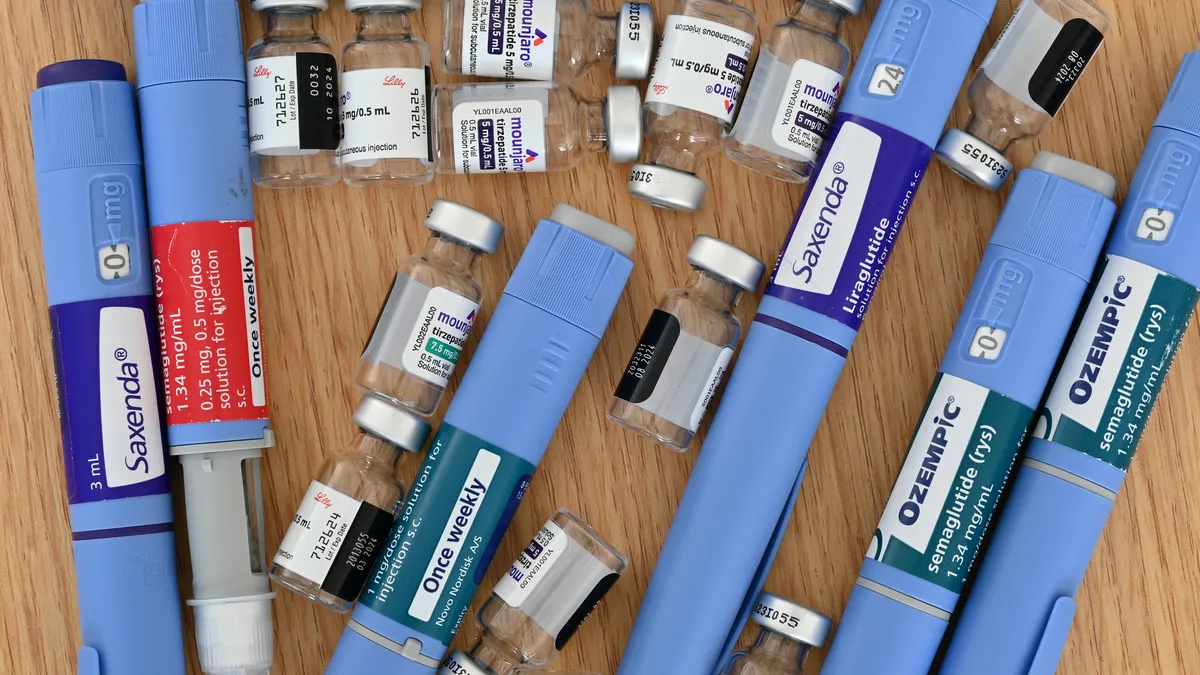
Originally developed for Type 2 diabetes, GLP-1s have shown remarkable efficacy at treating obesity, which affects a large swath of Americans. About 1 in 8 adults say they’re currently taking a GLP-1 for weight loss or to manage a chronic condition, according to a survey conducted last year by health policy researcher KFF.
However, the popular medications are expensive, with list prices reaching around $1,000 per month. Research shows GLP-1s are contributing to rising healthcare costs, already a challenge for many employers that are struggling to absorb the increased expense.
Some employers may decide to stop covering the drugs for weight loss as cost pressures mount, according to the Business Group on Health report, which surveyed more than 100 of its members earlier this year.
“Our findings show the tremendous concern employers have regarding these medications from a cost and financial viability perspective,” Ellen Kelsay, president and CEO of the employer group, said in a statement. “Against the backdrop of anticipated double-digit health care cost increases, fueled to a large degree by GLP-1s and overall prescription drug costs, companies cannot ignore the reality that GLP-1s have significant implications for health care budgets – and overall affordability.”
Sixty-seven percent of surveyed employers reported they currently cover GLP-1s for weight management. Many workplaces rely on different strategies to ensure the medications are prescribed appropriately, such as limiting prescriptions to specific providers, excluding some medications from their formularies and requiring participation in a weight management program, according to the survey.
Eighty-three percent said they used standard cost-sharing arrangements for GLP-1s, instead of special benefit designs or not allowing out-of-pocket costs. Additionally, nearly 8 in 10 reported executive management teams are involved in GLP-1 coverage decisions.
And, though some research has found sustained GLP-1 use could eventually lower employers’ healthcare costs, workplaces aren’t seeing health benefits yet.
More than half of employers that covered the drugs for weight management said they expect they’ll produce significant clinical benefits, but few had have seen evidence of lower obesity rates or fewer bariatric surgeries in their claims so far, according to the survey.