Dive Brief:
- Providers are urging the government to abandon any plans to implement after-the-fact rebates in the 340B drug discount program, arguing it would impose undue costs on hospitals and clinics and jeopardize patient care.
- In comments due this week to the Health Resources and Services Administration, which oversees 340B, providers said implementing the systems to process rebates would impose costs on clinics and hospitals that would outweigh any potential savings it could use to benefit patients.
- Drugmakers pushed back, arguing providers abuse upfront discounts in 340B to reap financial benefits and that a rebate model would not impose any new cash-flow challenges.
Dive Insight:
Providers and drugmakers have clashed over 340B, a three-decade-old program meant to provide discounted drugs to safety-net hospitals and clinics serving low-income or uninsured patients.
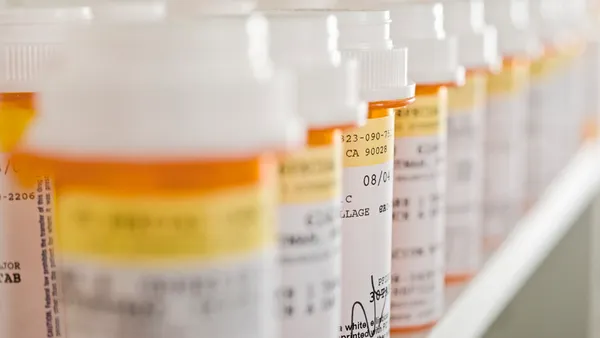
Traditionally, 340B has given upfront discounts on drugs at the point of sale. Providers say these discounts allow them to care for more needy patients and keep their doors open.
But drugmakers have pushed back on the discounts, arguing providers abuse the program and manipulate 340B to garner steeper discounts that they sometimes don’t divert to patient care.
They point to rising spending in the 340B program, which has ballooned since its inception. 340B participants have grown over 600% since 2000 and purchases reached a record high of $66.3 billion in 2023, according to a report commissioned last year by Sen. Bill Cassidy, R-La.
Additionally, the potential money to be garnered in 340B has driven hospitals to acquire more outpatient clinics and prescribe higher-cost drugs, increasing healthcare spending for the federal government and commercial health plans, according to research.
Amid growing scrutiny of 340B last year, the Trump administration announced that it would pilot a rebate program for some drugs. The announcement followed multiple lawsuits from both hospitals and drugmakers, after some drugmakers like Eli Lilly and Johnson & Johnson announced they would be unilaterally imposing their own rebates.
In response, hospitals sued the Trump administration, which promptly said it would drop the pilot in February. But HRSA said it would be issuing a “Request for Information” from the public on a future 340B rebate program it could propose through rulemaking.
Over 5,500 comments were submitted ahead of Monday’s deadline. Providers — including hospitals and community centers — urged HRSA not to go through with rebates, pointing toward the administrative overhead costs it would take to implement 340B.
340B “has worked successfully for decades,” NYC Health and Hospitals said in comments. “The incremental costs associated with a 340B Rebate Model Pilot Program would not be marginal—they would be significant, ongoing, and deeply destabilizing.”
It could cost a mid-sized community health center over $3 million per year to manage the rebate pilot program, according to Spectrum Health, a Philadelphia-based health center. Rebates would “cause significant financial turmoil” and be “a duplicative and unnecessary administrative burden,” it said.
Potential administrative costs, include hiring employees, to administer a rebate model would be detrimental to providers with scarce resources, according to lobby the American Hospital Association. The AHA “urges HRSA to abandon the idea altogether,” according to its comment letter.
For their part, drugmakers urged HRSA to continue with a rebate model, arguing it would impose much needed oversight into 340B. Pharmaceutical lobby PhRMA argued regulators should impose a rebate model as soon as possible, ideally before Jan 1.
A rebate model is “commonsense” and wouldn’t propose any cash-flow problems for providers, because they would typically receive rebates before wholesale drug invoices are due, according to PhRMA’s comments.
Furthermore, 340B rebates wouldn’t affect patient care, according to PhRMA, because the drug discounts are currently not being passed along to patients.
“We also emphasize that—despite unfounded comments from covered entities—there is no reason to expect the rebate model will affect patients in any way,” the pharma lobby wrote.