The Trump administration on Monday released long-awaited Medicaid work requirements guidance for states, finalizing a rule that will affect healthcare access for millions of Americans — and create a roadmap for the beleagured state officials looking to operationalize Congress’ bedrock changes to the safety-net insurance program.
The CMS’ new interim final rule includes key definitions and standards that states have been waiting for, just seven months ahead of the deadline for Medicaid work requirements to go into effect.
On a call with reporters, CMS officials said the rule is the result of months of conversations with states and is a commonsense implementation of the work requirements passed in the GOP’s “Big Beautiful Bill” almost one year ago.
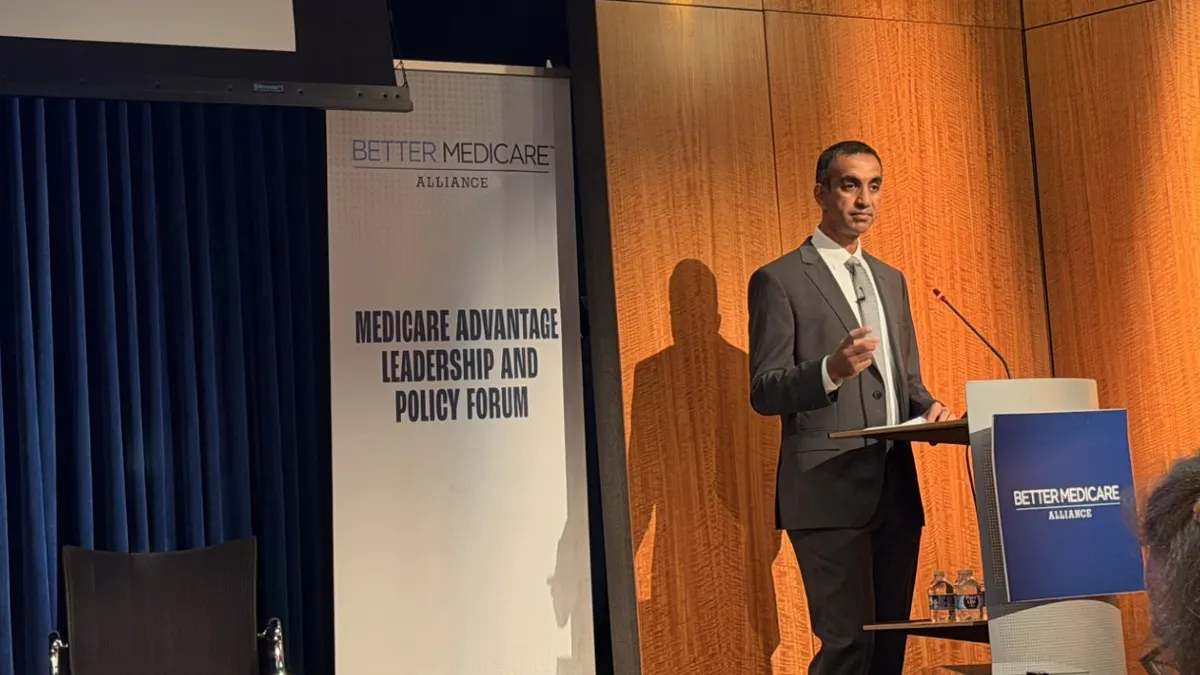
“We want the path of this process to be smooth and seamless, and CMS is using and leveraging its power to convene across government and industry to ensure that those on Medicaid achieve the lasting health from youth to old age that we aspire for,” Medicaid Director Dan Brillman said.
The rule includes some flexibilities, including a broad definition of what “medically frail” people are exempt work mandates, and allowing individuals to self-attest that they’re exempt once before states require documentation.
However, the rule doesn’t do enough to protect beneficiaries from improper enrollment, and creates new, unnecessary administrative burdens beyond what Congress originally intended, medical groups, patient advocates and top Democrat lawmakers argued.
Rep. Frank Pallone, D-N.J., urged the CMS to withdraw the rule, while Sen. Ron Wyden, D-Ore., called it a “grim step in America’s march towards a health care system that further restricts access to health care.”
Defining exemptions
Starting on Jan. 1, 2027, Americans who receive Medicaid coverage due to their state’s expansion under the Affordable Care Act will have to work, volunteer or attend school for 80 hours a month in order to stay enrolled in the insurance program.
The work mandates were a health policy pillar of the “One Big Beautiful Bill” passed by the Republican-led Congress last summer. The law cemented a long-held dream for conservatives, who argue that work requirements are a pathway to increasing employment and removing freeloaders from federal programs.
The law also set up a massive undertaking for states, which had just 18 months to completely remake their data and eligibility systems, expand outreach and education, and track compliance — all with minimal federal funding.
States have been spending millions of dollars, further stressing already tight budgets as they hustle to implement the changes in time. But in certain areas, states have been stuck in a holding pattern or been forced to move ahead without CMS guidance, waiting for federal regulators to clear up important grey areas, mostly around who’s exempt from work requirements and how they need to prove it.
The framework released by the CMS does weigh in on those issues. But it leaves a lot up to the states.
For example, the “Big Beautiful Bill” outlined some populations who should be exempt from work requirements, including pregnant women, those with a disability or dependent child, and people who are considered “medically frail.”
Since the law was passed, states have clamored for more guidance from the CMS around the medical frailty exemption. Now, the CMS has released a broad definition that leaves states with some wiggle room in determining which beneficiaries should be subject to the work mandates.
Essentially, the exemption encompasses anyone with a serious medical condition or a disability that significantly impairs their ability to live or comply with the requirements, CMS officials said on the call with press.
“If your condition significantly impairs your ability to engage in work and the requirements, then you are likely not subject to the work requirements,” Brillman said. “To that end, we do give states options to meet the unique needs of their population.”
That latitude could have huge implications for whether hundreds of thousands of Americans keep or lose Medicaid.
Research finds two-fifths of Medicaid enrollees have three or more chronic conditions, and medical groups have warned that very sick individuals are especially at risk of worsening health outcomes without insurance coverage.
Still, it’s not a silver bullet for Medicaid beneficiaries living in red states that might take a more restrictive approach. Even though some enrollees may be eligible for an exemption, they could struggle to get one due to their state’s reading of the medical frailty stipulation.
Patient advocacy groups, including the HIV+Hepatitis Policy Institute and the American Cancer Society Cancer Action Network, said they were disappointed and worried that the Trump administration is allowing states to determine whether an individual’s health is impaired enough to qualify for an exemption.
“Cancer patients and survivors who are suffering from debilitating side effects of the disease or treatment would have to officially prove they can’t work, in a process that is likely to be difficult and take a long time,” Lisa Lacasse, the president of the ACS CAN, said in a statement. “Cancer patients who can still work — and many want to, for example, when they are well enough to work in between chemo rounds — will have to choose between losing their Medicaid coverage, working the required 80 hours per month, or giving up working altogether to qualify for an exemption.”
The rule also cemented other exemptions to the work requirements, including those concerning hardship in certain circumstances, like for people receiving inpatient hospital care or those living in areas with high unemployment rates.
The majority of states plan to use at least one hardship exemption, according to health policy research firm the KFF.
Some room for self-attestation
The interim final rule also clarifies another major grey area: Whether or not states can take an individual’s word for it that they aren’t subject to the work requirements, especially due to medical frailty, which can’t be as easily tracked.
States have to verify whether people are compliant with or exempt from the mandate when they apply for Medicaid when they renew their coverage. States can also recheck compliance more frequently if they choose.
During this process, states should pull claims data and other information to try and determine whether someone is eligible or exempt without involving them, CMS officials said. If that data is unavailable, states can request additional data from the Medicaid enrollee within the first year that the work requirements are in effect.
Starting in 2028, an enrollee can self-attest that they’re exempt — but only once. For the next eligibility check, the state will need data backing up that attestation, such as evidence of a doctor’s visit for a health condition, according to the CMS.
Reporting leading up to the rule’s publication indicated that the CMS planned to take a more restrictive view on self-attestation, which could have made it harder for someone to qualify for an exemption.
Still, “this guidance significantly raises the barrier for demonstrating medical frailty, meaning many patients in the middle of treatment will have the new hassle of proving their condition, over and over, with any mistake or gap being penalized by the loss of their health care and coverage,” Anthony Wright, the executive director of patient advocacy group Families USA, said in a statement.
“Through this rule, CMS is requiring duplicative documentation and prohibiting states from taking full advantage of consumer-friendly tools like self-attestation,” Wright added.
The brief allowance for self-attestation aligns with the Trump administration’s push to root out what it says is rampant fraud in Medicaid, including by those who don’t qualify but receive coverage anyway.
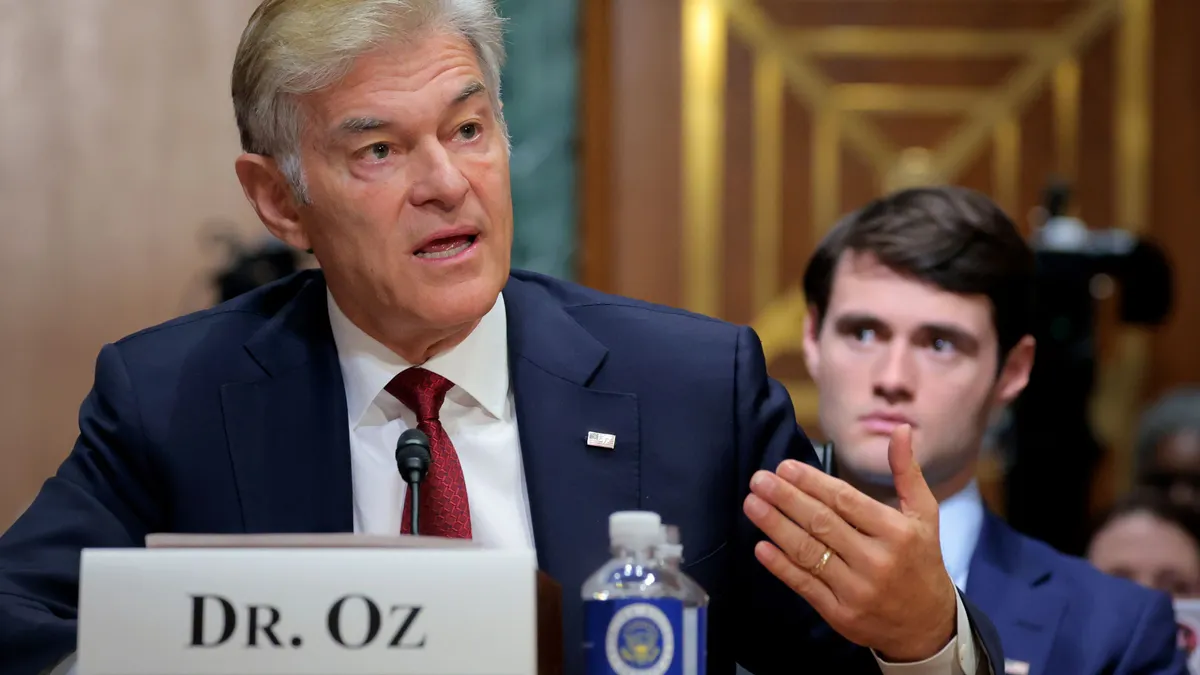
During Monday afternoon’s call with press, CMS Administrator Dr. Mehmet Oz said it was important for regulators to ensure that the most vulnerable would be exempt from the work mandates, but threatened penalties for anyone who takes advantage of self-attestation.
“We are serious about the consequences of dishonesty and self-attestation,” Oz said. “We hope the vast, vast majority of people will be helped without ever having to talk to anybody ... but in the rare instance where you’re self-attesting, you need to tell the truth. And we will be speaking with the different enforcement bodies to make sure that folks know that’s not a joke.”
If states can’t verify that someone is exempt from the work requirements, they need to give the individual 30 days to come into compliance, according to the rule. If not, they could be disenrolled.
If someone is disenrolled, they will be able to reapply for Medicaid, the CMS said.
Enrollment impact
The interim final rule is one of the most consequential Medicaid policy documents in years, according to Families USA, a patient advocacy group
Still, the rule’s publication just seven months before work requirements are set to kick in raises questions about whether states are prepared to take on the changes in advance of that deadline.
It’s also unclear how states like Nebraska and Montana that have already or plan to roll out enforcement well in advance of 2027 will be affected.
The key question is whether the rush to implement work requirements could increase improper disenrollments. Historically, work requirements have resulted in eligible individuals losing coverage due to issues documenting their compliance, with no corresponding uptick in employment.
The Congressional Budget Office, a nonpartisan scorekeeper, estimates that north of 5 million people will become uninsured as a result of the requirements.
The interim final rule estimates that 2.3 million people will lose Medicaid enrollment in 2027, with that figure rising to between 3.1 million and 3.3 million people in subsequent years. That’s roughly 15% of the Medicaid expansion population.
CMS officials said that states will need to continue modernizing their technology infrastructure, data sharing and verification systems to make sure processes are smooth and people aren’t improperly disenrolled.
Correction: A previous version of this story misidentified CMS’ disenrollment projections. The CMS estimates up to 3.3 million people will lose Medicaid coverage as a result of the rule.