WASHINGTON — The leader of an influential congressional advisory group is defending its estimates of Medicare Advantage overpayments amid growing controversy over how to best analyze spending in the privatized Medicare program.
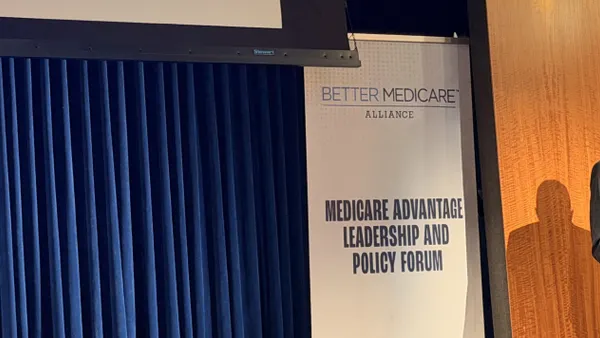
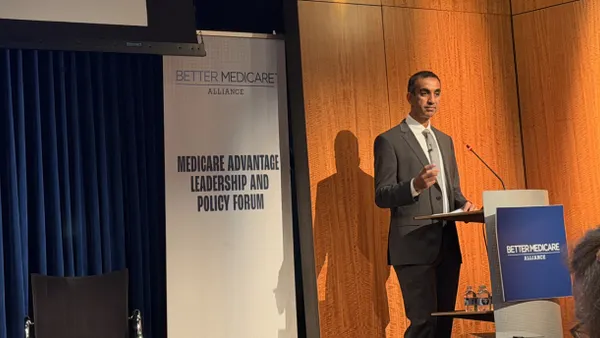
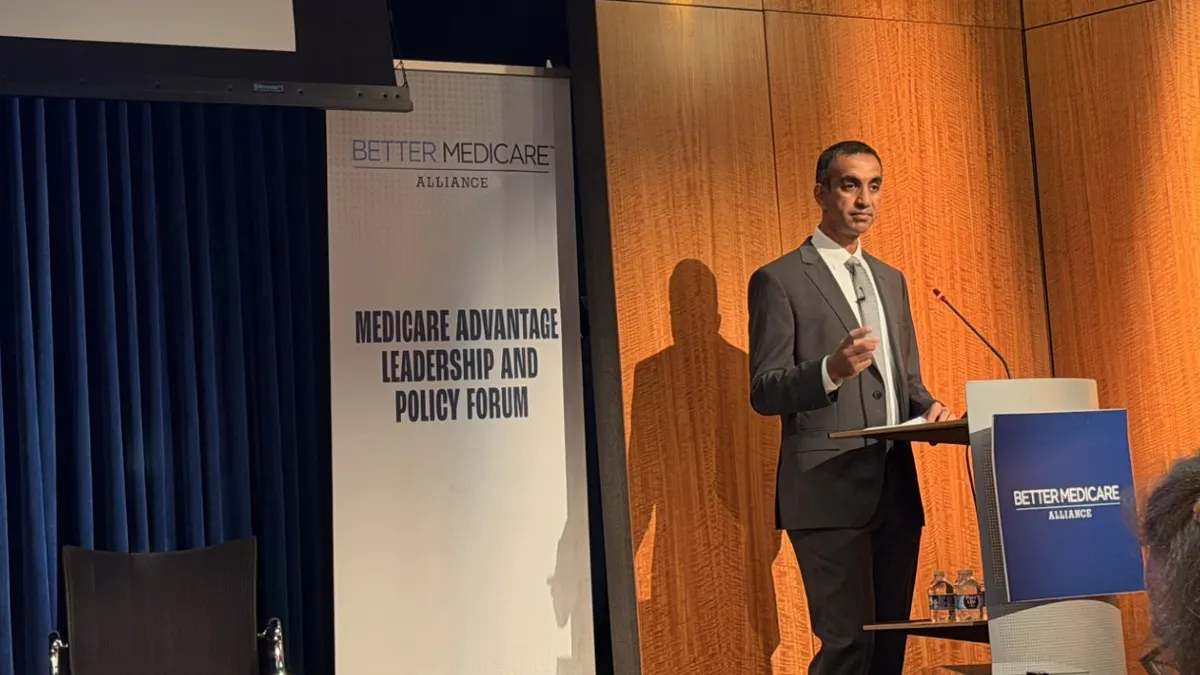
Dr. Amol Navathe, the chair of the Medicare Payment Advisory Commission, or MedPAC, took the stage during an MA industry event in Washington, D.C. on Tuesday in support of the group’s research that the U.S. government is set to spend 14% more — an extra $76 billion — this year on seniors that opt into MA than it would if those same beneficiaries went into traditional Medicare.
MedPAC isn’t interested in making MA look bad, Navathe said at the event hosted by the Better Medicare Alliance, an influential MA lobby.
The estimate that MA costs 14% more than traditional Medicare doesn’t mean MedPAC is advocating for a 14% cut to MA. Instead, the legislative agency’s goal is to support competition in the popular Medicare alternative and produce reliable research that spurs meaningful conversations about potential reform, according to Navathe, who was named MedPAC’s chair in May.
“We hope that as we put evidence out there and raise issues and questions out there, that stakeholders will engage with them in serious fashion and provide meaningful, substantive feedback. There are opportunities for us to refine our methods and to improve our work, and we’re aspiring to do that,” he said. “We recognize that we may not agree on every data point or every policy prescription.”
Insurers argue that MedPAC’s estimate — which is broadly cited by members of Congress, health policy experts and other stakeholders in the healthcare industry — is flawed and makes MA seem costlier than it really is. MA plans instead prefer a CMS analysis from January that yields a dramatically lower estimate of overpayments, or industry-funded research that finds MA is actually cheaper for taxpayers.
The MA industry has embarked on a heavy advocacy push to get more favorable research in front of legislators. In June, the BMA launched an advertising campaign to “help raise awareness with policymakers about more accurate Medicare Advantage data.” And earlier this month, the lobby published a white paper arguing that MedPAC’s methodology fails to account for fundamental differences between MA, in which plans assume risk for managing seniors’ care, and traditional Medicare, which operates on a fee-for-service basis.
Insurers are attempting to erode trust in MedPAC’s analysis as Congress mulls legislation that would reform MA, including by curbing perceived overpayments. Legislators are also considering refereeing MedPAC’s methodology as the once-wonky policy debate becomes increasingly mainstream.
In a party-line vote earlier this month, Republicans in the House Ways and Means committee advanced a bill that would force MedPAC to conduct two analyses of MA spending: one that includes the effect of a phenomenon called favorable selection, when MA beneficiaries end up being healthier than originally thought, and one that does not.
The bill would allow the MA industry to point to the more favorable spending number, and give them fodder to argue that MedPAC’s previous estimates of overpayments are unreliable. Democrats have criticized the measure for undermining MedPAC’s independence, while insurance groups have called on Congress to pass it.
Navathe, who has served on the board of two MA plans and is currently a medical ethics and health policy professor at the University of Pennsylvania School of Medicine, stressed that MedPAC wants an open dialogue with the MA sector, calling it “a really important point that I would like to highlight as I do step into this role of chair.”
MedPAC’s goal “is to track new evidence, is to refine our methods, and we have tried very hard to make that transparent, to show sometimes I think in exhaustive detail, the methodological detail underlying our work. To allow folks to critique it, hopefully to understand it, and ultimately to improve it,” Navathe said. “And we have seen that the Better Medicare Alliance recently, for example, has offered that critique, and that’s okay.”