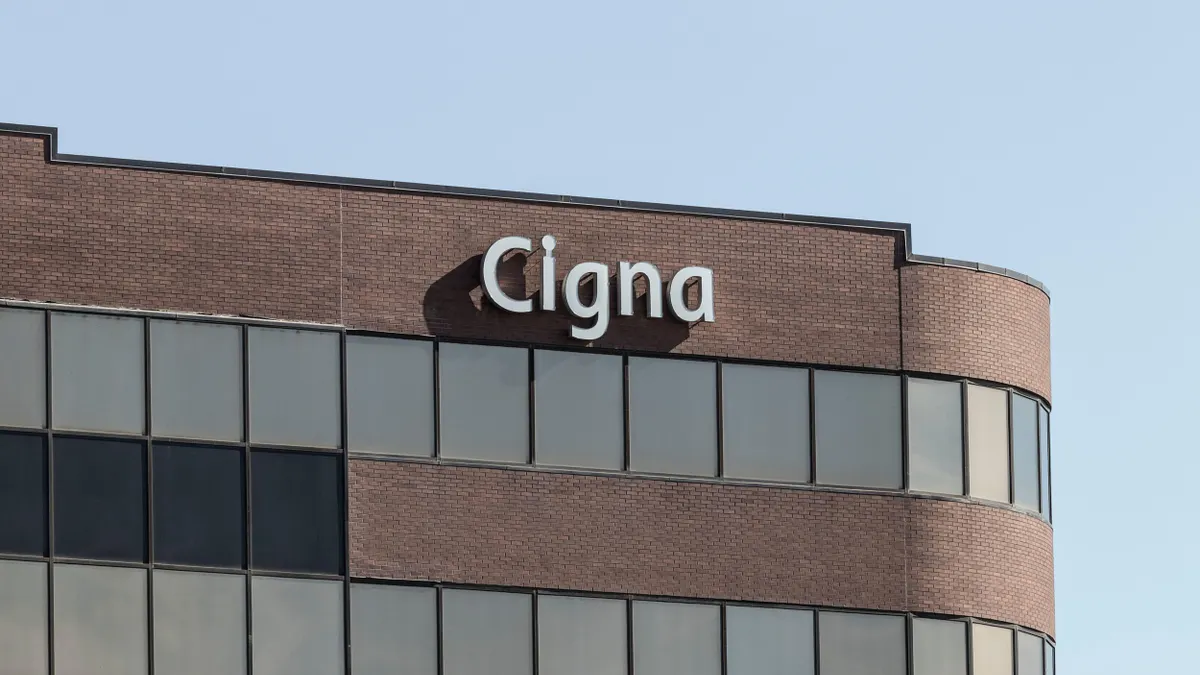
Cigna is embarking on a $3 billion multi-year initiative to boost productivity and fuel growth — including by using artificial intelligence, as healthcare companies continue to look for ways to harness the technology to cut costs.
The initiative, unveiled during Cigna’s investor day on Wednesday, focuses on automating and modernizing processes, including digitizing front- and back-office activities; better managing suppliers, partners and vendors, including more rigorous sourcing and relationship management; and making employees more effective.
The actions are expected to save $3 billion by 2030, some of which will be reinvested in the company and some of which will go towards helping Cigna reach its earnings growth targets, CEO Brian Evanko said.
Healthcare corporations, including insurers, have been focused on operating more efficiently to preserve bottom lines threatened by growing medical spending and to improve their relationship with consumers amid growing discontent with the industry. Many companies are turning to AI to cut waste, better detect fraud, improve customer service and give them a competitive advantage against peers — and in billings disputes and contract negotiations with providers.
More than 9 in 10 insurers say AI is helping to improve productivity and reduce operating costs, according to a recent survey from KPMG. But few are functionally redesigning their processes around the technology. None of the insurers that participated in the survey report fully remaking sales and distribution or underwriting with AI, while just 3% have done so in policy servicing and claims management.
The $3 billion productivity initiative is part of Cigna’s new “Lead to One” mission, which aims to provide personalized services to its members, whether they’re completely healthy or chronically ill, Evanko said during the investor day.
A big driver of that vision is the Bloomfield, Conn.-based company’s health intelligence engine, which digests data across Cigna’s different businesses with the goal of translating them into specialized interactions meant to improve health outcomes, patient experience and better affordability, executives said.
The health intelligence engine also powers Cigna’s new customer and clinical support model, called Health Sense, which the company’s insurance arm expects to go live early next year, according to Bryan Holgerson, the division’s president.
Cigna said it expects Health Sense to reduce its insurance costs by 10% by the end of 2030.
The company’s increased commitment to AI builds on other recent rollouts, including weaving generative AI into the virtual assistant of its myCigna member portal last year.
Growing adoption of AI from insurers has sparked significant concerns, especially around the use of automated tools to review claims or prior authorizations with minimal human oversight. Cigna is currently facing a lawsuit for allegedly using an algorithm to wrongfully deny hundreds of thousands of medical claims.
During the investor day, executives for the $275 billion healthcare giant touted how the combined capabilities of its specialty and care services, pharmacy benefits and health insurance businesses will help it drive profitable growth.
In particular, Cigna is doubling down on its lucrative specialty pharmacy division, which it expects to fuel almost 40% of its overall earnings this year; expanding in the small employer insurance market; and pivoting its PBM Express Scripts to a new rebate-free model as part of its settlement with the Federal Trade Commission earlier this year.
Cigna also reaffirmed its previously issued 2026 guidance on Wednesday, while providing financial targets for 2030.
The company expects adjusted revenues of $280 billion and adjusted earnings per share of at least $30.45 this year. Over the next four years, Cigna expects to achieve 10% to 14% growth in adjusted EPS, and roughly $50 billion in cumulative operating cash flow.