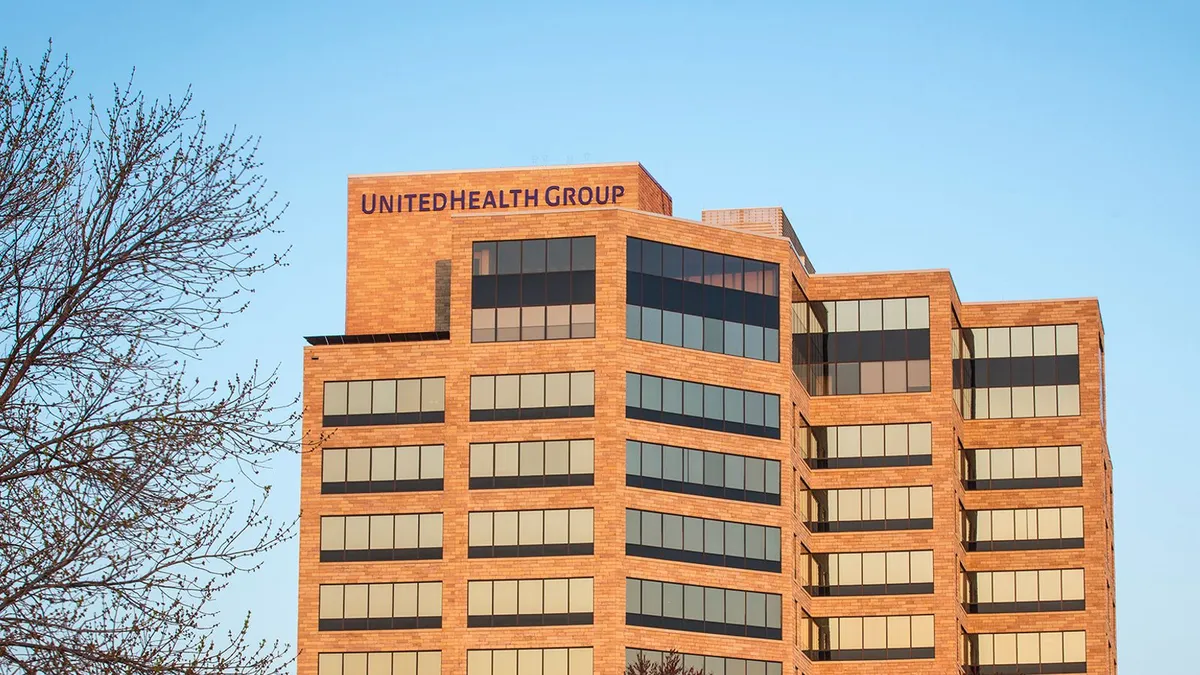
UnitedHealth on Thursday released the results of the latest audit of its business practices, part of CEO Stephen Hemsley’s commitment to improving the healthcare juggernaut’s transparency and relationship with the public.
The review focused on how UnitedHealth’s insurance unit UnitedHealthcare creates clinical criteria used to make coverage decisions. It found few faults with the process.
But the review left out a key element — how the policies are actually being applied, a question with major ramifications for the more than 48 million people in the company’s insurance plans who could have their care approved or denied as a result.
It’s also a major area of scrutiny for lawmakers and regulators concerned that UnitedHealthcare’s coverage decisions could be based on profit motives rather than medical necessity. Research has shown that many of the Minnesota-based insurer’s coverage denials are overturned upon appeal, suggesting the care should have been approved in the first place and may have been rejected to save UnitedHealthcare money.
A UnitedHealth spokesperson did not comment on why the application of medical criteria was left out of the audit, and whether it could be covered in a future review.
“This review was designed to answer a specific question if UnitedHealthcare develops, maintains and oversees its medical policies with rigor and in line with external standards and clinical evidence,” the spokesperson said.
The audit dug into the expertise and processes of the more than 80-person team that crafts UnitedHealthcare’s medical policies, which include criteria used to decide if a treatment, drug or device should be used for a particular member’s care.
Insurers have latitude to create their medical policies, though the degree of leeway depends on the insurance market — for example, in privatized Medicare Advantage plans, they can only develop internal criteria when traditional Medicare’s coverage rules are unclear or nonexistent.
UnitedHealthcare’s medical policy team is well-staffed, highly qualified and relies on clinical evidence from authoritative groups to develop and maintain medical criteria, the review found. It was conducted by FTI Consulting, which has performed past audits of UnitedHealth’s business practices, and Rubrum Advising, a medical coverage advisory firm founded by the former chief medical officer of the CMS.
FTI and Rubrum also evaluated a sample of nine medical policies running the gamut from molecular testing for blood cancers to a surgery for children with scoliosis, and found they’re evidence-based, well-researched and fairly defined.
There were some areas for improvement. UnitedHealthcare doesn’t have explicit documentation for when a new policy should be created or how to vet subject matter experts that weigh in on policy development.
In addition, policies are complex and long, making their use by doctors and members difficult, the reviewers said.
But “overall, UnitedHealthcare demonstrates a strong and industry-leading approach to medical policy development, maintenance, and oversight,” FTI and Rubrum wrote in a summary of the report.
In a statement, Hemsley said that UnitedHealth welcomes the findings and “will use them to continue strengthening our processes to better serve the people who count on us.”
But the review has gaps. FTI and Rubrum did not evaluate the specific content of the medical policies, or how they’re applied in coverage decisions, including any potential cost considerations associated with determinations.
That omission is notable, given the unflattering spotlight on UnitedHealthcare for allegedly curtailing access — a major concern given its status as the largest private insurer in the U.S., and due to claims that UnitedHealthcare uses an algorithm to systematically deny care. UnitedHealth has denied that allegation.
But a KFF analysis of prior authorizations, or coverage determinations before care is administered, found that UnitedHealthcare denied more requests for care than any other insurer in the privatized Medicare Advantage insurer, at 17% last year. Sixty percent of those denials were overturned upon appeal.
Though UnitedHealthcare’s initial denial rate was lower in Medicaid managed care, at 11%, over 80% of those denials were overturned upon appeal.
Denial and overturn rates also skyrocket in particularly high-cost areas.
In 2024, UnitedHealthcare had one of the highest denial rates of any MA insurer for post-acute care, rejecting more than 70% of requests for long-term care hospital admissions, according to the HHS Office of the Inspector General.
The watchdog also looked into requests for skilling nursing care, and found when those denials were appealed they were overturned 99.7% of the time.
UnitedHealth’s first audit, which was released late 2025, touched on how the insurer manages requests for care, and found those processes were fully compliant with external standards. However, the review was based on a collection of regulatory audits of the company and limited in scope, so it did not address how frequently UnitedHealthcare approves or denies care across its tens of millions of members.
The audits are one salvo in UnitedHealth’s campaign to rebuild trust with the American public after pent-up backlash over its business practices burst into the public eye in late 2024, with the shocking killing of its top insurance executive. Amid growing vitriol against the private insurance industry for its control over whether Americans can access medical care — and how much they pay for it — Hemsley kicked off the reviews last summer, part of UnitedHealth’s broader turnaround following a series of operational, financial and PR crises.
UnitedHealth has remade its corporate structure, rejigged leadership, and cut unpopular prior authorizations as it tries to improve its public image. But that hasn’t been enough to head off scrutiny, including over denials: On top of probes from the Department of Justice, two Democrat senators are investigating UnitedHealth over reports it restricted care for nursing home residents, while Texas Attorney General Ken Paxton has accused the company of illegally preventing Texans from getting medically necessary care.
Past audits have focused on areas where Unitedhealth has faced public sanction, including its house calls program for seniors, Medicare Advantage risk assessment and coding and how pharmacy benefit manager Optum Rx passes drug discounts along to its clients.
Hemsley said the company would continue the audits and make changes “where needed” in his Thursday statement.
The UnitedHealth spokesperson said it was too early to comment on areas of future review, but that updates would be shared as available.