

Dive Brief:
- The CMS is delaying an unpopular proposal that ends Medicare payment for remote patient monitoring services provided by third-party vendors that contract with healthcare providers.
- The proposal will now go into effect on Jan. 1, 2029, according to the recently finalized 2027 payment rule for physicians, offering a two-year reprieve from the original Jan. 1, 2027 start date to providers and companies that rely on third-party contracting for RPM services.
- Virtual care lobbyists said they want to work with the CMS in the next two years to ensure RPM payments continue while reducing the potential for fraud.
Dive Insight:
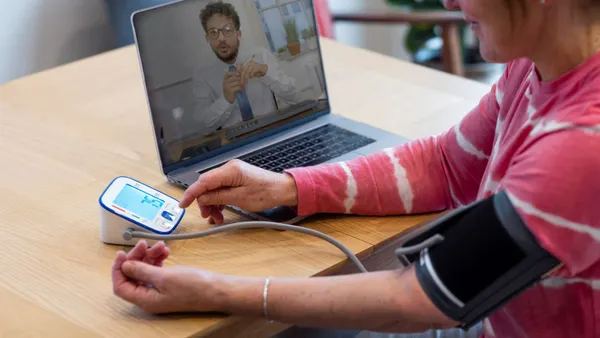
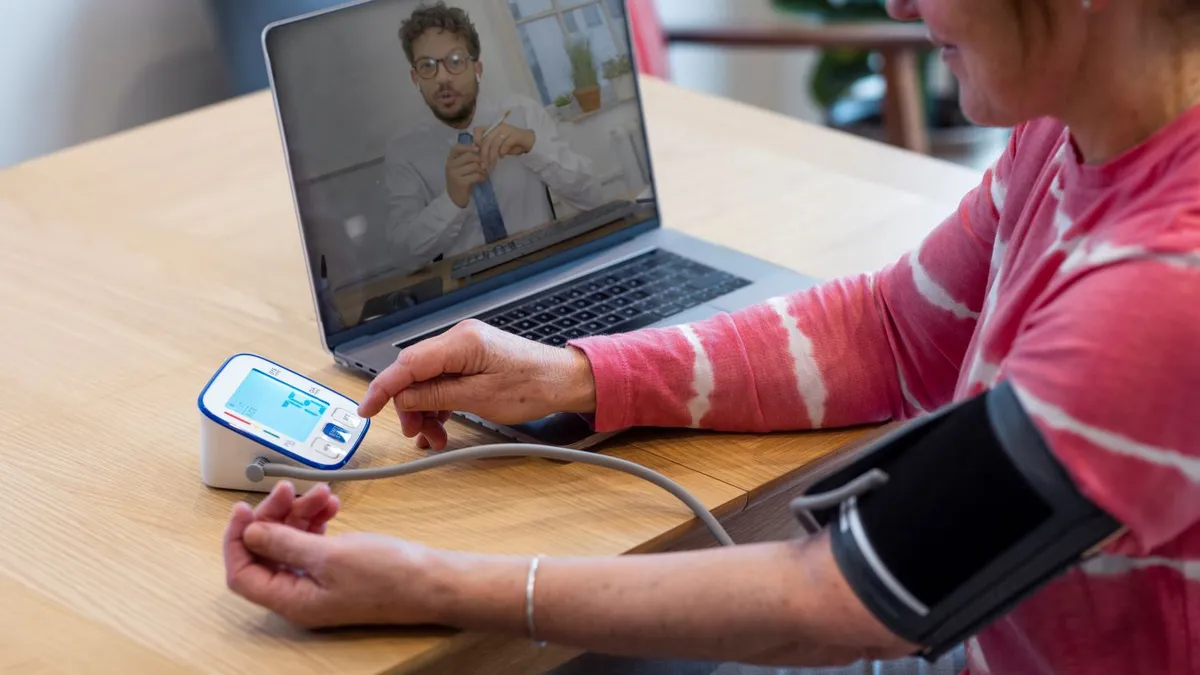
The CMS sent shockwaves through the virtual care industry in July when it announced plans to end payment for RPM services provided by third-party vendors. In many cases, healthcare providers contract with companies for RPM services, where care teams remotely monitor vital signs and other health metrics and step in when patients fall outside established ranges, indicating changes to their condition. This ability to intervene quickly has been credited with improving outcomes, reducing hospitalizations and readmissions and supporting chronic disease management.
But according to the CMS, third-party contracting has led to fraud and improper billing for services. The agency cited reports from HHS' Office of Inspector General to back up its claims, stating that outsourcing RPM services can result in situations where the healthcare provider billing for the RPM service may not be involved in, or have enough oversight of, the care delivered by the third party.
So, in the proposed 2027 Medicare Physician Fee Schedule, CMS said that Medicare would only pay for RPM services provided by clinical staff employed by the practice where the patient is receiving care. This means that healthcare organizations cannot bill for third-party RPM services, in which contracted companies provide and set up the necessary technology and employ the care teams that monitor patients' health metrics.
The proposal was meant to take effect at the beginning of 2027, but in the final rule, CMS deferred the start date to the beginning of 2029.
Lobbying groups, providers, virtual care companies and patient advocacy organizations painted a grim picture of the proposal's impact, if it were finalized. They warned of situations where the lack of payment could force providers to shutter RPM programs they cannot operate on their own, leaving patients without access to healthcare.
Now, with two more years before the proposal takes effect, the groups say they will work with CMS to find a way forward that preserves access to RPM.
"ATA Action will use the next two rulemaking cycles to press CMS to adopt targeted program-integrity safeguards that address fraud and abuse without cutting off access to proven remote monitoring programs," said Kyle Zebley, CEO of the ATA and executive director of ATA Action, in a statement.
Similarly, Brian Scarpelli, executive director of the Connected Health Initiative, said in a statement, "CHI will push CMS on clinical staffing arrangements for remote monitoring before the 2029 deadline."
In addition to delaying the third-party RPM payments proposal, the CMS finalized other changes to RPM reimbursement, including only paying for remote monitoring of non-physiologic metrics, such as medication adherence and pain levels, for established patients and not new ones.
According to Caroline Pearson, executive director of Peterson Center on Healthcare, these changes to RPM payments are a "cautionary tale" about creating payment models based on volume of services rather than patient outcomes. She noted that the current fee-for-service nature of RPM reimbursement enables indefinite billing with "no requirement to show the patient still needs the service."
"The rule will create broad disruption in the market…What comes next has to be smarter: payment tied to clinical outcomes and targeted to the patients who benefit, so it builds confidence instead of eroding it," Pearson said.