Medicare will slash payment rates for a federal drug discount program and broaden site-neutral policies next year, according to a final rule released by the CMS on Wednesday.
340B payments are set to drop by billions of dollars and Medicare will pay the same amount for more medical procedures, regardless if they’re furnished in hospital-owned outpatient departments.
Under the final rule, hospital outpatient departments and ASCs will also see their Medicare payments increase 2.3% next year, slightly less than the 2.4% bump regulators proposed in July.
Officials said the 2027 Outpatient Prospective Payment System and Ambulatory Surgery Center policy would drive affordability for Medicare beneficiaries by lowering out-of-pocket costs for drugs and imaging services.
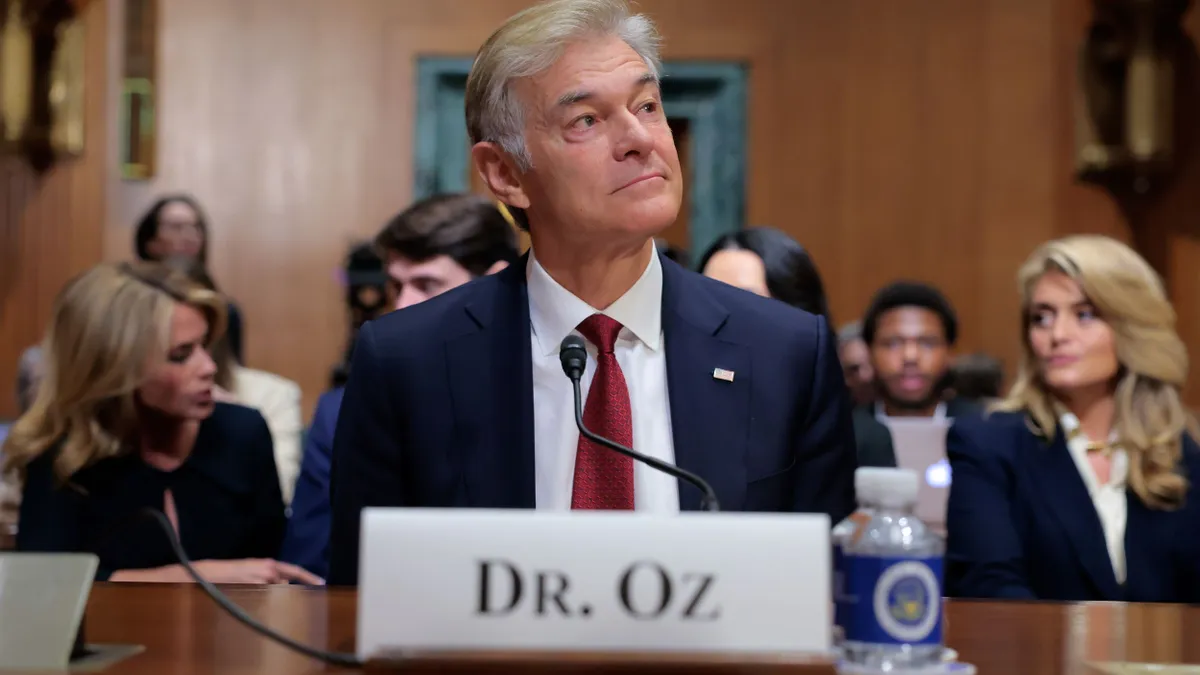
“By right-sizing payments and rooting out waste, today’s reforms will drive affordability in Medicare for current beneficiaries while ensuring it will still be there to serve their children and grandchildren,” CMS Administrator Dr. Mehmet Oz said in a statement.
Still, hospitals railed against the regulation, with the American Hospital Association arguing the payment bump isn’t adequate to address the financial challenges facing hospitals.
In addition, the “continued assault on the 340B program” is deeply disturbing and will put further stress on hospitals, said Ashley Thompson, senior vice president of public policy analysis and development at the AHA in a Wednesday statement.
Regulators slash 340b payments
Under the final rule, Medicare will reimburse 340B participants at the drug’s average sales price, minus 28%.
The change will slash billions of dollars in 340B payments, although it’s slightly less severe than the rate Medicare proposed paying for 340B drugs earlier this year. Regulators said that the policy would reduce drug spending by about $5.5 billion next year alone.
It’s the latest volley against the 340B program by the Trump administration. Although the decades-old drug discount program was created to help hospitals that serve a high proportion of vulnerable patients afford expensive outpatient drugs, some lawmakers, drugmakers and researchers have argued that spending in the program has ballooned out of control.
The Trump administration has taken up that criticism, proposing to institute rebates instead of upfront discounts in the program and moving to slash payment rates.
Medicare typically pays for outpatient drugs at a rate equal to the drug’s average sales price plus 6%. But when hospitals acquire drugs through 340B, they can receive Medicare reimbursements that exceeds the cost to buy the drugs.
Some discounts are by design in 340B, but the CMS has said the discrepancy in Medicare is too high.
Because the cuts are required to be budget neutral, regulators will increase outpatient payments for non-drug services by the same amount. That’s expected to provide a tailwind for for-profit hospitals, because they do not participate in 340B.
Medicare broadens site-neutral services
Medicare will also pay the same amount for more medical services regardless of whether they’re performed in hospital-owned outpatient departments or freestanding physician offices.
Imaging services without contrast — including CT scans, MRIs, x-rays and bone density scans — will be paid at the same rate across both facility types starting next year.
Under current policy, hospital outpatient departments receive higher reimbursement for providing the same services compared to physician offices and ambulatory surgery centers. Critics say those policies incentivize hospital consolidation and drive up costs in Medicare.
The equalized payments, dubbed “site-neutral,” have been a priority for the Trump administration. Wednesday’s policy builds upon past efforts from the CMS to expand site-neutral payments, including policy released last year that equalized payments for drug administration services.
The CMS estimates the policy would save taxpayers and beneficiaries over $9 billion over a decade.
Inpatient-only list diminishes
For the second year in a row, Medicare is proposing to shorten the list of procedures that are only allowed to be performed in inpatient settings.
The CMS will remove 637 services from the inpatient-only list next year, including endocrine, digestive, auditory and respiratory procedures.
Regulators are proposing to phase out the inpatient-only list over three years, arguing that medical advances have enabled these procedures to be performed in more convenient and cheaper outpatient settings.