

Dive Brief:
- Oracle CEO Mike Sicilia defended the $17 billion increase in the contract cap for the Department of Veterans Affairs’ electronic health record modernization project at a House committee hearing on Thursday.
- Oracle’s request to earmark additional funds puts the EHR modernization contract with Oracle at a total upper limit of $27 billion, sparking scrutiny from lawmakers. Sicilia defended the hike, saying the project’s scope has grown substantially in recent years as the EHR system needs to support more users than originally anticipated.
- Lawmakers have not been satisfied with Oracle’s reasoning so far. “Oracle purchased Cerner for $28.3 billion dollars, and it now expects the government to pay almost that much for the privilege of using the software,” Rep. Mark Takano, D-Calif., said during the hearing. “At this rate, the government would have been better off just buying Cerner itself.”
Dive Insight:
It’s the first time Oracle leaders have publicly addressed questions from lawmakers since the VA tacked on billions to the upper limit of the contract’s price in August, raising alarms among lawmakers and prompting them to dish out subpoenas to Oracle’s CEO, Sicilia, and Executive Chairman Larry Ellison.
The VA and Oracle have long faced intense scrutiny over the EHR modernization program, which was designed to promote interoperability and standardize records at VA medical centers. However, it has been plagued by delays, mounting costs and technical challenges.
The original contract was inked with Cerner in 2018. Oracle inherited the project when it acquired Cerner in 2022. By 2023, just five VA medical centers out of 170 had deployed the new EHR. Negative feedback, outages and other problems forced the VA to pause the project that year to renegotiate its contract with Oracle and address performance issues.
The VA and Oracle restarted deployments in April, rolling out the EHR at 13 VA medical centers. Another 26 medical centers are on the schedule for next year, and the VA plans to complete 170 site deployments by 2031.
Lawmakers acknowledged that this year’s deployments have gone smoother than those that came before. But they still have concerns about the price tag and are pressing Sicilia for answers.
In response, Sicilia stressed the scope of the project has changed.
“I thought we needed to build a three-story office building. Turns out, we need to build a nine-story office building, and that's the situation that we find ourselves in,” Sicilia said during the hearing.
According to Sicilia, the system was intended to support 85,000 users in 2022 when Oracle took over the contract, but now it needs to support 195,000 users, a 129% increase. That requires Oracle to build new interfaces that support the higher-than-anticipated number of users and health records in the system.
“And again, $17 billion is not a commitment to spend at Oracle. It is an estimate to finish the deployments that are contemplated,” Sicilia said.
The contract is designed with that $27 billion ceiling in mind, but money is only spent when an order for a task is issued for specific work. That order is fulfilled at a fixed price, and Sicilia said Oracle would absorb any cost overruns.
“We're here to deliver for the veterans,” he said. “If there are better ideas, if people have other cost approaches, I'm absolutely willing to listen to that.”
Lawmakers appeared unswayed by Sicilia's price justification.
“I find myself no more confident in this program, and I'm certainly not seeing the justification for the $17 billion increase in its cost,” Takano said. “It is clear to me that no one wants to take responsibility for this program's failures and skyrocketing costs. But both VA and Oracle want a blank check from taxpayers to continue down this road while veterans are actively being harmed.”
Some doctors groups still harbor concerns about the functionality of the new EHR and its impact on patient safety, and lawmakers noted that Oracle’s contract is ultimately meant to improve the quality of care for veterans.
“Congress needs transparency. Veterans deserve accountability. As I've always said, at the end of the day, this is still about the veteran sitting in the exam room,” Rep. Mike Bost, R-Ill., chairman of the House Committee on Veterans Affairs, said during the hearing.
“This is also about making sure that the contract with Oracle Health delivers for the veteran, not the shareholders. Our focus must remain on providing veterans with the best healthcare in the world.”
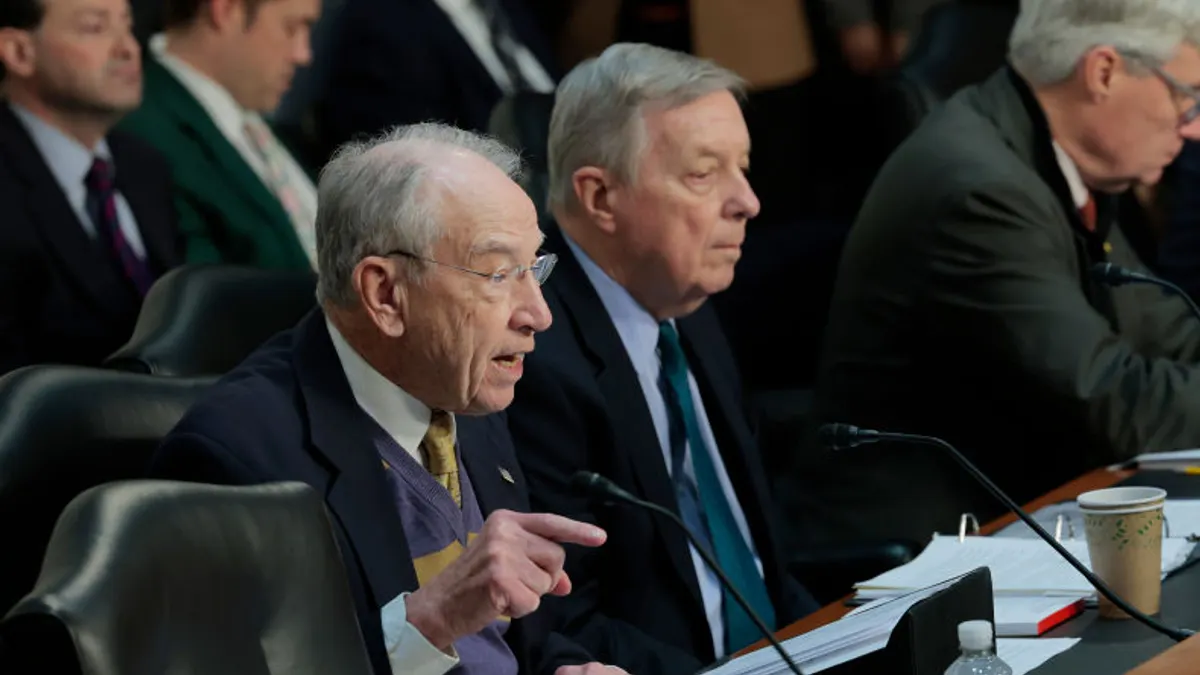
The Senate is also looking into this price hike, questioning Sicilia at a subcommittee hearing on Wednesday. At that hearing, Dr. Neil Evans, program executive director of the VA's Electronic Health Record Modernization Integration Office, doubled down on the increased costs.
In his written testimony, Evans said the VA learned “critical lessons” from early deployments of the EHR and that the expanded scope, staff and training required for future deployments necessitated the cost ceiling increase.