Dive Brief:
- The House Veterans Affairs Committee voted unanimously this week to subpoena two leaders at Oracle as costs mount for the multiyear electronic health record modernization at the Department of Veterans Affairs.
- Lawmakers on Wednesday said they will subpoena Executive Chairman Larry Ellison and CEO Mike Sicilia. The cost ceiling for the EHR modernization project, which Oracle leads, nearly tripled to $27 billion despite just 17 medical centers out of 170 deploying the new medical record system since 2020.
- Lawmakers were peeved that Oracle did not send a representative to speak at the hearing after an executive, Seema Verma, declined to attend citing scheduling conflicts. “I'm just despondent at the ridiculousness of now a request for more and more money for them to do a job they should have done a decade ago, and I don't know where the accountability goes,” Rep. Greg Murphy, R-N.C., said during the hearing.
Dive Insight:
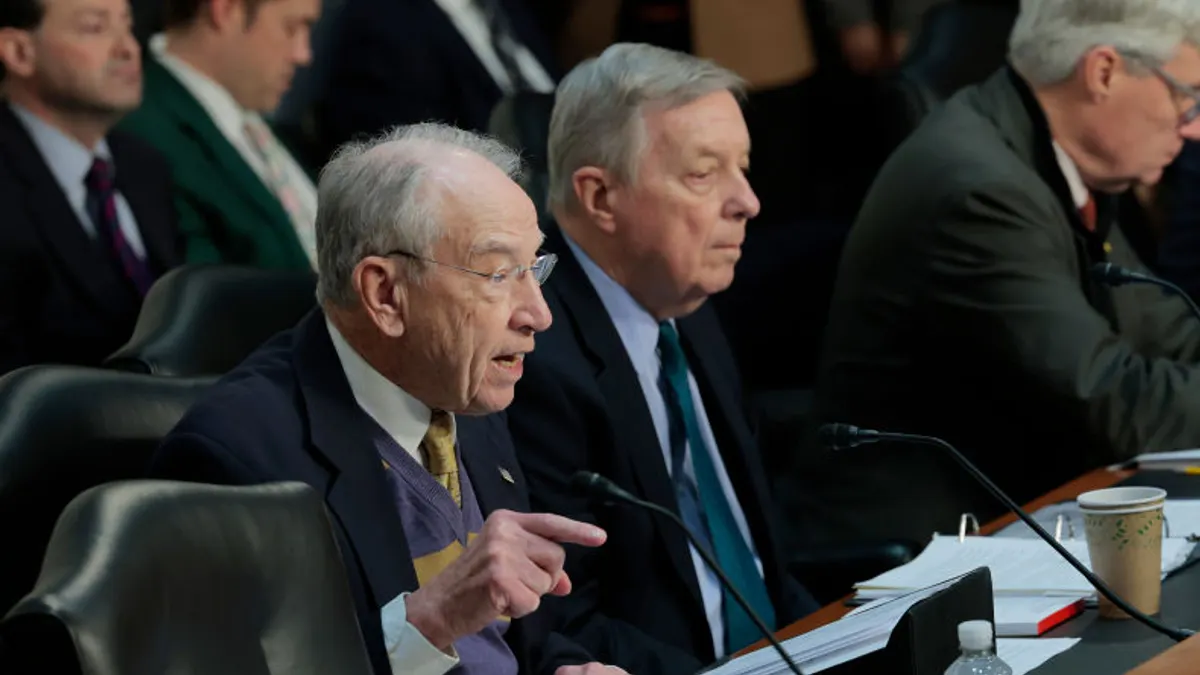
The motion to subpoena came during a full committee hearing in which lawmakers discussed the VA’s recent extension of its deal with Oracle — it added $17 billion to its contract ceiling and three one-year expansion options in August, nearly tripling its existing ceiling of $10 billion under its current deal.
Oracle’s absence at the hearing was a major talking point, with several Congress members raising concerns about what they saw as a lack of accountability on Oracle’s part.
“When the vendor responsible for a taxpayer-funded contract going from $10 billion to roughly $27 billion will not sit at this table and answer our questions, all of us are being prevented from doing our oversight duties,” Rep. Maxine Dexter, D-Ore., said.
The VA and Oracle have faced intense scrutiny over its EHR modernization program, which has been plagued by delays, mounting costs and technical challenges since the contract was inked with Cerner in 2018. Oracle acquired Cerner in 2022.
By 2020, just six VA medical centers out of 170 had debuted the Oracle EHR. Negative feedback, outages and other problems forced the VA to pause the project in 2023 to renegotiate its contract with Oracle and address performance issues.
The VA resumed and accelerated its efforts in April and has deployed the new system at 11 hospitals so far this year, getting closer to the agency’s goal of implementing the EHR at 13 sites this year and all VA sites by 2031.
During his testimony, Paul Lawrence, the VA’s deputy secretary, told lawmakers that the program is “back on track” and that the system is now “stable, strong and reliable.”
But lawmakers are skeptical about whether the additional $17 billion will really get the job done, considering the initial $10 billion is set to run out in the first quarter of fiscal year 2027 and more than 100 deployments remain.
“We have deployed the schedule exactly as we said we would. We have had serious conversations with our contractors that this is the money available to do the things we need to do,” Lawrence said. “The secretary has been very clear about the importance of this mission. I'm very confident that is the money we need.”
The Government Accountability Office, a federal watchdog, also provided testimony to Congress, saying that it still does not have an estimate from the VA on the full cost of the EHR rollout. GAO says the VA has fully implemented only four of the 18 recommendations it has issued since 2020.
Oracle did not respond to a request for comment as of press time.