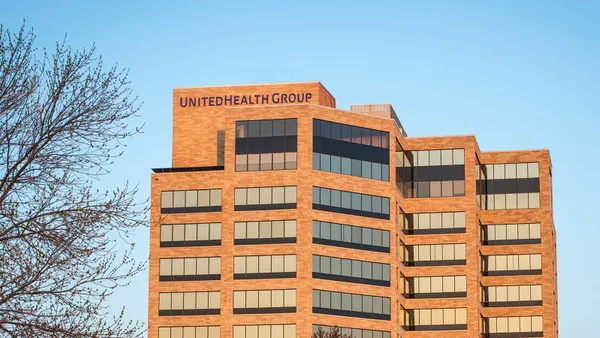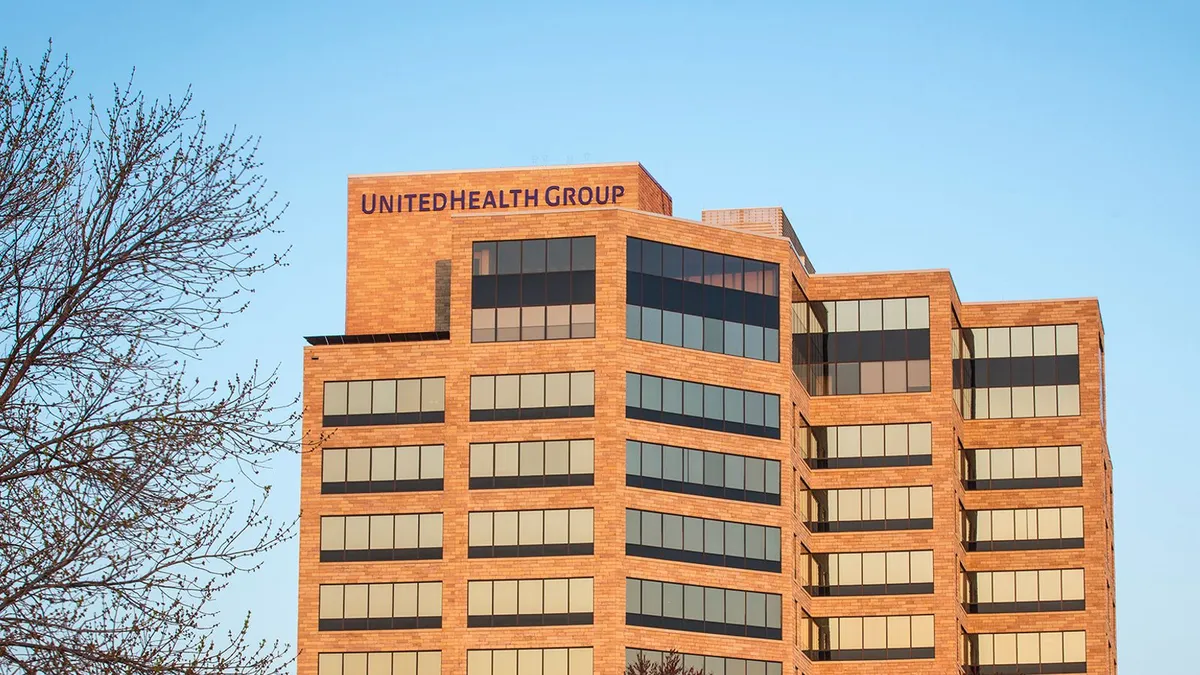
UnitedHealth boosted its 2026 profit outlook on Tuesday after getting a better handle on medical costs in the first quarter.
It’s a positive development for the Minnesota-based healthcare behemoth, which is attempting to right the ship after higher medical spending placed UnitedHealth on shaky financial ground and sent shares in the company — usually the darling of Wall Street — plummeting last year.
On Tuesday morning, UnitedHealth raised its adjusted earnings per share guidance from greater than $17.75 to greater than $18.25. The $0.50 raise was well above the roughly $0.10 to $0.20 bump that investors had expected, and came on the heels of better-than-expected first-quarter profits, too.
The results looked “nicely better than optimistic expectations,” Leerink analyst Whit Mayo commented in a research note.
Wall Street quickly rewarded the company, sending UnitedHealth’s stock up almost 10% Tuesday morning. Shares in other publicly traded insurance companies also rose, given UnitedHealth — generally the first to report results each earnings season — is viewed as a bellwether for overall industry performance in a given quarter.
Everything’s coming up roses for UnitedHealth
UnitedHealth brought in $111.7 billion in revenue in the quarter, up about 2% year over year, largely thanks to its UnitedHealthcare insurance division, which hiked premiums for its coverage in 2026 to better cover medical spending.
Though healthcare utilization remains elevated, it doesn’t appear to be accelerating compared to last year, UnitedHealth executives said on a Tuesday morning call with investors.
And costs are actually coming in slightly lower than expected in government programs — including in Medicare Advantage, the once-lucrative privatized Medicare program that’s proved the biggest wrinkle in UnitedHealthcare’s efforts to recover margins.
“Underlying utilization trends remain broadly consistent with our expectations, and we are seeing early signs of improved alignment between pricing and medical cost trends,” UnitedHealth CFO Wayne DeVeydt said on the call.
Overall, UnitedHealth’s adjusted earnings per share reached $7.23 in the quarter, well above Wall Street’s forecasts.
Still, the company’s net income was just shy of $6.3 billion, largely unchanged year over year. UnitedHealth also remains well below its peak profitability levels.
But the results suggest UnitedHealth’s turnaround plan is making progress, according to analysts.
UnitedHealth executives agreed.
“Overall this has been a strong start to the year,” DeVeydt said.
UnitedHealth reported a medical loss ratio — a closely watched marker of spending on patient care — of 83.9% across its insurance and value-based businesses. The MLR is below both the 85.6% that analysis had expected, and the 84.8% UnitedHealth lodged in the first quarter last year.
Insurers try to keep their MLRs as low as possible while remaining within regulatory bounds.
Along with better-controlled medical spending for UnitedHealthcare, the MLR was also helped by efforts to bolster Optum Health, UnitedHealth’s care delivery arm under its Optum division.
Along with providing medical care to consumers, Optum Health — the largest physician enterprise in the U.S. with roughly 90,000 owned or affiliated doctors — also enters into value-based contracts with insurers to care for their members in MA.
The arrangements cover millions of Americans. But their profitability has fallen over the last year, as government efforts to curb overpayments in MA coincided with seniors utilizing more medical care — and that care becoming more expensive.
To try and recoup profits, Optum Health cut certain providers from its network and slashed its risk-based membership, including by dropping unprofitable contracts. Those strategies led to a sizable outperformance in the first quarter. Optum Health posted an operating profit of $1.3 billion — more than double what analysts had expected.
Optum Health’s results contributed to the overall Optum division beating earnings expectations in the quarter, despite underperformance in Optum’s other two main businesses, pharmacy benefit manager Optum Rx and data and analytics firm Optum Insight.
Reason for optimism in Medicare Advantage
UnitedHealthcare, which has also been dinged by policy and spending shifts in MA, also made progress on its turnaround in the first quarter.
The insurer’s revenues rose 2% year over year to $86.3 billion, while operating income increased 8% to $5.7 billion. The improvement on both the top and bottom lines can largely be chalked up to premium hikes, especially since UnitedHealthcare slashed its membership heading into 2026 to boost margins.
Cutting membership should ostensibly lower premiums and subsequent revenue, which wasn’t the case here.
UnitedHealthcare — the largest private insurer in the U.S. — ended the first quarter with 49.1 million members, compared to 49.8 million members at the end of 2025.
Membership losses were especially drastic in MA, a result of UnitedHealthcare raising premiums, exiting underperforming markets and making its plans less generous.
The company has lost almost 1 million members in the privatized Medicare program since the end of 2025, and wants to cut back even further. UnitedHealthcare expects to shed about 1.3 million MA members in total this year, which could lead the company to lose its status as the largest MA insurer.
However, the cuts and other efforts to better manage spending have put UnitedHealthcare on a good track to reach its long-term margin target of 2% to 4%, according to Bobby Hunter, who leads the company’s government plans.
The company has also had some help from regulators in Washington in reaching its 2027 margin targets.
The Trump administration has proved surprisingly charitable to the MA industry this spring, finalizing two regulations set to send billions of dollars more to insurers despite widespread concerns about gaming and overpayments in the program.
One regulation locked in a 2.48% average rate hike for MA insurers in 2027, well above the 0.09% originally proposed, after fierce lobbying from the industry.
On the Tuesday call, UnitedHealth executives said they appreciated the rate hike — and how the CMS has proved open to industry feedback.
Still, the final rates remain insufficient in light of dramatically elevated spending, they said.
MA isn’t the only government program keeping insurance executives up at night.
UnitedHealthcare’s Medicaid business will probably see negative margins this year, as states’ payment rates continue to lag spending, according to UnitedHealthcare CEO Tim Noel said. The insurer’s Medicaid membership also dropped by about 200,000 members in the first quarter, the result of states curtailing eligibility after Republicans in Congress passed steep cuts to Medicaid last summer.
UnitedHealthcare’s Affordable Care Act membership is also contracting, which was expected after the payer secured steep premium increases for 2026 — a hedge against healthy individuals exiting the exchanges this year after Congress allowed generous financial assistance to expire.
In light of skyrocketing premiums for ACA plans, UnitedHealth has pledged to send all of the profits it makes in the ACA exchanges this year back to its consumers. The pledge comes as the conglomerate works to rehabilitate its image — though, it’s worth pointing out that the ACA business has very low earnings, so the commitment is unlikely to meaningfully affect UnitedHealthcare’s profits.
UnitedHealth has also exited its international businesses, invested significantly in artificial intelligence, replaced nearly half of its top 100 leadership roles and revamped its board of directors as it faces waning consumer trust and increased regulatory and legislative scrutiny of its business practices.