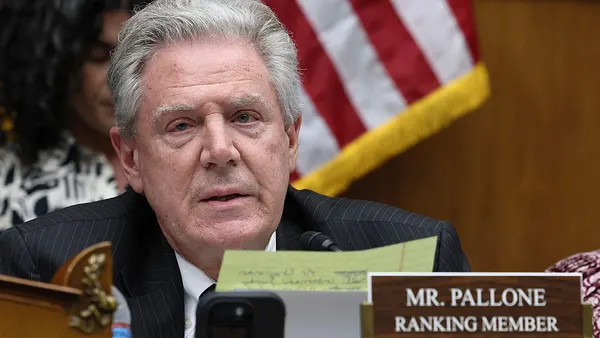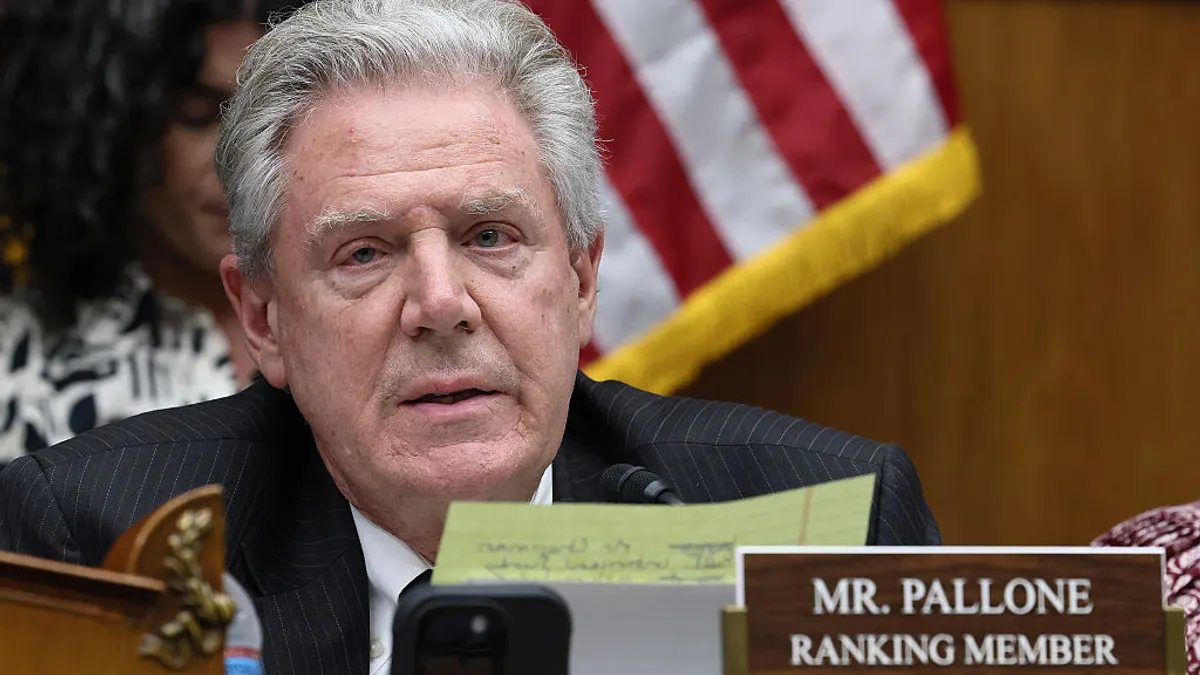
Rep. Frank Pallone, D-N.J., introduced a bill last week that would eliminate the arbitration process set up by the No Surprises Act to resolve out-of-network bills between providers and payers.
It’s the latest sign of growing interest on the Hill to reform independent dispute resolution, or IDR, as concerns mount that the process might be inflating healthcare spending by billions of dollars.
The bill, introduced Thursday and dubbed the “Lower Premiums, Faster Payments Act,” would end arbitration entirely between payers and providers after 2027. After that, plans would pay providers flat out-of-network rates based on comparable in-network payments.
Pallone, a ranking member of the House’s Energy and Commerce Committee, said in a statement that the bill would reform an arbitration process that is “clearly not working.”
The No Surprises Act went into effect in 2022 in an effort to stop patients from receiving unexpected medical bills, including when they unknowingly receive out-of-network care at in-network facilities.
By most measures, the law has successfully protected patients from surprise medical bills. But the arbitration process set up to determine how much providers are paid for those services has been contentious, marred by a series of lawsuits and increasingly scrutinized by lawmakers, regulators and researchers for driving up healthcare spending.
Researchers from Georgetown University estimated the law’s dispute resolution process has added over $22 billion in extra healthcare costs since it went into effect, driven mainly by providers filing — and winning — an outsized share of disputes.
When providers win, they regularly reap payments orders of magnitude higher than what an insurer would have paid in-network. For some services like breast reductions, providers were paid more than 80 times what Medicare would have reimbursed them last year, the Georgetown researchers found.
Evidence of inflated awards is worrying, given costs could be pushing premiums up.
Lawmakers, including Pallone, have also raised concerns that private equity firms are exploiting dispute resolution. Over three-fourths of resolved disputes in 2025 came from three private-equity backed organizations, according to the Georgetown researchers.
“A few bad actors — largely backed by private equity — are gaming the system, creating backlogs, delaying payments, and driving up premiums,” Pallone said in a statement.
The new bill would toss out arbitration entirely beginning in 2028. Instead, it would mandate plans pay providers an out-of-network payment rate based on an insurer’s median contracted rate as of Jan. 31, 2019. It would also adjust the payment amount annually to the Consumer Price Index, so reimbursement rises along with inflation.
In an attempt to quash legal challenges over specific claims, the bill would also prevent “judicial review of the methodology” undermining the new payment rates. Providers have filed multiple lawsuits seeking to reshape how the payment rates, which are used in arbitration, are determined.
Provider groups have already pushed back on the bill. On Thursday, the American Society of Anesthesiologists, American College of Emergency Physicians and American College of Radiology released a joint statement arguing that Congress should instead be cracking down on insurers’ practices, like low arbitration offers.
“Giving health insurance companies even greater control over physician payments is not the solution to concerns about the IDR process — particularly when health insurers’ own practices are contributing to the problems Congress should be addressing,” ASA President Dr. Patrick Giam said.
Pallone has been an active proponent of reforming the No Surprises Act. One of the authors of the original law, he’s investigated arbiters appointed to resolve disputes, sending letters to six arbiters last month requesting documents on how they decide claims.