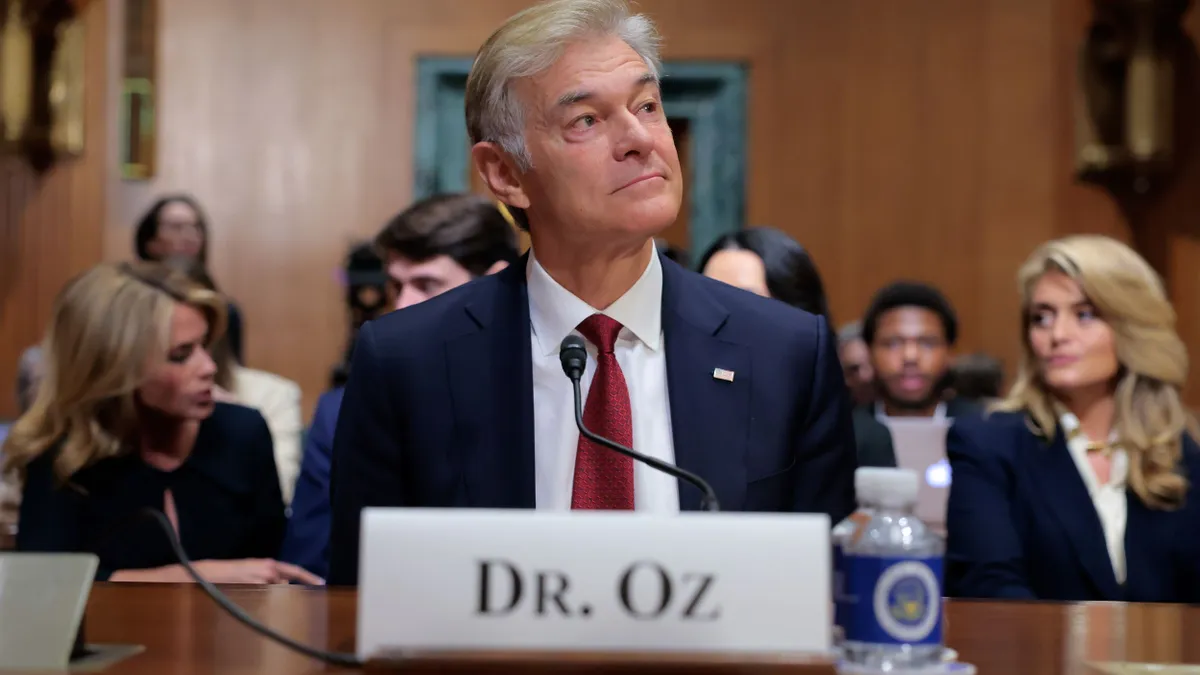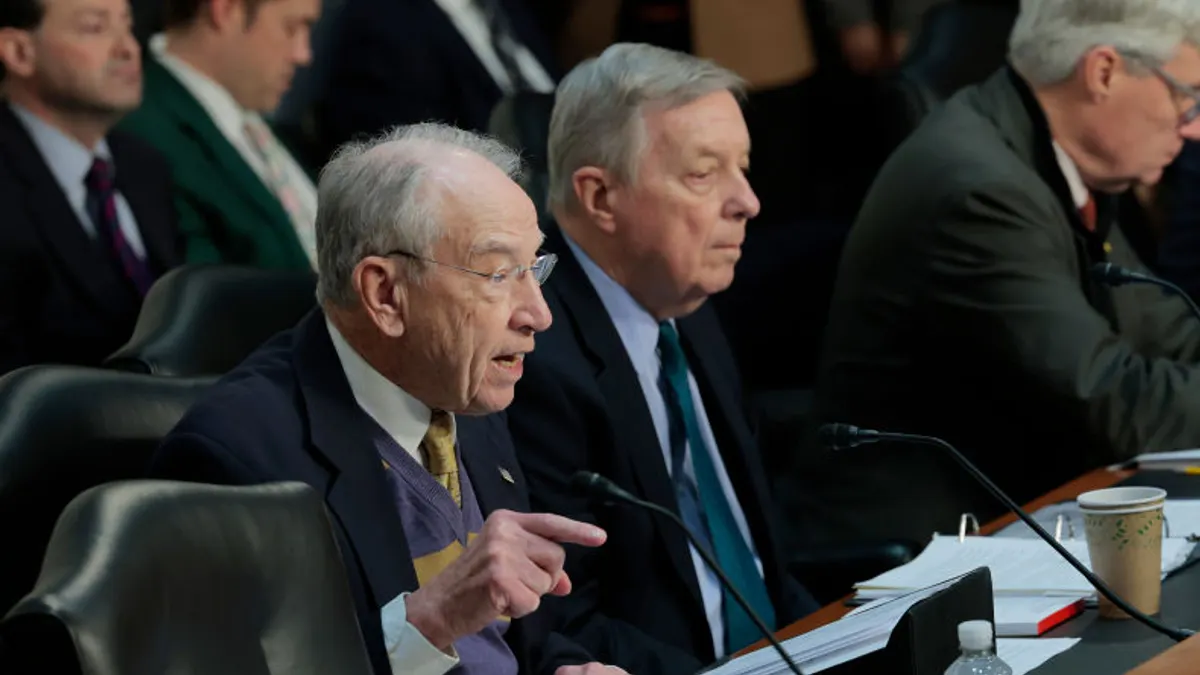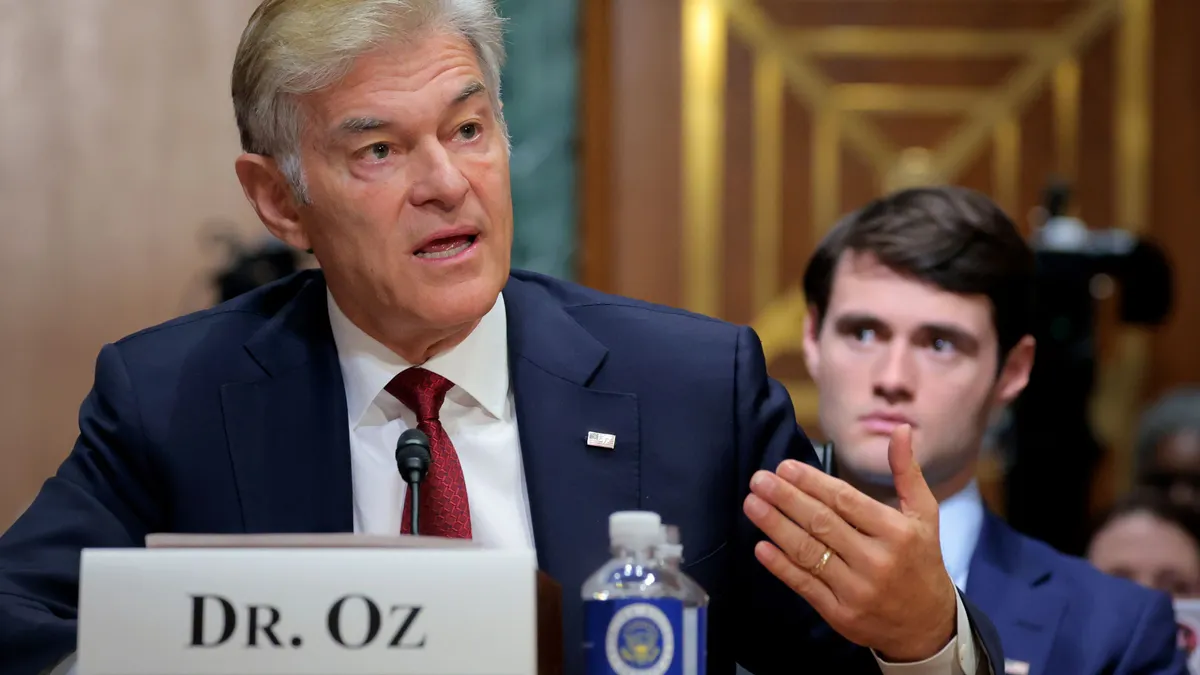
Democrats are losing patience with what they see as Republicans’ hypocritical fixation on combating fraud in Medicaid.
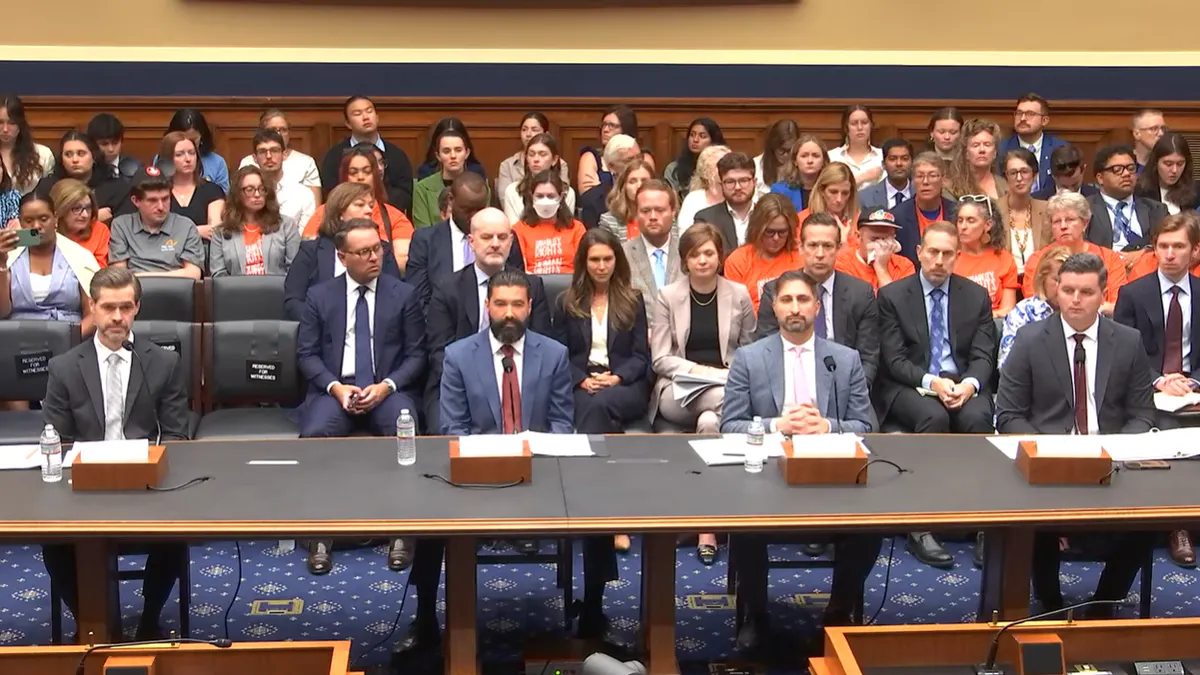
A House Energy and Commerce oversight subcommittee hearing Thursday laid bare the divisions between the two parties over the issue, after the CMS’ controversial decision to halt Medicaid funding to two blue states over allegations of widespread fraud in their Medicaid programs.
Republican lawmakers defended the Trump administration’s aggressive focus on fraud as long overdue and necessary to protect taxpayer dollars. However, Democrats slammed the crusade as a smokescreen for President Donald Trump’s war against blue states, and an attempt to divert attention from GOP cuts to healthcare programs.
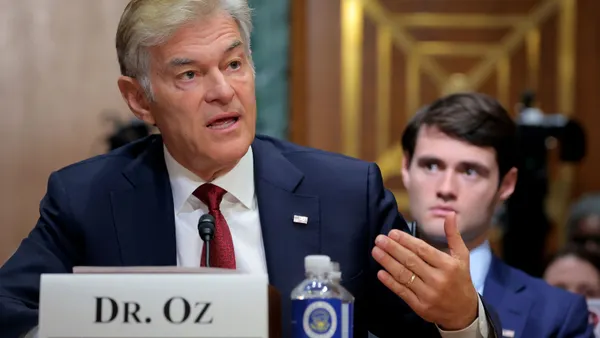
“It’s becoming increasingly clear that under [CMS Administrator Dr. Mehmet] Oz, CMS does not intend to work with states in good faith, particularly states that do not vote or did not vote for President Trump,” Energy and Commerce Ranking Member Frank Pallone, D-N.J., said during the hearing.
Measuring fraud is difficult, given it can only be identified after the fact. Last year, state Medicaid fraud units reported some $2 billion in recoveries. However, Republicans, including the president, have been loudly beating the drum about staggering fraud in the safety-net program, bringing the issue into the national spotlight and sparking a slew of enforcement actions from regulators.
In March, Trump issued an executive order establishing a fraud-fighting task force, which has worked closely with the Department of Justice and top health officials in the CMS to root out fraud, waste and abuse.
This spring, the CMS asked all 50 states to recheck the credentials of Medicaid providers viewed to be at risk of fraud, and warned state attorneys general that Medicaid fraud control units need to comply fully with federal standards or face decertification — before decertifying Hawaii’s earlier this month.
The CMS has also threatened billions of dollars in federal Medicaid payments to California and Minnesota, arguing that the states aren’t doing enough to curb Medicaid fraud.
Though the Trump administration’s focus on fraud has long raised eyebrows for Democrats — especially given the president’s blizzard of pardons for people convicted of fraud — withholding the states’ funding went over the line for many, given the CMS normally works collaboratively with states to administer Medicaid and address any vulnerabilities in their programs.
The aggressiveness of the CMS under Trump is a departure from the status quo, the Medicaid directors of California, Minnesota and New York testified on Thursday.
In May, the CMS deferred $1.3 billion in federal Medicaid funds to California, alleging the state wasn’t taking fraud seriously. It’s the largest deferral in the agency’s history, according to Oz.
The vast majority of the deferral is payments for in-home services for seniors and disabled beneficiaries, which have grown much more quickly in California than in other states — evidence of snowballing fraud, the CMS argued.
But the growth was the result of an intentional strategy from California to expand home-based services, which are cheaper and more convenient than care provided in institutions, according to Tyler Sadwith, California’s Medicaid director.
“We began addressing CMS’ questions before the deferral was ever issued. They reviewed intensively — and we value that partnership,” Sadwith said. “We explained what drove the growth. And CMS decided to defer the payments, and they have not provided any instances of fraud, waste or abuse as part of their review.”
The CMS didn’t give California any notice before deferring its Medicaid funds. And the state has gotten little information about what it needs to do to get its funding back, Sadwith said.
“Is this a departure from how CMS and California have collaborated in the past?” asked Rep. Diana DeGette, D-Colo.
“Yes,” Sadwith responded.
The CMS has also paused $350 million in Medicaid payments to Minnesota, and threatened to withhold $2 billion annually in future funding in response to potential fraud.
Minnesota has attempted to comply with CMS asks to get its funding back on track. But shifting goalposts from federal regulators have made that difficult, testified John Connolly, Minnesota’s Medicaid director.
The CMS in March accepted Minnesota’s corrective action plan, which eliminates the threat of the withhold if federal regulators approve of how Minnesota implements it.
But the state has no idea when the $350 million in deferred funding might be reapproved or what it has to do to make that happen, Connolly said.
The loss of the funding “threatens the state’s ability to finance the services and benefits that are part of the program,” Connolly said. “We have a structural budget deficit in Minnesota. We’ve had that for a couple of years now, and so we are already struggling to maintain the services, the payment levels for providers across the state, the eligibility levels that we have in the program. This adds another layer of pressure and risk.”
To date, the CMS has only publicly announced funding deferrals in Minnesota and California. But the agency has sent letters requesting information about Medicaid program integrity to a handful of others, including Maine and New York.
The letter to New York accused the state of running a Medicaid program riddled with fraud. But that accusation was based in part on faulty information: Oz claimed that New York provided some 5 million people with personal care services last year, representing almost three-fourths of the state’s entire Medicaid population.
But the real number of New Yorkers using these services is 450,000, just about 5% of enrollees, according to Amir Bassiri, New York’s Medicaid director.
The CMS later acknowledged its mistake — but not before receiving a barrage of criticism from Democrats, New York officials and health policy advocates arguing that the imbroglio exposed the “attack first, ask questions later” political theater of the Trump administration’s war on fraud.
“It’s clear that President Trump and Dr. Oz decided to go after New York and then try to manufacture the basis for doing it,” Rep. Yvette Clarke, D-N.Y., the ranking member of the Oversight and Investigations subcommittee, said.
Top health officials have denied they are targeting blue states. In March, Kim Brandt, the deputy administrator and chief operating officer of the CMS, testified before the subcommittee that the agency was following the data in going after fraud, noting that the CMS had also sent a letter to Florida probing the state’s Medicaid policies.
GOP lawmakers on Thursday also grilled Scott Partika, the Medicaid director of reliably red Ohio, about fraud in the state, especially around home health.
“It’s not the administration, as was represented here, saying that we’re just going to hold blue states, we’re going to punish blue states because they’re blue states. What it is, is this administration making the decision that we have rampant fraud,” said Energy and Commerce Chair Rep. Brett Guthrie, R-Ky.
But only blue states have had their Medicaid funding threatened or withheld, DeGette pointed out.
“CMS, in my view, is going out of its way to blindside blue states while pampering red ones,” DeGette said, adding that the letter to Florida is a “fig leaf” to pretend the CMS’ investigations aren’t partisan.
It’s illustrative of “how hollow the administration’s focus on fraud really is,” she said.
As the debate rages on in Washington over the Trump administration’s Medicaid program integrity blitz, states are continuing to take extensive actions to improve fraud prevention, detection and enforcement, the Medicaid directors testified.
Connolly said that Minnesota has conducted more than 3,000 investigations and recovered more than $50 million from cases of fraud since 2020. More recently, the state has increased its oversight staff, expanded prepayment reviews to block payments to fraudulent providers before they go out, and deemed more Medicaid benefits as high-risk, subjecting them to heightened levels of scrutiny.
California has suspended approximately 5,000 providers over the past five years for fraud, while recovering more than $1 billion in fraudulent payments over the past three years, Sadwith said. The state is also implementing new safeguards in risky areas like hospice care, applied behavioral analysis and non-emergency medical transportation, he added.
As for New York, the state performed more than 2,500 audits and investigations in 2024, referred more than 450 matters for clinical prosecution and generated $4.5 billion in cost savings and recoveries, Bassiri said.
New York has also shrunk a program that allowed Medicaid members to hire their own caregivers after determining it was vulnerable to fraudulent billing, and removed almost 800 providers from its non-emergency medical transportation program over concerns about fake claims.
Over the hearing, the blue state Medicaid directors said they welcome dialogue with Washington on how to improve and stressed that the CMS is an integral partner in preventing fraud in the safety-net program.
But cutting funding without warning — and without a clear path to get it back — is drastic, and threatens services for the 75 million low-income Americans in Medicaid, they said.
It’s possible for the CMS to be laser-focused on combating fraud without making Medicaid beneficiaries collateral damage, Connolly argued.
“Federal deferrals of Medicaid payments to Minnesota have put our residents at severe risk. This is not an accounting dispute on a spreadsheet,” Connolly said. “These decisions affect Minnesotans with significant needs, people for whom a missed appointment, a gap in treatment or an interrupted support service can quickly become a crisis. This is not an either-or decision. We can protect program integrity while still operating these programs effectively.”