Dive Brief:
- Minnesota nonprofit health systems HealthPartners and Essentia Health have announced plans to merge, the third in a spree of large hospital combinations proposed in the state this year.
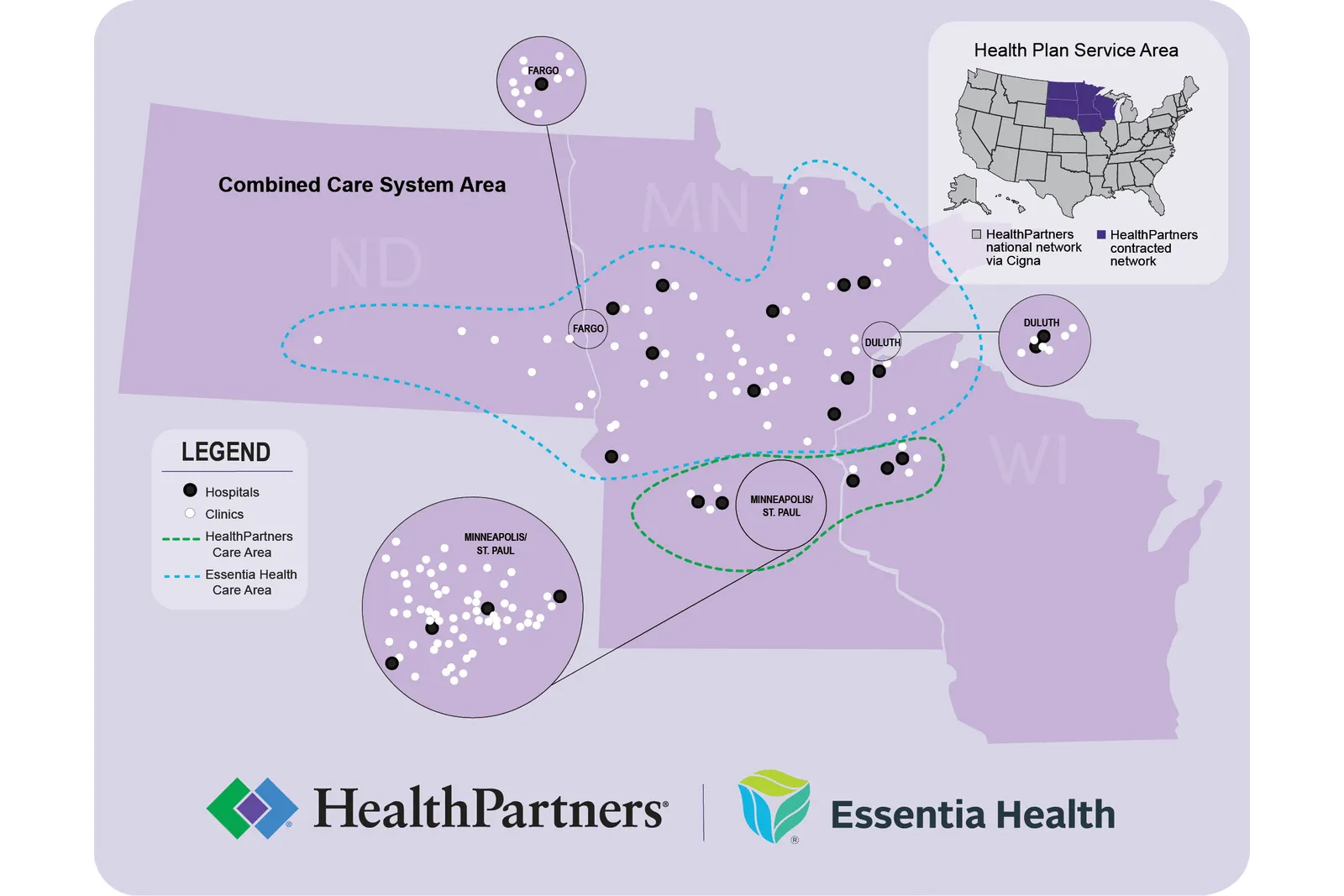
- If approved by regulators, the combined system will include 22 hospitals and 45,000 employees serving patients across Minnesota and the upper Midwest, according to a Tuesday press release. The new system will take HealthPartners’ name and its CEO will lead the new company.
- HealthPartners and Essentia expect the deal to close on Jan. 1, barring regulatory approval. But some unions are already pushing back on the merger, concerned about the rapid pace of hospital acquisitions in the state.
Dive Insight:
A combination of HealthPartners and Essentia would create one of the largest health systems in Minnesota, with hospitals in Wisconsin and North Dakota.
Essentia operates 14 hospitals and has a presence across the three states, with the greatest concentration of services in north central and northeastern Minnesota, and northwestern Wisconsin.
HealthPartners, by contrast, operates eight hospitals based in the Twin Cities market in Minnesota and western Wisconsin.
The deal would combine the two systems’ hospital portfolios with HealthPartners’ integrated health plan, which offers commercial, Medicaid, Medicare Advantage, and Affordable Care Act coverage. The plan has proved a financial boon to HealthPartners this year, offsetting lower patient volumes and operating performance in its hospital division.
That scale might allow the new system to better compete with some its newly merged, and much larger, peers including Sutter Health and Sanford. Sutter announced it was merging with Midwestern system Allina Health to create a $26 billion nonprofit health system in March and Sanford, which closed its acquisition of regional health system North Memorial this month.
The rapid pace of the acquisitions, all announced in the past six months, has prompted multiple public hearings and forums from state Attorney General Keith Ellison’s office, which is responsible for reviewing major hospital deals. Although Ellison’s office can’t deny or approve mergers, it can sue to block deals if it determines they violate antitrust law or are contrary to public interest.
Regulators cleared the Sanford deal after agreeing to an oversight agreement with the two systems to preserve core services at North Memorial’s hospitals. But more pushback has followed from Sutter’s proposed deal, including from stakeholders in California who say Sutter has a history of jacking up prices in its home state.
Research has shown that hospital consolidation can lead to higher healthcare prices without a similar increase in quality. The issue has piqued the attention of Congress, which held multiple hearings on healthcare affordability earlier this year, though no solid legislative agenda on the topic has emerged since.
Ellison’s office said in a statement Monday that it would hold community meetings on the merger between Essentia and HealthPartners.
“As we have done several times now, we will conduct a thorough review of this potential acquisition to ensure it complies with the law and is in the public interest,” Ellison said.
The Minnesota Nurses Association, a union, said it would advocate for a “thorough and transparent” review of the transaction, and called on the two systems to provide “full financial transparency.” Still, the union said it had concerns about the deal, especially about the effects that increased concentration would mean for health costs and access.
“Minnesota has now seen three major back-to-back healthcare consolidation announcements, and nurses are deeply concerned about what that could mean for our patients and communities,” MNA President Chris Rubesch said in a statement.
Terms of the deal weren’t disclosed. Neither HealthPartners nor Essentia responded to a request for comment.