CVS’ insurance division Aetna has a finally gotten a handle on medical spending after a turbulent few years, according to the healthcare giant’s chief executive.
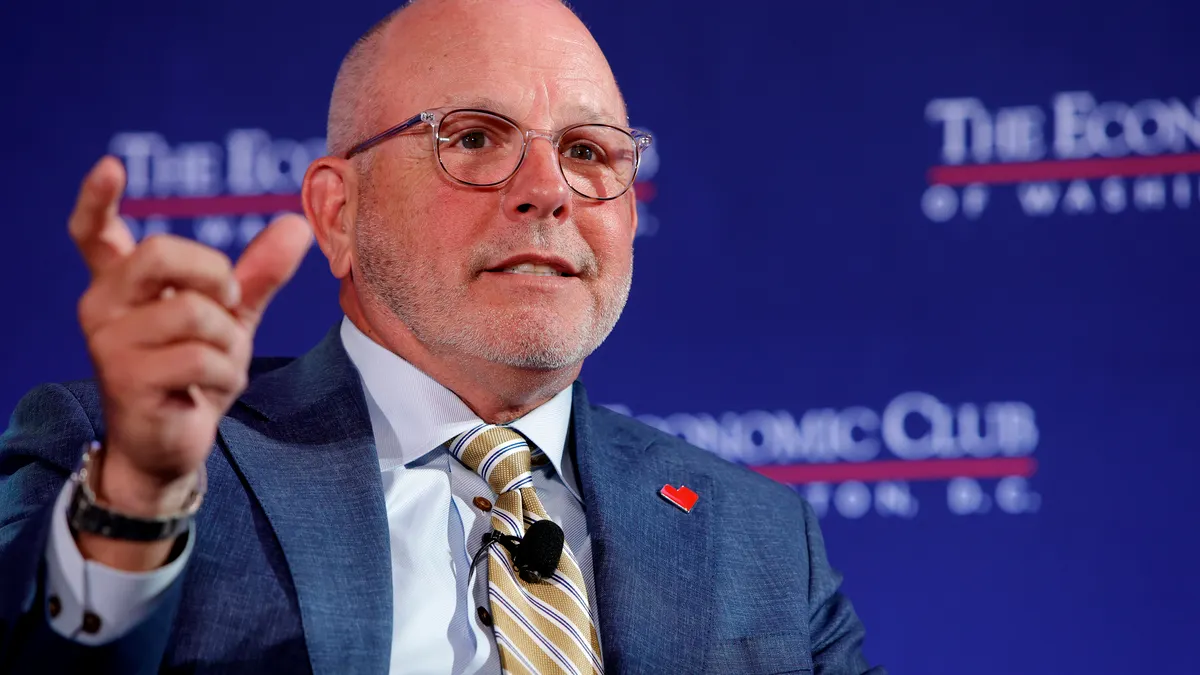
“We’ve got, I think, our arms around how to project and predict where healthcare costs are going, and making sure we’re pricing our products accordingly,” CVS CEO David Joyner said at an event hosted by the Economic Club in Washington, D.C., on Thursday.
Joyner’s comments — which come about a month before CVS is scheduled to report second quarter results — are likely a welcome signal for investors that Aetna can continue recent progress on controlling spending.
Insurers began to see unexpected increases in costs starting in late 2023 and early 2024, especially for seniors in privatized Medicare Advantage plans. CVS was particularly hard-hit by the trend, given the company had significantly increased its MA benefits in order to nab new members — a gamble that backfired hard in the face of higher spending.
Aetna reported a $984 million operating loss in 2024, compared to income of $3.9 billion the year prior. The division’s struggles almost halved CVS’ total net income that year.
As Aetna’s performance flatlined, CVS’ board replaced then-CEO Karen Lynch with Joyner, a company veteran serving as the head of CVS’ pharmacy benefit manager Caremark at the time. Joyner’s No. 1 focus was to improve operations at Aetna, the CEO has said.
2025 showed some early proof of a turnaround, after CVS rejigged its MA business by slashing benefits and exiting unprofitable markets.
Those efforts helped Aetna spring back into the black, with the division reporting operating income of $1.8 billion last year. CVS again scaled back its MA offerings and exited the Affordable Care Act market entirely for 2026 in order to control rising costs.
Still, investors remained wary that CVS’ troubles were entirely behind it, citing the difficulty of adequately forecasting medical spending after the pandemic threw normal utilization trends into disarray.
Yet Aetna has posted solid operational performance in 2026 so far, with executives promising that they have taken an adequately disciplined approach to bid pricing and benefit structure to cover medical trend this year.
CVS hiked its 2026 revenue and earnings guidance after posting first quarter results in May, and the company’s stock is currently trading at its highest levels since 2022.
The biggest challenge for CVS isn’t managing members’ costs: It’s policy uncertainty out of Washington, Joyner said.
“I spend a lot of my time, both at the federal level and in the states, trying to help educate and also describe what are the real drivers of healthcare costs, and then making sure that we play an active role to help with members of Congress,” the CEO said.
Joyner has testified before Congress four times in the three years he’s been CEO. The company has faced particularly sharp scrutiny around the role its PBM Caremark plays in potentially inflating drug costs as the American public clamors for lawmakers to improve healthcare affordability.
CVS is scheduled to report second quarter earnings on August 5.