
President Trump on Thursday tapped Erica Schwartz, a top public health leader during his first term, to be the next leader of the Centers for Disease Control and Prevention.
In a post on the social media platform Truth Social, Trump announced the selection of Schwartz and named three others to senior agency positions. Should Schwartz be confirmed by the Senate, she’d be the first full-time director the CDC has had since last August.
Schwartz was the deputy surgeon general during Trump’s first term and has spent over two decades serving in the U.S. Navy, the U.S. Coast Guard and the Commissioned Corps of the U.S. Public Health Service. She holds degrees from Brown University and the University of Marlyand.
"I look forward to working together to restore trust, accountability, and scientific integrity at the [CDC] so we can return it to its core mission and Make America Healthy Again," Health and Human Services Secretary Robert F. Kennedy Jr. wrote in a post on X.
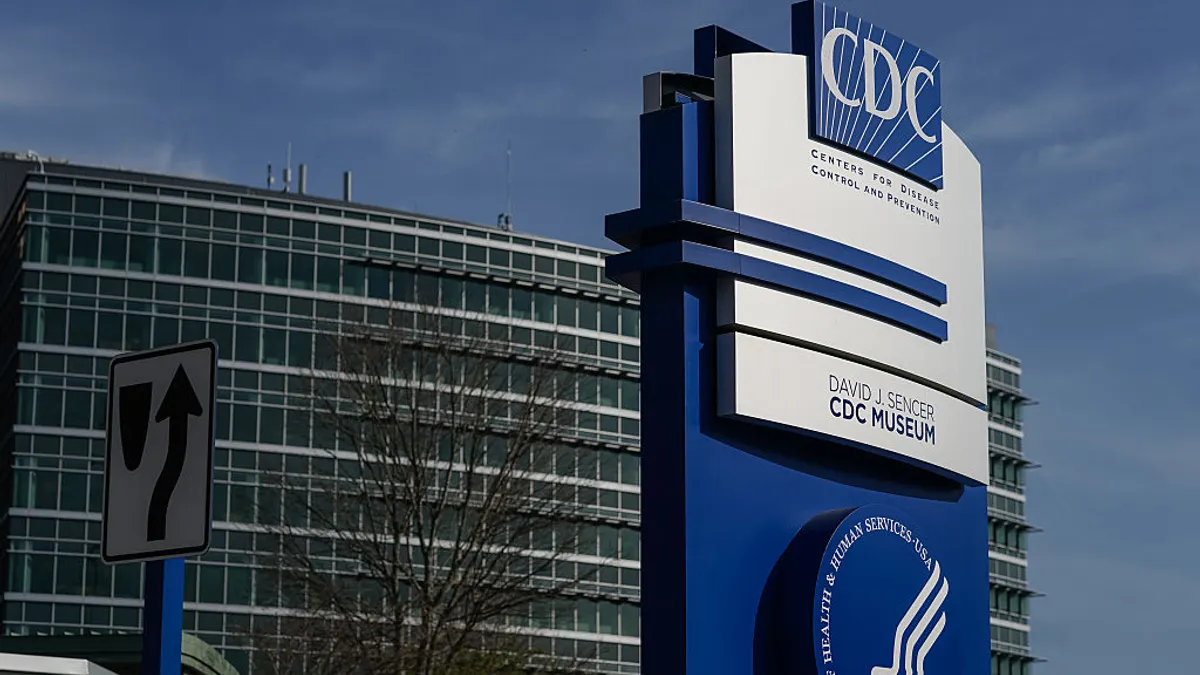
Schwartz’s nomination comes amid an unusually tumultuous time for the CDC, the agency charged with protecting the American public from disease threats. The CDC has operated without a permanent leader for most of Trump’s second term, and seen its standing with the scientific community eroded amid a series of changes to vaccine policy that have gone against longstanding evidence.
Dave Weldon, the first nominee Trump chose to run the agency last year, withdrew his nomination when it became clear he didn’t have enough support from the Senate.
Months later in July, the White House named Susan Monarez, who had been serving as the CDC’s acting director, as its next pick. Monarez had better luck with Congress, but she was fired less than a month later. At a congressional hearing afterwards, Monarez revealed she refused to rubber-stamp new Kennedy-directed vaccine guidelines without supportive evidence, prompting other senior officials to leave the agency.
The CDC has been without a permanent leader ever since. Jim O'Neill served as acting director, but left his post in February. National Institutes of Health leader Jay Bhattacharya stepped into the role afterwards.
Amid the leadership turnover, the CDC has enacted a series of significant changes to longstanding vaccine policy. Kennedy reformed an influential panel, known as ACIP, that issues vaccine guidance linked to insurance coverage. That panel has since softened recommendations for multiple immunizations and fueled skepticism about many existing shots. The CDC in January also bypassed normal protocols in announcing plans to reduce the number of universally recommended childhood vaccines.
That move, as well as decisions made by the recast ACIP panel, were criticized by many major medical organizations and later blocked by a federal judge. And multiple published reports have indicated that the White House has since aimed to change the messaging coming from Kennedy’s HHS ahead of the midterm elections, shifting away from controversial vaccine views and towards a focus on more popular topics like nutrition.
Schwartz’s nomination appears to align with that narrative. Alongside her selection, Trump also named experienced Jennifer Shuford, an infectious disease physician, as a CDC deputy director and chief medical officer; former Walmart executive Sean Slovenski as a deputy director and chief operating officer; and Sara Brenner, a top Food and Drug Administration official and former acting commissioner, as a senior counsel for public health.
Schwartz will go before the Senate Health, Education, Labor and Pensions Committee for confirmation, but a date hasn’t yet been announced.