Dive Brief:
- Consumers are increasingly turning to wearables and connected devices to manage their health and share data with providers, according to a survey published Monday by Rock Health.
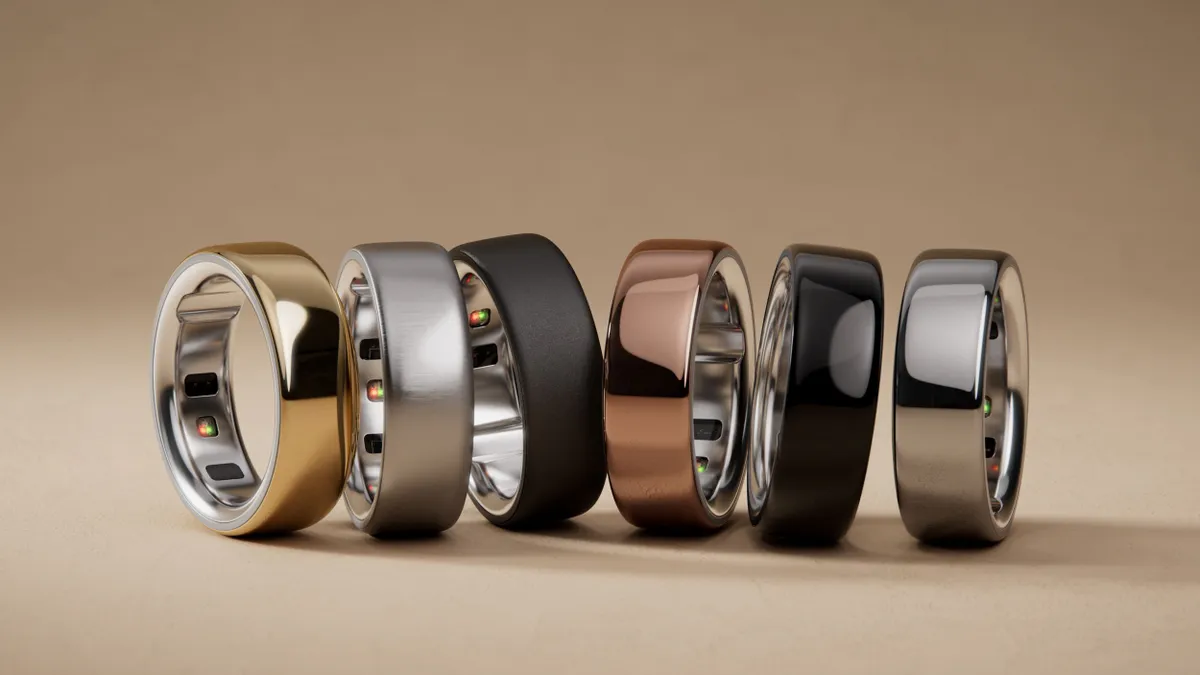
- Nearly 60% of U.S. adults told Rock Health they owned at least one wearable — such as an Apple Watch or an Oura Ring — or connected device, like continuous glucose monitors, smart scales or connected blood pressure cuffs.
- Data from these devices are being integrated into the traditional healthcare system, allowing providers to potentially see a long-term view of their patients’ health according to the venture capital firm and consultancy. Nearly 60% of wearable owners have already discussed their data with a provider, including 30% that said they do so regularly.
Dive Insight:
Wearable adoption specifically has increased significantly over the past decade, with 46% of adults saying they owned a smart watch or ring last year, according to the report, which surveyed 8,000 Americans. In comparison, just 13% said they owned a wearable in 2015.
Most wearable owners use their devices to track physical activity, sleep and heart rate, the survey found. Those devices are being used frequently too: 59% reported wearing theirs always or almost always.
Adults increasingly own wearables
Owners of connected devices and wearables tend to be younger, wealthier, healthier, more urban and more likely to be commercially insured, according to the survey. Twenty-three percent rate their health status as “excellent,” raising concerns that the groups who could benefit the most from health monitoring don’t own these tools, according to the report.
And most users didn’t access their device through the healthcare system. More than half said they purchased the device themselves, while just 15% said they got theirs through a provider and only 12% received a device through their insurer or employer.
Still, the majority of wearable owners say they’ve discussed their data with providers at least once or twice. However, many health systems haven’t turned on wearable integrations like Apple HealthKit or Google Health in their patient portals, given liability and reimbursement concerns, according to Rock Health.
“The liability question alone—what happens if a clinician misses a flagged fall or AFib alert?—has been enough to keep many traditional providers on the sideline,” the report’s authors wrote.
The survey comes as the Trump administration has encouraged the use of wearables and lessened regulatory oversight of the devices.
Early this year, the Food and Drug Administration released guidance saying products linked to certain measurements, like blood pressure or blood glucose, don’t need to be regulated as medical devices if they’re used for wellness purposes. Wearables can also direct patients to see a provider without being classified as a medical device.
And in December, the CMS announced a payment experiment that aims to expand access to technology-backed care for chronic conditions. Participants include connected device and wearable companies like Whoop and Withings.