Dive Brief:
- Millions of Medicare beneficiaries could be eligible for a new program that covers GLP-1 drugs for weight loss, representing billions of dollars in potential costs to the health insurance program, according to an analysis published Monday by health policy researcher KFF.
- Nearly 4 million enrollees meet the criteria to receive low-cost GLP-1s for weight management under the Medicare GLP-1 Bridge, a temporary demonstration project from the CMS that launches Wednesday, KFF found.
- If 10% to 25% of those eligible fill a prescription each month starting in July, the cost to Medicare would be $1.3 billion to $3.3 billion. And if 50% to 75% of eligible beneficiaries participate in the program, costs rise to $6.7 billion to $10 billion.
Dive Insight:
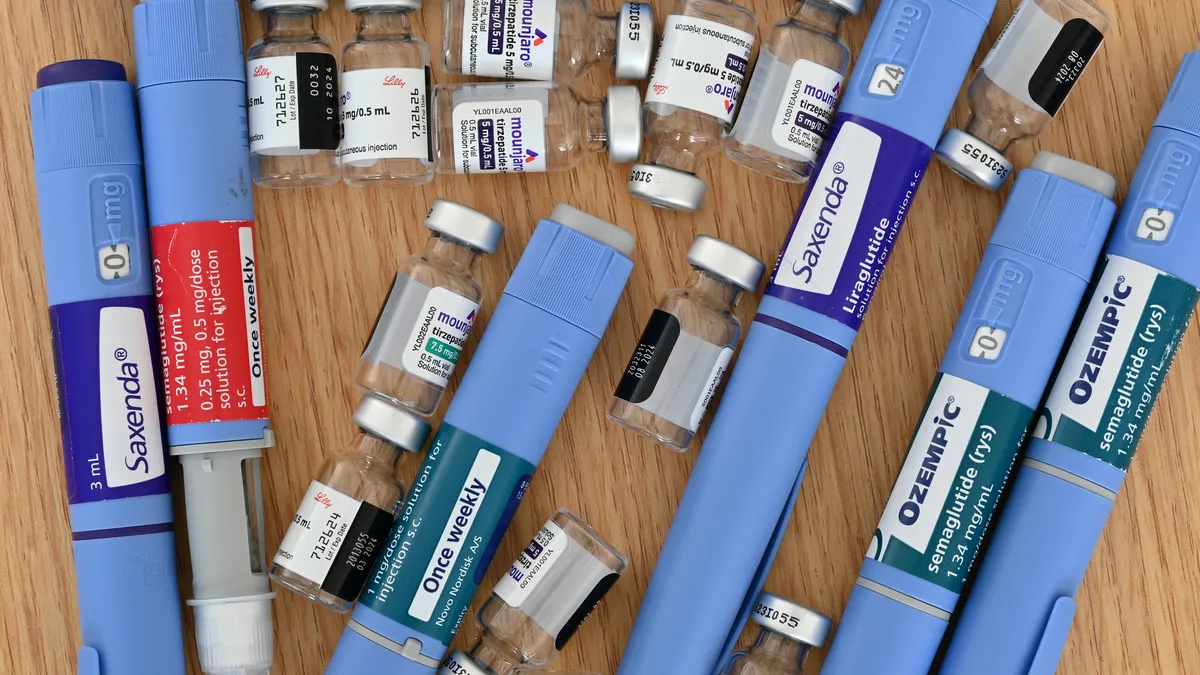
Initially developed for treating diabetes, GLP-1s have become extremely popular and effective medications for weight loss. About 1 in 8 adults say they’re taking a GLP-1 to lose weight, according to a poll published late last year by KFF.
However, the drugs can be pricey, with list prices of around $1,000 per month. That’s a major barrier to accessing the drugs, and cost is a main reason patients say they decide to discontinue GLP-1s.
The Medicare GLP-1 Bridge program aims to ameliorate those cost concerns. It’s a departure from typical policy in Medicare, which is largely barred by law from covering weight loss drugs except in short-term pilots.
The new demonstration, set to run from July 1 through 2027, will cover the GLP-1s Wegovy, Zepbound and Foundayo for weight management for Medicare Part D enrollees with a $50 monthly copayment. To qualify, beneficiaries must have a body mass index of 35 or more, or have a BMI of 27 or more with certain conditions.
Enrollees also can’t have health conditions that can be treated by GLP-1 drugs that already receive Medicare coverage, like Type 2 diabetes. They also can’t have already filled a GLP-1 prescription under their Part D plan this year.
That leaves millions of beneficiaries who could be eligible for the program, according to KFF’s analysis, which used claims data from 2023. More than 13 million people, or around one-quarter of all Medicare enrollees, met the BMI criteria that year.
Around 10 million were enrolled in Part D and met the clinical requirements, according to the analysis. But less than half of them — 3.8 million people — met the other eligibility requirements, like not having another diagnosis that could qualify for GLP-1 coverage or recently receiving a GLP-1 prescription.
Overall, costs for the program will depend on how many people are eligible in 2026 and 2027, how many choose to participate, how quickly they take up prescriptions and how often they fill them, the health policy researcher said.
“The ultimate cost to the federal government of the Medicare GLP-1 Bridge will depend on actual participation numbers and adherence during the 18-month program, as well as potential cost offsets from savings that might accrue over time due to beneficiary health improvements from GLP-1 use for weight reduction and weight management,” the report’s authors wrote.
The program comes as GLP-1s are inflating U.S. healthcare spending. The nation’s healthcare expenditures rose more than 7% last year to $5.7 trillion, in part due to expensive prescriptions like the weight loss drugs, according to government data released last week.