Dive Brief:
- A pilot program that adds artificial intelligence-backed prior authorization for some services in Medicare is delaying care for seniors in Washington, according to a report released Wednesday by one of the state’s Democrat senators.
- Under the WISeR program, procedures that were previously approved within about two weeks now take four to eight weeks to be authorized, according to survey data from the Washington State Hospital Association.
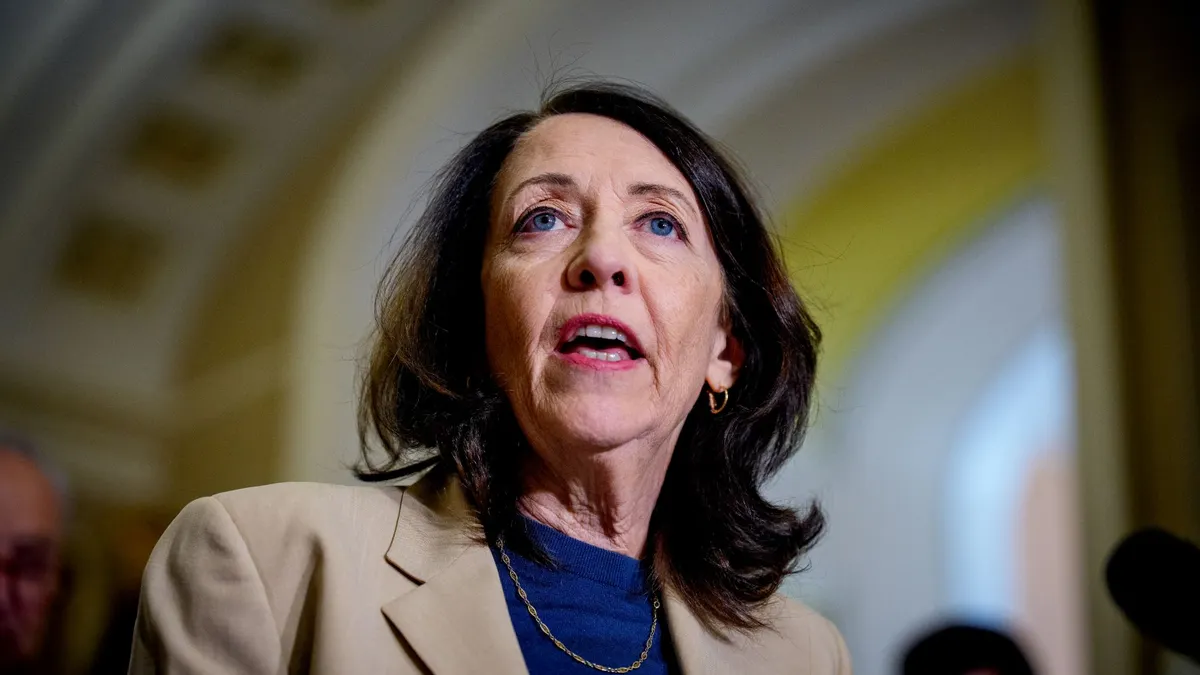
- The pilot is creating increased administrative work for providers in the state, as well as potentially worsening health outcomes for patients whose care is delayed, the report released by Sen. Maria Cantwell, D-Wash., found. “It’s not taking a few days to find out whether you’re going to get covered or not,” Cantwell said during a Senate Finance Committee hearing Wednesday. “It’s basically taking weeks to find out you were denied.”
Dive Insight:
The pilot, called the Wasteful and Inappropriate Service Reduction model, was announced by the CMS last year in a bid to cut down on healthcare spending.
Under the program, the federal government contracts with private companies to handle AI prior authorization for some procedures — like skin and tissue substitutes and epidural steroid injections for pain management — in six states, including Washington.
That’s a departure from typical practice in traditional Medicare, which rarely requires providers to receive pre-approval before administering certain services or medications. Democrat lawmakers have raised concerns for months about the pilot, arguing WISeR will add red tape and limit access to care for seniors.
Patients in Washington are facing those challenges, Cantwell said. Wait times for approval frequently exceeded the CMS’ standards for the model, which aimed to provide responses within three days for routine care and one day for urgent care, according to the report.
For example, providers at the University of Washington Medical System are waiting an average of 15 to 20 days for responses to prior authorization requests under the pilot. The health system has nearly 100 patients waiting for epidural steroid pain injections due to the delays, the report said.
A CMS spokesperson said in a statement to Healthcare Dive that the agency was committed to timeliness, accuracy and transparency under WISeR and would take corrective action if participants failed to meet program requirements.
They added that processing time for some requests may take longer if routed through an administrative contractor, but that the agency did not have evidence of inappropriate denials currently.
Still, hospitals say denials are frequently inconsistent with clinical criteria and lack clear reasoning, according to survey data from the state’s hospital association.
Health systems also have to add staff and increase work hours due to the prior authorization process, which could potentially drive up the cost of care, the Washington State Hospital Association said.
Meanwhile, the company contracted to administer the pilot in Washington, Virtix Health, only allows the employee who submitted the request to access updates and documents, creating delays when staff members are out of the office, the report said. Virtix didn’t respond to a request for comment by press time.
In response to a question asked by Cantwell during a Senate Finance Committee hearing, HHS Secretary Robert F. Kennedy Jr. said waiting weeks to receive a response to a prior authorization request was unacceptable, and the department would work with Cantwell to fix those issues.
But he noted Medicare was paying for care that often was fraudulent or wasteful, like spending on skin substitutes that has skyrocketed in recent years.
“We found we were being ripped off by certain categories of procedures that are not good for the patient and a lot of time they’re unnecessary, and they’re very lucrative for the doctors,” Kennedy said.
The reports of delayed care stand in contrast to the Trump administration’s goal of reducing prior authorizations — an aim Kennedy touted multiple times during a marathon of hearings in front of Congress over the past week.
Major insurers say they’ve cut 11% of prior authorizations since committing to cut back on the pre-approvals in pledges spearheaded by the Trump administration last year.
Editor’s note: This story has been updated to include comments from a CMS spokesperson.