Dive Brief:
- Nonprofit health systems AdventHealth and Intermountain Health have taken the first step toward inking a partnership to unite their services in the Denver area.
- The proposed joint venture would bring together AdventHealth’s five hospitals, urgent care centers, medical practices and off-site emergency clinics around Denver with Intermountain’s three hospitals and related practices in the area, the systems announced Tuesday.
- AdventHealth and Intermountain have signed a letter of intent and anticipate signing a definitive agreement in the next few weeks. The transaction is expected to close early next year if it clears regulatory hurdles, the systems said.
Dive Insight:
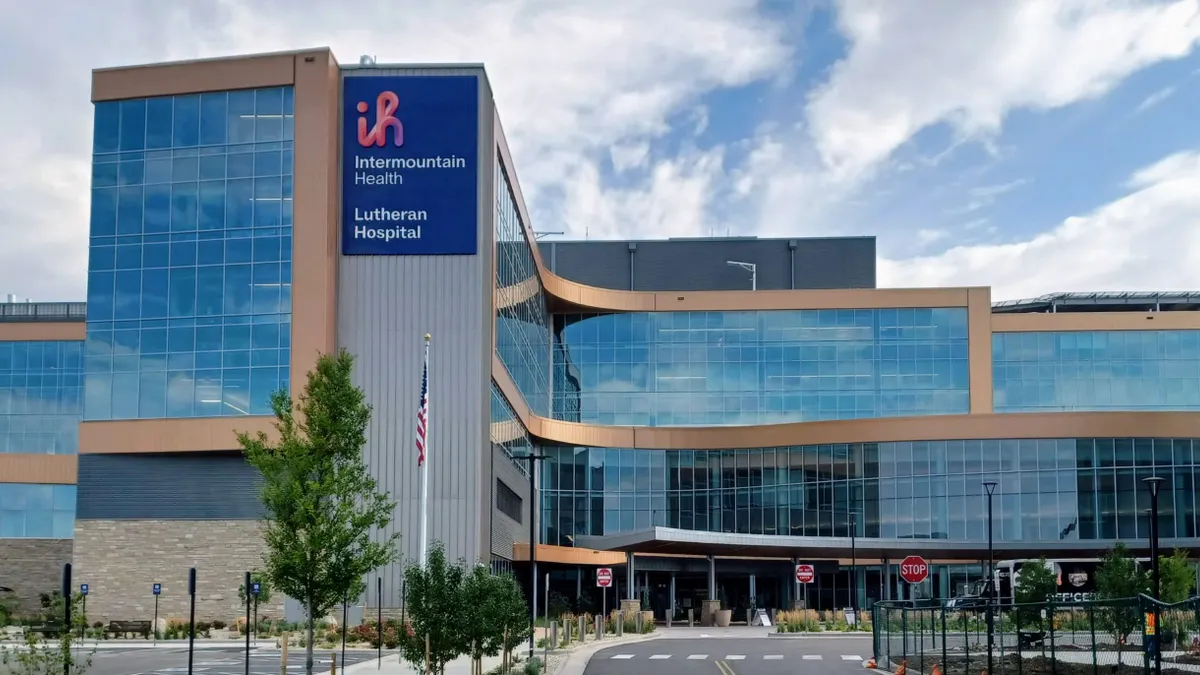
The joint venture would bring together AdventHealth hospitals Avista, Castle Rock, Littleton, Parker and Porter with Intermountain hospitals Good Samaritan, Lutheran and Platte Valley, along with related clinics.
AdventHealth would manage day-to-day operations of the facilities, the systems said in a release. AdventHealth is expected to have a majority membership interest in the joint venture, although the health system and Intermountain will split interest based on a “fair valuation approach” agreed upon by each party.
Intermountain’s Saint Joseph Hospital and affiliated clinics in Denver are not included in the joint venture. The system said it was still exploring options for the hospital, including other partnerships.
The partnership should add to AdventHealth’s multi-state expansion and push the Florida-based system westward. AdventHealth, which owns and manages 55 hospitals across nine states, has expanded hospital campuses in Florida and started construction on new facilities in North Carolina.
AdventHealth’s expansions have been supported by a robust financial portfolio. In 2025, the system took in $23 billion in operating revenue, and the nonprofit has operated at an average margin of 12.8% over the past five years, according to credit ratings agency Fitch Ratings.
For its part, Salt Lake City-based Intermountain owns 34 hospitals across Utah, Colorado, Nevada, Montana, Idaho and Wyoming. In 2025, the system logged $18 billion in revenue, an almost 8% increase year over year.