Dive Brief:
- Hinge Health is expanding into gastrointestinal care through the acquisition of Cylinder Health, a virtual-first digestive healthcare company.
- Hinge has signed a definitive agreement to acquire Cylinder for $105 million in cash, the digital musculoskeletal care company announced Tuesday.
- The acquisition is expected to close in the third quarter this year, after which Hinge plans to add integrated GI care to its existing MSK and migraine care programs.
Dive Insight:
Digital health deals are heating up as companies diversify their offerings to attract clients fed up with point solutions and capitalize on interest in artificial intelligence tools.
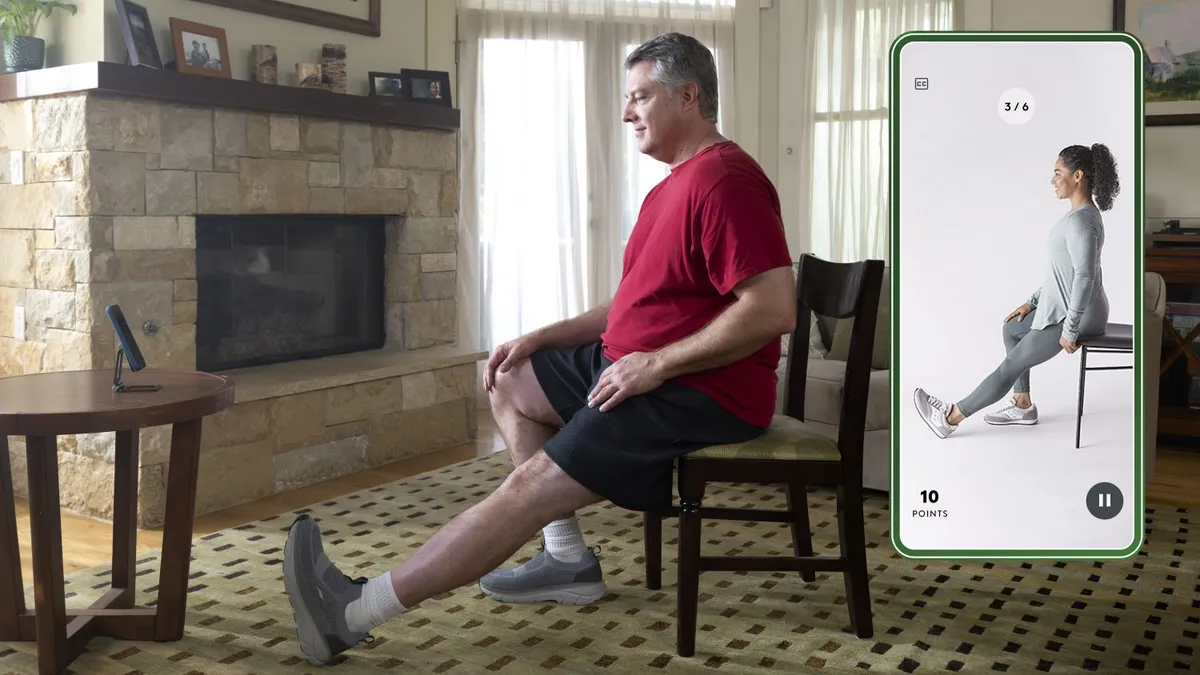
San Francisco-based Hinge was founded in 2014 as an integrated MSK provider, offering wraparound support along with access to health coaches, physical therapists and other clinicians. The company also offers a migraine care program, which includes a wearable device designed to alleviate pain and lifestyle guidance to help with prevention.
Now, Hinge is foraying into GI care through the acquisition of Cylinder, a five-year-old digestive healthcare provider with a similar focus on condition management paired with personalized support.
Hinge said it’s responding to client demand for better GI services. GI conditions affect one in four U.S. adults, and drive $135 billion in annual medical spend. But care can be tricky to access, given almost 70% of counties lack a gasteoenterologist, according to statistics cited by the company.
“We're entering GI care because of member and client demand,” Daniel Perez, Hinge’s co-founder and CEO said in a statement. “Many people we already serve for back, joint, pelvic, and migraine care also have chronic digestive conditions.”
Hinge’s clients say that GI is a top cost driver — and one that’s growing, as GLP-1 medications for new indications like weight loss become increasingly prevalent, Perez said on a Tuesday call with investors.
GLP-1 drugs slow down stomach emptying, which can cause side effects like nausea, vomiting and pain.
Cylinder offers services for minor digestive discomfort, such as bloating or gas, to serious GI issues, including irritable bowel syndrome and inflammatory bowel disease, through curated courses, microbiome testing, diet and lifestyle plans and virtual visits with a care team.
The company was an attractive acquisition for Hinge given its existing customer base and potential for expansion, Hinge said.
Cylinder contracts with almost 100 clients covering two million people, partners with two out of the three largest pharmacy benefit managers, and has deals with three of the five largest self-insured health plans in the U.S.
There’s also overlap in clients, products and functions between Hinge and Cylinder, which should make integration smoother than other potential acquisitions, according to Perez.
“They're selling to the same customers, have the same go-to-market motion, have the same partners, distribution partners that we do,” Perez said on the call.
Hinge plans to combine Cylinder’s platform with its own to create a single app scheduled to launch in 2027. The GI program will be technology and AI-driven, including tracking what members eat and how their bodies respond to create personalized diet and lifestyle plans, Perez said. Hinge will pair that with access to GI specialists and work to ensure engagement and outcomes across the platform.
“This acquisition gives us a strong foundation to build from in GI,” Perez said, calling Cylinder’s offerings a “natural extension of our care model.”
Analysts agreed. “We view this as a logical extension of the business,” William Blair analyst Ryan Daniels wrote in a Tuesday note.
Hinge anticipates that Cylinder will modestly boost sales this year by about $7 million to $8 million, an amount that should grow in 2027 and beyond.
The new GI benefit is oiling existing financial growth for Hinge, which went public last spring. In its most recent quarter, the company reported revenue of $213 million, up 53% year over year. Hinge also swung to profitability, posting net income of $43.7 million, up from a loss of $575.7 million the same time last year.
Hinge increased its 2026 financial outlook on the back of the results.