
Dive Brief:
- Responding to a drive in the “Make America Healthy Again” movement, the Food and Drug Administration is moving to lift restrictions that the Biden administration placed on peptides marketed for a variety of ailments.
- Peptides are short chains of amino acids that form the basis of a number of approved medicines, including insulin and popular GLP-1 drugs. But there are also many peptides that are not backed by rigorous research and are available through compounding pharmacies, whose purpose is to tailor medications for patients with specific needs.
- In September 2023, the Biden administration identified a group of peptides with the potential to pose “significant safety risks” and designated them in a category that prohibited compounding pharmacies from making them. Now, the FDA is moving to reclassify 12 of those peptides, which would allow compounding to resume.
Dive Insight:
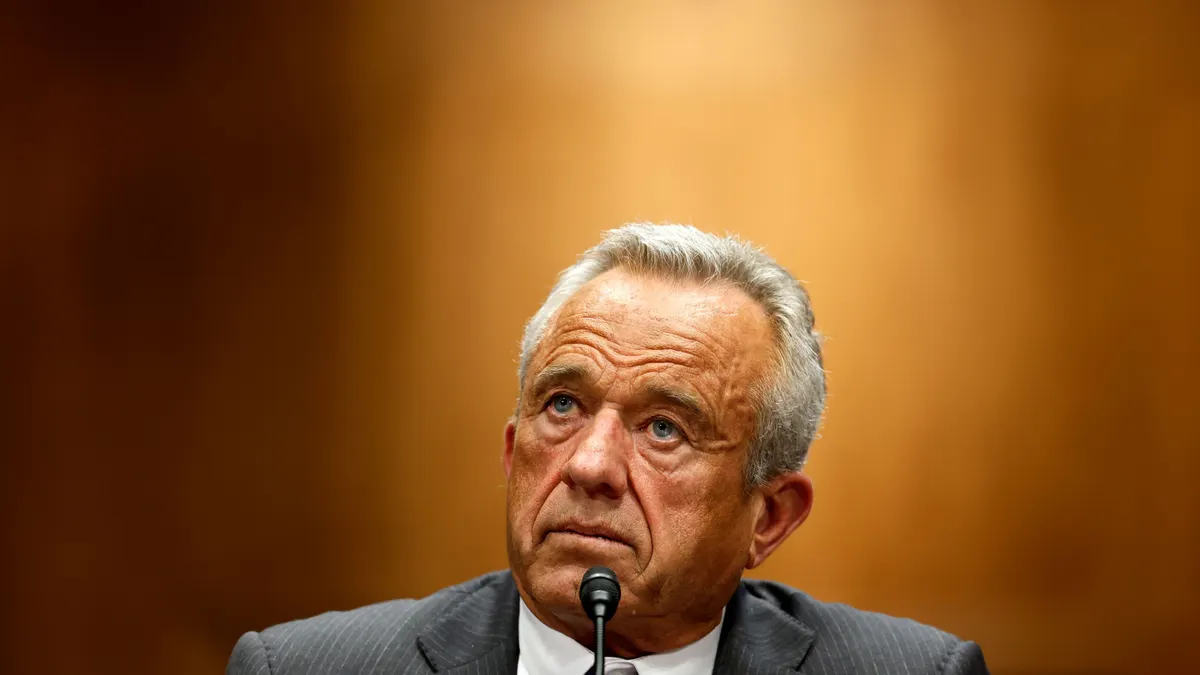
The proposed peptide reclassification is the latest move by Health and Human Services Secretary Robert F. Kennedy Jr. to move the American health system toward his own MAHA vision. Kennedy is a “big fan” of peptides and has taken them himself, he told podcaster Joe Rogan in February. Kennedy claims the Biden administration overstepped in its action and drove users to a black market for peptides.
To facilitate the action, the FDA in late July will hold a two-day meeting of its advisory committee for pharmacy compounding, asking its outside experts to discuss seven peptides, including BPC-157, which is often touted by Rogan. Another panel will take up five more peptides by February 2027.
The meetings are unusual in themselves; in the second Trump administration, the FDA has rarely convened the panels of outside advisers frequently used in the past. The meetings are typically a forum for debate over products that have raised questions for FDA reviewers, and the agency historically has almost always accepted the advice of the experts.
But under Kennedy, the FDA has been charting its own path, offering quick reviews to companies “aligned with U.S. national priorities,” and issuing a series of controversial decisions that have left investors grumbling about the unpredictability of the agency.
It’s also pursued what seem like pet projects for administration officials, pushing GSK to apply for approval of a decades-old medicine it never intended to sell again as FDA Commissioner Marty Makary touted its benefits for autism. In the end, the FDA approved the drug only for an ultra-rare brain disease, and GSK again withdrew its application, leaving the small new market to generic providers.
A vaccine skeptic, Kennedy has worked to tighten the standards for inoculations that have been tested in thousands of patients. But for peptides, he’s pushing for easier access to a group of products that often have no substantive proof of efficacy or safety but do have some reports of dangerous side effects. The latest action adds to concerns that ideology and politics are fueling the FDA’s actions rather than science.
But Kennedy called the move a “long-overdue action to restore science, accountability and the rule of law.” The reclassification “begins to restore regulated access and will immediately begin shifting demand away from the black market,” Kennedy posted on X. “We will follow the science, enforce the law, and deliver the clarity patients, provider, and pharmacies deserve.”
Hims & Hers, a telehealth company that capitalized on shortages of GLP-1 drugs to supply cheaper compounded versions, hailed the decision. “The FDA’s plans to more clearly define the regulatory status of several peptides is an important step toward moving these treatments out of the gray market, and into more trusted channels overseen by vetted healthcare professionals,” CEO Pat Carroll said.