Dive Brief:
- Almost 12 million Americans can’t access telehealth services because they don’t have enough broadband to support a reliable virtual care connection, according to new research published Friday in JAMA Health Forum.
- The majority of impacted individuals live in rural areas, highlighting how inadequate infrastructure and pricey broadband subscription rates are preventing traditionally underserved Americans from getting virtual access to primary, specialty and emergency care, researchers with the University of Vermont said.
- Affordability, low digital literacy, inadequate technology and a lack of availability of telehealth services are also hindering telehealth access.
Dive Insight:
The study reinforces other research that telehealth can improve access to care for people living in rural and remote areas, but broadband availability is still a significant barrier.
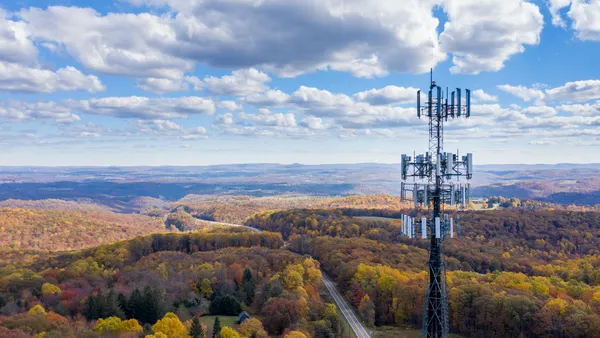
Researchers used data from a variety of sources to paint a picture of telehealth access and availability across 41 states. Of the states’ total population of more than 249 million people, 11.9 million lived in broadband deserts, where broadbands speeds are lower than 100/20 megabits per second — the Federal Communications Commission’s threshold for a sufficient connection.
Eighty-eight percent of those individuals lived in rural areas, so are likely to face worse access to other healthcare services, including ambulance availability, the study found.
The U.S. has “persistent broadband disparities ... especially in rural areas of the South and West, where limited internet infrastructure and broadband subscription rates compound challenges in accessing timely medical care,” researchers wrote.
Poor broadband connection is hampering telehealth access even in households that would otherwise be able to engage in virtual care. Ninety-five percent of people in rural areas have access to a computing device, while almost 89% have a broadband subscription, the study found.
“While broadband availability and subscriptions are prerequisites for telehealth, its presence does not inherently guarantee use,” researchers noted. “While telehealth has the potential to mitigate gaps in accessing care, its actual impact remains contingent on overcoming a complex set of socioeconomic, health care practitioner and health system offerings, and behavioral barriers beyond mere physical connectivity.”
Telehealth usage exploded during the coronavirus pandemic as Americans were unable to access much in-person medical care. Though it’s waned since, more people are using virtual care than before COVID-19, according to FAIR Health. But technology gaps and piecemeal reimbursement remain a challenge to adoption, experts say.
University of Vermont researchers suggested that policymakers consider investing more in broadband infrastructure and expanding reimbursement policies to expand the use of telehealth.