
The healthcare industry stands at a critical inflection point. With operating margins under pressure and patient expectations rising, health systems are increasingly turning to cloud technology not just for infrastructure modernization, but as a catalyst for transformative clinical and operational improvements.
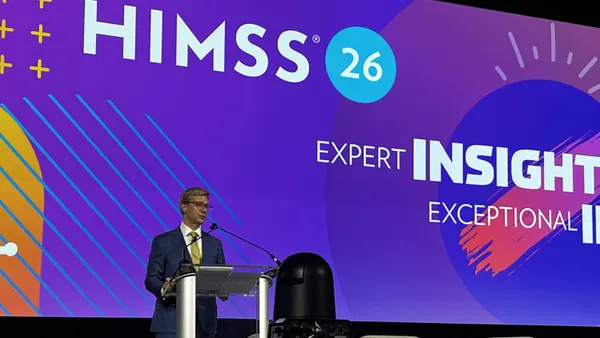
AWS presented a ‘Views from the Top Session’ at HIMSS 2026, with healthcare leaders from Jupiter Medical Center and Rady Children's Health, hosted by Matt Dinger, Global Epic Lead at AWS. They shared compelling stories that illustrate how moving beyond traditional electronic health record (EHR) implementations can unlock significant value. Their experiences offer a roadmap for healthcare organizations navigating similar journeys.
The Foundation: Epic on AWS Becomes Standard Practice
The adoption of Epic on AWS has accelerated dramatically. What began with just two health systems in 2021 has grown to over 50 organizations across the United States, Canada, and Australia in 2026. This growth reflects a fundamental shift in how healthcare views cloud infrastructure—not as experimental, but as essential.
The value proposition centers on three harmonized benefits: business agility, technology resilience, and financial efficiency. AWS's Epic workload capacity has grown from 8 million global references per second in 2021 to 140 million in 2025, representing 80% year-over-year growth. This scalability, combined with AWS's superior resilience record and continued focus on cost saving opportunities, are some of the many reasons AWS was ranked Best in KLAS for Public Cloud in 2025 and 2026.
Jupiter Medical Center: Reimagining Patient Access
For Jupiter Medical Center, an independent healthcare system in South Florida, the journey to Epic on AWS opened doors to operational transformation. The organization faced a common challenge: fragmented patient experiences across multiple portals and a costly, underperforming contact center infrastructure.
By implementing Amazon Connect alongside their Epic migration, Jupiter achieved remarkable results within months. Their radiology scheduling backlog decreased by 60%, while utilization of diagnostic imaging modalities improved by 20%. Patient call abandonment rates dropped by 50%, falling to just 4%. Operating expenses decreased significantly, all while the organization maintained its independence and clinical excellence—reflected in their Leapfrog A rating and CMS 5-star designation.
Chief Information Officer Kevin Olson emphasized that these improvements weren't about replacing human interaction but enhancing it. "Healthcare is a very human experience," he noted. "Our intention is really to make that as seamless as humanly possible for every patient that we serve in our community."
Rady Children's Health: Building a Digital Nervous System
John Henderson, VP and Chief Information Officer at Rady Children's Health, faced a different challenge. When he asked "Where's the data?" the answer was "Everywhere"—scattered across third-party systems, basement servers, dashboards, emails, and institutional knowledge.
Rady's response was to build what Henderson calls a "digital nervous system"—Platform Mosaic, a cloud-native data platform built on AWS and powered by Databricks, Tableau Cloud, and Alation. The platform democratizes data access while maintaining rigorous HIPAA compliance and governance.
The organization also developed RCH Chat, a private generative AI assistant leveraging Claude 3.5 on Amazon Bedrock, with retrieval augmented generation models. Unlike generic chatbots, RCH Chat retrieves answers from approved internal policies and documents, eliminating hallucinations while maintaining security.
Now facing both a merger with Children's Hospital of Orange County and an Epic implementation, Rady is positioned to leverage its modern data infrastructure as a strategic advantage. "We don’t want to bring in data just to have it," Henderson reflected. "We want to make sure all data has a use and can bring value to our clinicians, our researchers, and our patients."
Key Lessons for Healthcare Leaders
In their HIMSS presentation, both organizations emphasized similar principles for successful transformation. First, embrace change rather than fear it. The competitive landscape demands continuous innovation, and the risks of inaction often exceed the risks of thoughtful experimentation.
Second, prioritize governance alongside empowerment. Rady's approach of identifying power users, establishing clear policies, and building communities of practice enabled democratization without compromising security or compliance.
Third, focus on augmenting human capacity rather than replacing it. Whether through improved contact center analytics or AI-powered knowledge assistants, technology should expand what healthcare professionals can accomplish, not diminish their roles.
Finally, think beyond the EHR. While an EHR provides the clinical foundation, it is not the only system of record. The real value of healthcare data emerges in the cloud, where you can securely and efficiently direct it to power AI-driven workloads that address specific operational and clinical challenges —from Amazon Connect for patient engagement to Amazon Bedrock for knowledge assistants, and so much more.
As healthcare continues to navigate financial pressures and rising patient expectations, these stories demonstrate that cloud technology, thoughtfully implemented, can deliver measurable improvements in both operational efficiency and patient experience. The question is no longer whether to embrace cloud transformation, but how quickly can organizations move to capture its benefits.
Matt from AWS closed out the session with this advice, “On Monday, just start somewhere. If you’re feeling overwhelmed, you are not alone. The world is changing very rapidly. But there is a cost to doing nothing. So just start.”