
Over the last few years, the business of emergency medicine has fundamentally shifted. Providers have weathered national crises—from the opioid crisis to the COVID-19 pandemic—while also managing a sharp rise in patient acuity. But while the workload has increased, reimbursement has not. Payment for emergency care has dropped to unsustainable levels, putting the financial stability of our safety net at risk.
As we look toward 2026, the landscape for emergency medicine reimbursement is shifting once again. New federal regulations and aggressive commercial payer tactics are converging, pushing independent practices and hospital-based physician groups into an even more challenging financial environment.
State of the EM industry: An unraveling safety net
To understand the severity of these reimbursement challenges, we can examine a recent study published by the RAND Corporation, which analyzed over 50 million EM professional claims from 2018 to 2022.
During this period, professional payments have dropped across the board:
- Out-of-network reimbursement is down 47.7%.
- In-network reimbursement is down 10.9%.
- Medicare payments fell 3.8% during the study period.
But, when looking back over a longer timeline, Medicare payments are effectively down more than 30% compared to 2001 when adjusted for inflation.
In stark contrast, facility payments have increased more than 18% during this same period. This is largely because hospitals receive annual adjustments tied to inflation and the rising cost of care, mechanisms that physician payments largely lack.
These trends have only escalated since the study period and are expected to continue with new updates in 2026, with small and independent group practices feeling the brunt of this impact. Because they operate independently of hospital systems, they have no access to the facility revenues that hospitals collect, leaving them exposed to the impact of declining professional payments.
Commercial payer trends: The rise of downcoding and "black box" denials
Commercial payers are increasingly relying on aggressive cost-containment strategies that directly erode physician revenue. One of the most pervasive issues is downcoding—when a payer unilaterally reduces the reimbursement amount for a submitted claim.
The rise of AI-driven automation has accelerated this trend, as payers now deploy software to automatically flag and downcode claims based on final diagnoses or predictive analytics. Unfortunately, these automated reviews often struggle with the complexity and urgency of emergency care, failing to grasp clinical nuances or capture crucial patient context. The result has been a sudden rise in downcoding and denials that ignore the reality of the patient encounter.
-
Diagnosis-driven downcoding
Payers are increasingly using Low-Acuity Non-Emergent (LANE) lists to reduce reimbursement for diagnoses they deem non-emergency related. The list of specific diagnoses is typically based on analytics provided by consulting firms such as Mercer, which developed the Mercer LANE Analysis methodology.
This practice—utilized by major payers including Kaiser Permanente (Washington), Upper Peninsula Health Plan (Michigan), Horizon Blue Cross Blue Shield (New Jersey), Providence Health Plan / Health Assurance (Oregon)—fundamentally ignores the resource-intensive workup often required to rule out life-threatening conditions before a minor diagnosis can be confirmed.
-
"Black box" software algorithms
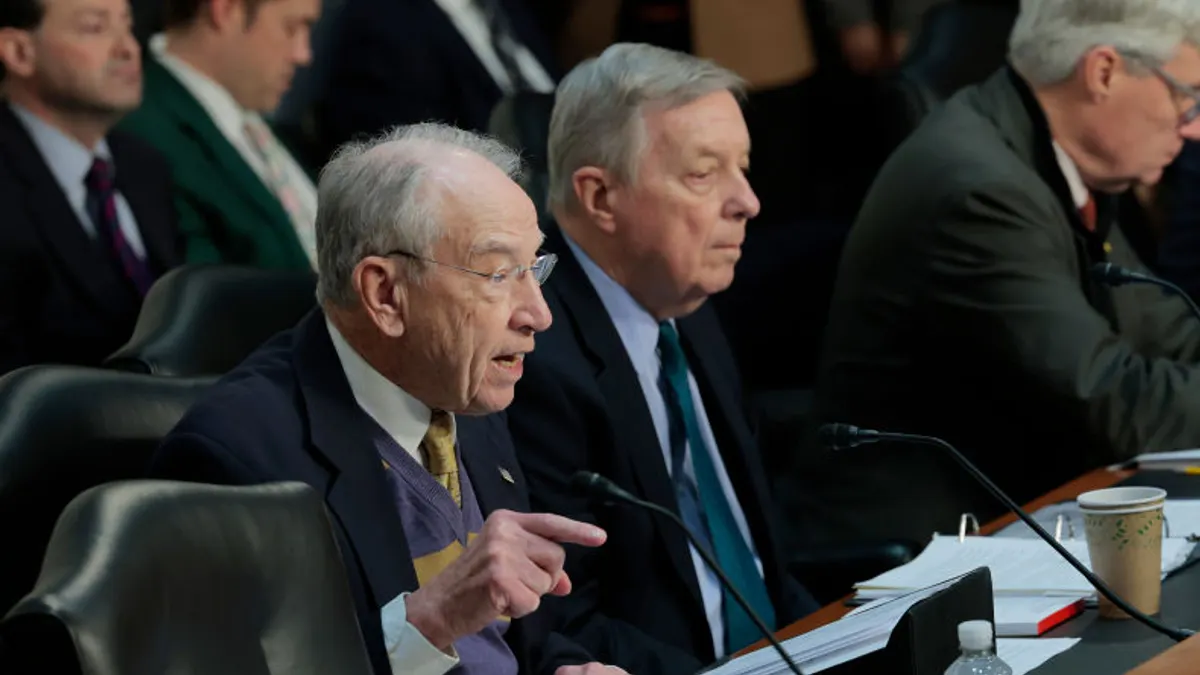
Other payers are going beyond a simple LANE list and deploying proprietary AI tools that function as "black boxes," obscuring the logic behind denials while drastically increasing their frequency. A 2024 Senate report cited by the AMA found that these AI tools can deny claims at rates up to 16 times higher than those of traditional review processes.
UnitedHealthcare (UHC), for instance, employs the Optum EDC Analyzer to review claims. And, while their process for physician payments remains a mystery, their facility coding policy suggests the algorithm relies heavily on diagnosis-based factors such as presenting problems and patient complexity. Similarly, Elevance Health-affiliated plans (such as BCBS) use Cotiviti for automated claim editing.
This widespread reliance on murky algorithms shifts the burden of proof entirely onto providers, creating a "guilty until proven innocent" dynamic where practices must absorb the administrative costs of appealing routine, automated denials.
States taking action on payer downcoding
The growing prevalence of automatic downcoding has prompted action from some state regulators:
- Arkansas and Virginia adopted new downcoding laws this year.
- Ohio, New York, Connecticut, New Jersey and Utah are currently debating similar measures.
While these efforts signal momentum, industry leaders emphasize the need for balanced regulation. Automation and AI are powerful tools for revenue cycle efficiency—provided they are not used to arbitrarily deny or reduce legitimate payment.
Payers rollout new penalties for out-of-network providers
Commercial payers also continue to evolve their cost-containment strategies, raising new concerns for independent emergency medicine groups. A particularly concerning trend is emerging as some payers roll out policies designed to penalize facility payments when out-of-network (OON) providers are involved.
These policies currently exclude emergency medicine, but there is still a risk that this exemption may change over time. If expanded, these policies could enable coercive contracting, pressuring independent EM groups to accept unfavorable rates to protect their hospital partners from financial penalties.
Medicare physician reimbursement: Updates coming in 2026
Medicare reimbursement also faces its own systemic challenges. CMS has consistently failed to adjust physician reimbursement for inflation. Instead, emergency medicine has faced repeated cuts to the Medicare Physician Fee Schedule (PFS), with the 2026 rule changes introducing a mix of temporary relief and long-term risk.
2026 Medicare PFS updates for emergency medicine
- Conversion factor increase: A slight increase in the conversion factor will provide some stabilization for EM physician payments in 2026.
- Practice Expense (PE) rebalancing: The new rule changes the way indirect practice expense (PE) is calculated by reducing the PE Relative Value Unit (RVU) for services performed in a facility setting to 50% of the non-facility rate. This change redistributes PE RVUs from facility-based to non-facility-based services, which will negatively impact emergency physicians who work primarily in hospital settings.
Legislative protections via the 2026 Continuing Appropriations Act
The 2026 Continuing Appropriations Act (H.R.5371) provides funding for specific programs through January 30, 2026, offering temporary support to physician payments:
- Medicare Geographic Price Cost Index (GPCI): The Act restores the 1.0 floor for the GPCI, preventing payment cuts based on geographic location.
- Medicare Telehealth: It maintains originating site protections for Medicare Telehealth services.
These measures provide short-term relief but do not alter the long-term trajectory of physician payment, which continues to trend downward unless Congress enacts structural reform.
The No Surprises Act: Progress, challenges and enforcement gaps
The No Surprises Act (NSA) fundamentally shifted the reimbursement landscape for emergency medicine. Prior to the law taking effect, many payers aggressively ramped up efforts to renegotiate contracts to unreasonably low rates and, in some cases, outright canceled good, long-standing contracts with provider groups.
The NSA created a disincentive for payers to be in-network with some EM provider groups, especially since early IDR rules largely benefited OON payers. Since then, several TMA lawsuits have helped level the playing field within IDR, making it a more reasonable process for many groups.
Independent Dispute Resolution (IDR) is working—when enforced
- Providers win more than 80% of IDR cases.
- Yet in 2024, 59% of rulings were not paid within the 30-day requirement, and 26% were underpaid, according to an EDPMA member survey.
This lack of enforcement allows insurers to side-step existing law, creating significant cash flow disruptions and financial strain for many EM groups.
Fortunately, Congress has taken note. In July 2025, Congressman Greg Murphy introduced a bipartisan bill aimed at closing enforcement gaps through increased penalties and transparency—an encouraging signal that lawmakers are beginning to understand these challenges.
What can we do about it?
While many factors in 2026 will remain outside of our control, EM groups still have meaningful levers they can pull.
- Get involved in IDR: While there is a slow ramp-up period and administrative costs to consider, the results are overwhelmingly positive for those who can make this a routine part of their RCM process. But recovery timelines are long, so the sooner a group engages in this process, the better. Strategic IDR partners can also provide the expertise and technology to organize and scale these efforts.
- Strengthen documentation practices: Precise, detailed documentation is the strongest defense against algorithmic downcoding. Clearly capturing complexity, risk and medical decision-making—along with thoughtful diagnosis wording—helps support the appropriate level of service.
- Advocate and stay engaged: Momentum is building among policymakers and researchers. Joining organizations such as ACEP and EDPMA, participating in surveys and contributing to advocacy efforts ensure that clinician voices are represented.
By focusing on operational efficiency and persistent advocacy, EM groups can better navigate the headwinds of 2026 and continue to provide the life-saving care their communities rely on.