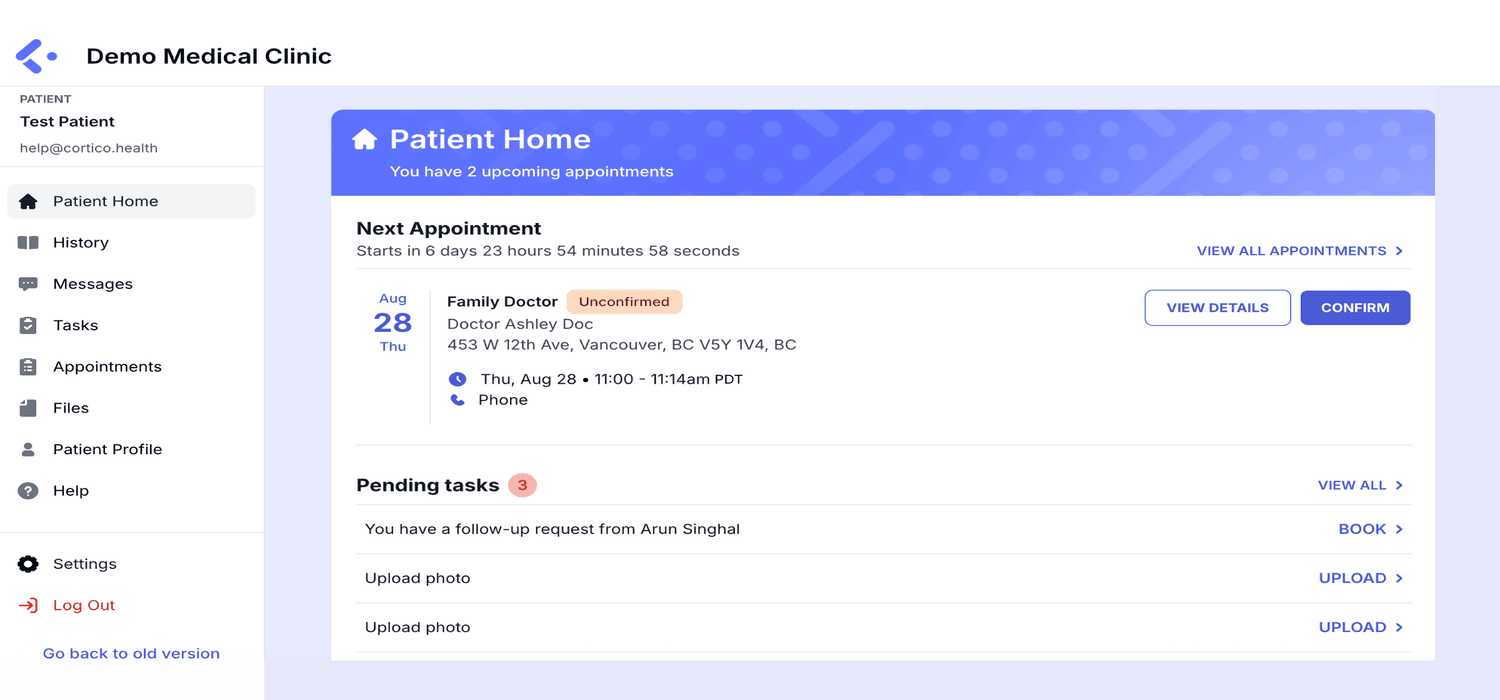
SPOKANE, WA — In 2025, more than 300,000 patients each month used Cortico to book appointments, complete intake forms, manage prescriptions, and handle other aspects of their care online—all without calling a clinic front desk.
These results are not a forecast, the company said. They reflect real-world data of how patients and providers utilized the platform throughout the calendar year. As 2025 comes to a close, Cortico reported continued growth in adoption among clinics across North America, driven by providers rethinking how care is delivered and how administrative work is managed in a digital-first environment.
2025 by the numbers Clinics using Cortico in 2025 collectively:
- Facilitated more than 3 million patient appointments. Over 300,000 appointments per month were managed online, reflecting sustained adoption across practices of all sizes.
- Processed more than 700,000 prescriptions. More than 60,000 prescriptions were sent securely to pharmacies each month using digital workflows.
- Registered more than 25,000 new patients online each month, reducing manual data entry and administrative workload for clinic staff.
- Logged more than 450,000 patient portal sessions per month. The portal, launched this summer, allows patients to manage care online and has helped significantly reduce inbound phone calls to clinics.
Together, these figures point to a growing number of practices moving toward fully online scheduling and routine care management to improve operational efficiency.
Adoption drives impact Cortico claimed one of the clearest lessons from 2025 is that adoption—not technology alone—is the key measure of success. The operational gains seen by partner clinics came from pairing digital tools with redesigned workflows that patients and providers can easily navigate.
Examples include providers who reported saving several hours of administrative time each week, clinics that transitioned fully to online booking, and practices that successfully increased patient volume without adding additional administrative headcount or strain.
Why it matters now Despite recent advances in health technology and artificial intelligence, physicians in the United States and Canada continue to face heavy administrative workloads. Research has repeatedly linked that burden—much of it unpaid—to rising burnout across the healthcare workforce.
Cortico stated that addressing these challenges requires more than incremental changes to existing workflows. By enabling patients to manage routine tasks independently, clinics can remove a substantial portion of daily administrative work and allow providers to focus more directly on patient care.
“By giving patients full access to their care via a system they find highly accessible, you also give local clinicians their evenings back and allow them to focus on providing care,” said Clark Van Oyen, CEO of Cortico.
Looking ahead to 2026 Cortico plans to continue expanding EMR integrations, automation capabilities, and digital infrastructure in 2026. The company’s upcoming work includes deeper integrations with major health systems such as Epic, Oracle Health, AdvancedMD, and Practice Fusion, along with expanded communication tools and support for growing multi-site clinics.
The company is also currently piloting secure provider-to-provider messaging and intelligent workflow automation features that are expected to roll out more broadly in the first half of 2026.
Cortico is a leading provider of patient engagement and healthcare workflow automation solutions for medical clinics. Founded in 2015 by Dr. Greg Baldwin and Clark Van Oyen, the company launched its first integrated online booking system at Kensington Medical Clinic, where call volumes dropped significantly following implementation. Today, more than 400 clinics across Canada, the United States, and international markets use Cortico to automate more than 3 million manual tasks each month.