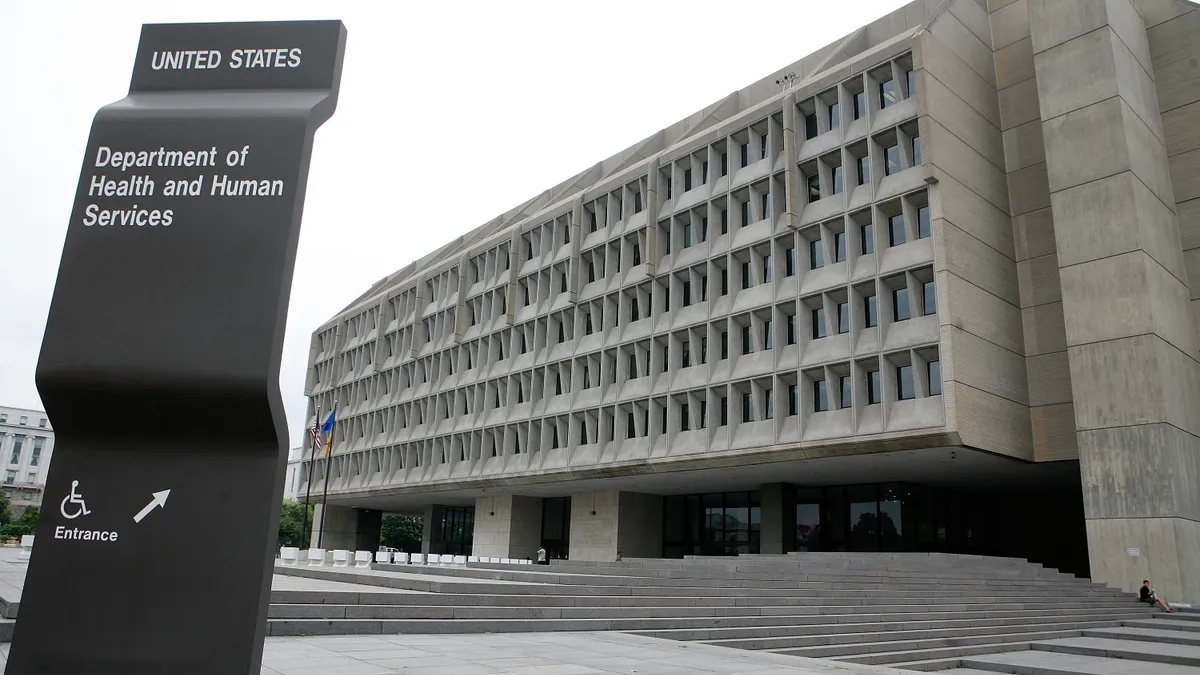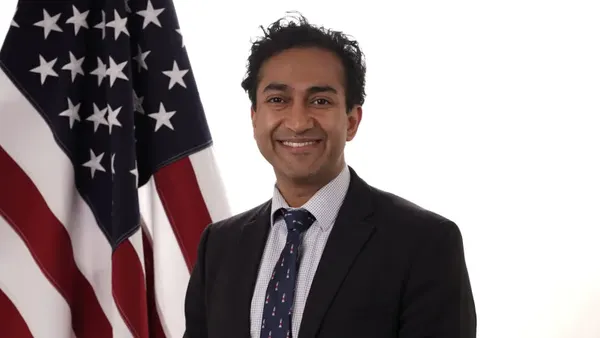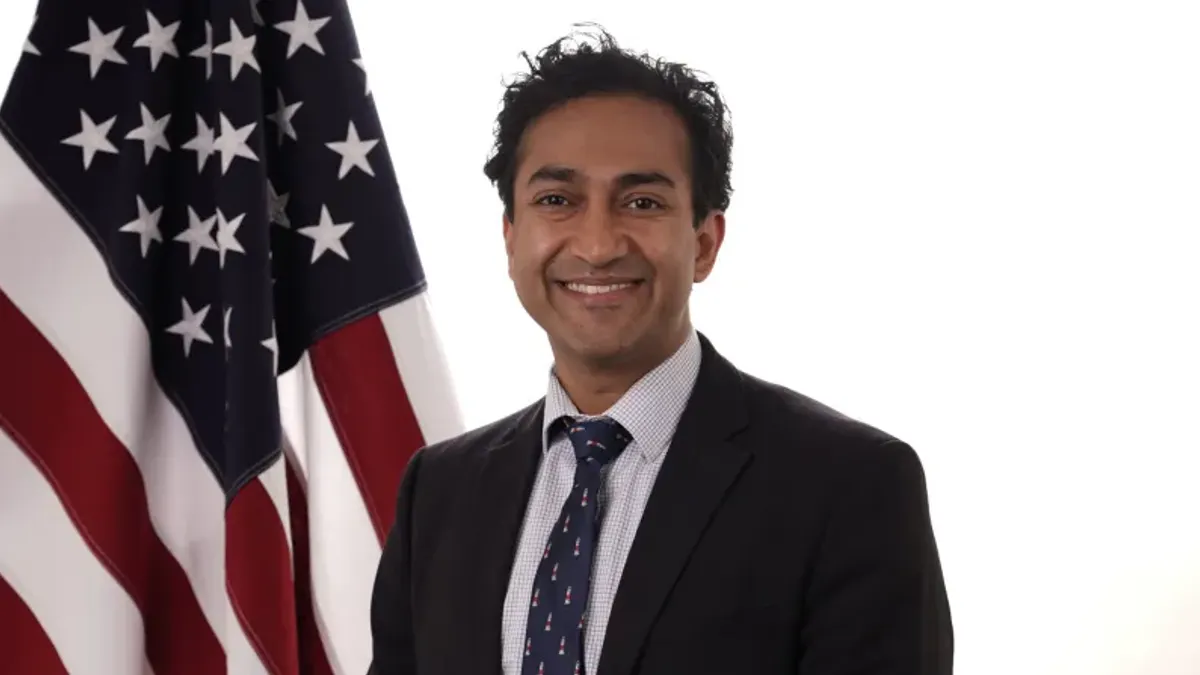

Vinay Prasad, the controversial head of the Food and Drug Administration office that regulates vaccines and gene therapies, will again leave the agency, a spokesperson for the Department of Health and Human Services confirmed Friday.
Prasad’s planned departure in April, first reported by the Wall Street Journal, will end a tumultuous tenure during which he reworked vaccine guidelines and appeared to set a higher bar for rare disease drug approvals. The announcement comes only days after an unusual public spat between the agency and UniQure, the developer of one such rare disease treatment that now faces a much longer road to approval than it had anticipated.
In a statement on the social media platform X, Commissioner Martin Makary cited the “long-lasting reforms” Prasad helped instill over his tenure, from a new pathway for bespoke therapies to shortened pivotal trial requirements and a “national priority” drug review program.
“I want to thank him for his service and personal sacrifice to take time away from his family,” Makary said, adding that the agency will name a successor before his departure.
A prolific academic and longtime critic of U.S. drug policies, Prasad was named the head of the FDA’s Center for Biologics Evaluation and Research last May. At the time, Makary called his hiring a “significant step forward” for CBER, as Prasad brought the “scientific rigor, independence and transparency” the office needed, he claimed.
Makary later named Prasad as the FDA’s chief medical and scientific officer, in addition to his role at CBER.
Prasad was a vocal opponent of his predecessor Peter Marks, who ran CBER for nearly a decade before resigning last March. Marks championed regulatory flexibility while at the FDA and, as head of CBER, oversaw the review and approvals of COVID-19 vaccines as well as dozens of cell and gene therapies, earning praise and criticism along the way. Prasad previously condemned many of those decisions, and his appointment raised concerns among many biotech companies and investors that FDA standards might be shifting.
After joining the FDA, Prasad helped establish stricter approval guidelines for COVID-19 vaccines. He then stepped in multiple times to overrule other agency reviewers in issuing narrower-than-requested clearances for COVID vaccines and, at one point, authored a memo warning that an investigation into COVID shots could be used to justify substantive changes to the way vaccines are regulated.
Prasad was also behind the FDA’s decision to initially refuse to review a flu shot from Moderna before the agency quickly changed course amid public backlash.
Like Makary, Prasad attempted to calm fears that the FDA might be less flexible under his watch in regulating gene therapies for rare conditions. At a round table meeting hosted by the FDA last year, he noted how progress “is not always made in a single leap” and that the agency would “consider incremental steps forward” too, “because those add up.” And he helped outline what’s now known as the “plausible mechanism” pathway, a new regulatory tool designed to accelerate the development of treatments for ultra-rare conditions.
Yet over the course of Prasad’s tenure, multiple messy disputes arose between the agency and the developers of drug programs regulated by CBER. He left the agency for a few weeks last July following a public spat over the safety of Sarepta Therapeutics’ Duchenne muscular dystrophy gene therapy Elevidys. After his return, the FDA was accused by multiple drugmakers of flip-flopping on previous guidance in delaying or rejecting rare disease therapies, frustrating biotech companies and investors and fomenting a sense of unpredictability around agency decisionmaking. And Prasad reportedly intervened in multiple cases in which he’s been skeptical of company data.
The controversy escalated over the last week, when the FDA demanded that the Dutch gene therapy maker UniQure run a new study before seeking approval of a treatment for Huntington’s disease. UniQure claimed that outcome represented a U-turn from what it was told previously. Days later the FDA, in unusual fashion, held a call with journalists and a high-ranking agency official who spoke on the condition of anonymity about UniQure’s case.
During that call, the official criticized UniQure's therapy and accused the company of mischaracterizing talks with the agency — an account the company disputed. After this call became public knowledge, many speculated the official to be Prasad, and one member of Congress claimed on Friday he’d violated agency rules and federal law by discussing the case. Prasad’s departure, which Makary framed in his social media post as the end of a “one-year sabbatical,” was announced hours later.
Prasad’s coming exit is “likely to be received positively,” wrote RBC Capital Markets analyst Brian Abrahams, in a Friday note to clients. Shares of multiple rare disease developers, including UniQure, rose in after-hours trading.
But his departure “perpetuates the regulatory leadership volatility that has kept companies uncertain about their developmental direction and many investors on the sidelines,” Abrahams added. “Prasad's replacement — even if a bit more lenient — would likely still mirror” the views Makary and the agency currently have, he warned.
Editor’s note: This story has been updated with additional information and commentary.