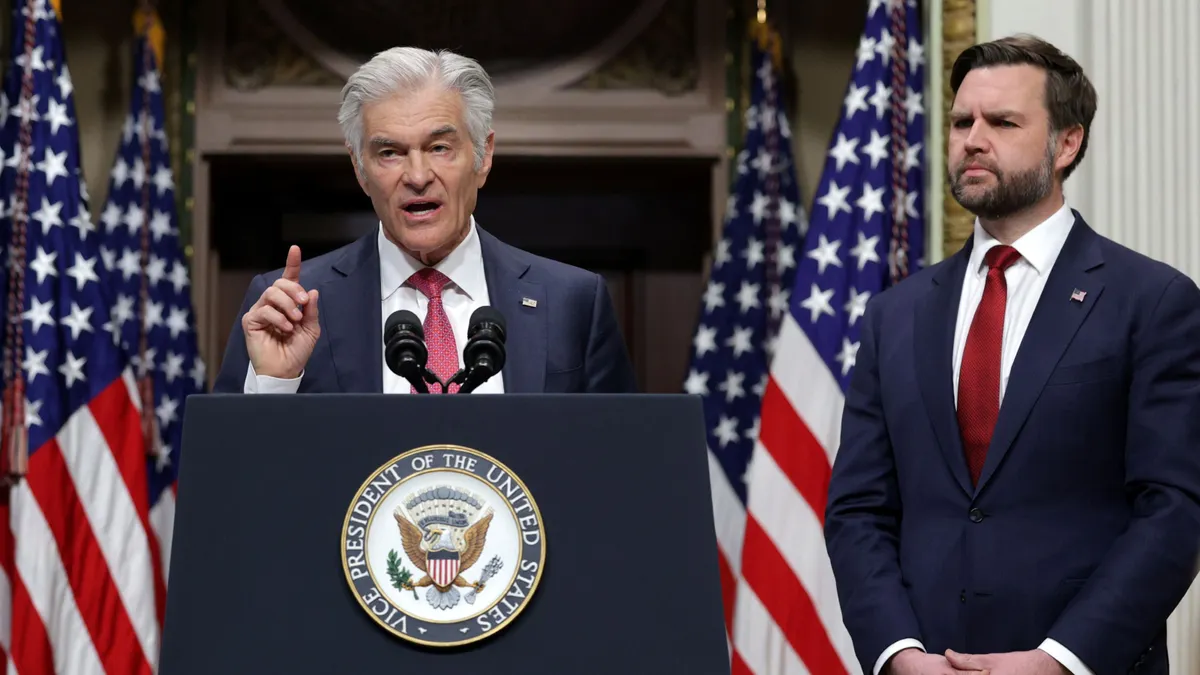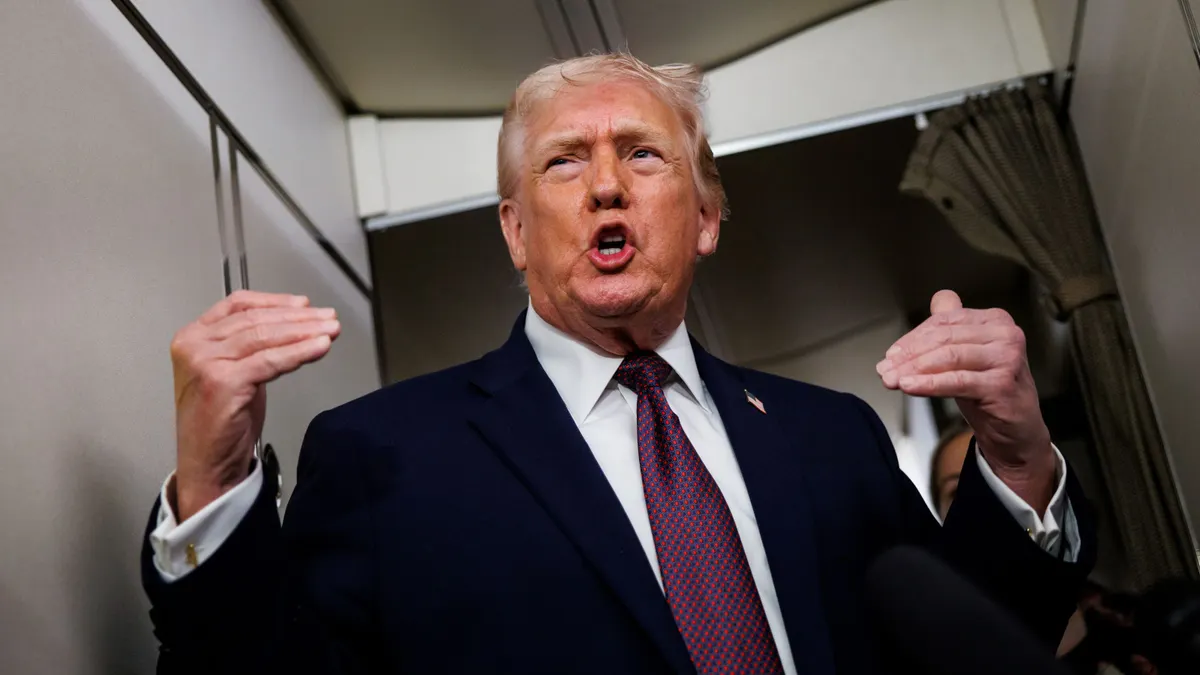
President Donald Trump on Thursday unveiled his long-awaited plan to make healthcare more affordable for Americans.
The proposal, dubbed the “Great Healthcare Plan,” would send money directly to consumers to purchase insurance, fund a cost-sharing reduction program in the Affordable Care Act exchanges and end kickbacks from pharmacy benefit managers to brokerage middlemen.
It would also codify the “most favored nation” deals for cheaper drugs that Trump has notched with pharmaceutical companies, and make more prescription drugs available for over-the-counter purchase.
In a statement, the White House said the “Great Healthcare Plan” will “slash prescription drug prices, reduce insurance premiums, hold big insurance companies accountable, and maximize price transparency in the American healthcare system.”
However, the blueprint is short — Thursday’s release is just one page — and vague on details.
It also includes number of policies that experts are unsure would move the needle on healthcare costs.
That includes sending money directly to consumers so they can buy insurance, a popular solution among conservatives for ameliorating sharp premium hikes for Affordable Care Act plans this year.
Premiums have doubled on average for ACA plans in 2026 after more generous subsidies for the coverage expired on Dec. 31. The president has maligned the subsidies, which drove record enrollment in ACA plans, as a handout to insurance companies.
“I want to end this flagrant scam and put extra money straight into the healthcare savings account in your name, and you go out and buy your own healthcare, and you’ll make a great deal,” Trump said in a video announcing the plan.
However, those health savings accounts, or HSAs, are currently limited to high-deductible bronze and catastrophic plans in the ACA exchanges, so only a subset of enrollees would benefit from the infusion of federal dollars.
Moreover, money in HSAs can’t be used to pay for monthly premiums.
Swapping the enhanced ACA subsidies for deposits in an HSA would measurably worsen healthcare affordability, according to 70% of experts surveyed by the Cornell Health Policy Center in December.
The “Great Healthcare Plan” would also fund a cost-sharing reduction program for ACA plans. Cost-sharing reductions are another type of assistance in the ACA exchanges — they help insurers finance out-of-pocket healthcare costs for low-income consumers. The government historically supported this through annual payments to health insurers.
However, cost-sharing reductions have been on hold since 2017, when the Trump administration elected to end them following a court case over the legality of the payments.
Now, Trump wants to bring them back. Funding a cost-sharing reduction program would save taxpayers “at least” $36 billion and cut ACA premiums by more than 10%, the White House said, citing estimates from the Congressional Budget Office.
The “Great Healthcare Plan” would also require insurers to provide rate and coverage comparisons upfront on their websites in “plain English” to help consumers more easily shop for plans.
Insurers would also have to publish the percentage of medical claims they reject and average wait times for routine care.
In addition, the companies would have to post how much revenue goes towards paying medical claims versus what’s spent on costs and retained as profit.
Insurers already report that breakdown in quarterly financial disclosures through a metric called the medical loss ratio.
Finally, any provider or insurer that participates in Medicare or Medicaid will have to “prominently post” their pricing and fees in their place of business, the plan says.
The focus on price transparency is not new for Trump, who has argued over both of his tenures in office that healthcare costs would plummet if only consumers knew the prices of medical care.
The CMS during Trump’s first term finalized two price transparency regulations requiring insurers and providers to share price data, but compliance has been shoddy and there’s little evidence the regulations have moved the needle on affordability.
Still, through the “Great Healthcare Plan” the U.S. “will have maximum price transparency and costs will come down incredibly,” Trump said in Thursday’s video. “I’m calling on Congress to pass this framework into law without delay.”
The release of an actual plan, however vague, is somewhat of a surprise given Trump and his top healthcare regulators spent his first term promising a healthcare plan that would replace the ACA. None materialized.
Still, conserveratives are backed into a corner on health costs. The party refused to extend enhanced subsidies for ACA plans last year, setting 20 million Americans in the ACA exchanges up for steep premium hikes. Given the popularity of the subsidies, Republican leaders are concerned they could be punished for that stance in November’s midterm elections.
However, America’s affordability crisis extends well beyond the ACA.
Costs are also rising in other insurance markets as Americans use more medical care and manage more chronic conditions. Meanwhile, prices for care have also become more expensive due to the inflationary effect of Trump’s tariff policies, medical workforce shortages, provider consolidation and other drivers.