Dive Brief:
- The federal government entered a partial shutdown on Saturday, allowing telehealth flexibilities in Medicare and waivers for acute hospital-at-home care to lapse.
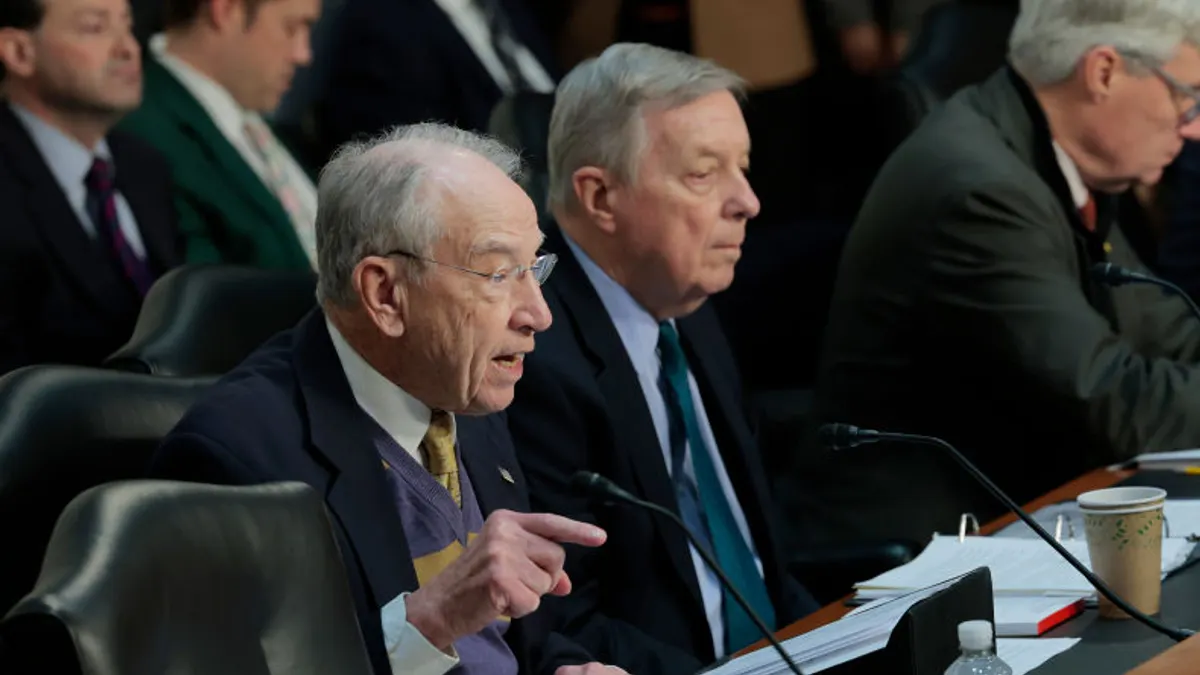
- Legislation that would fund the HHS through September and enact other healthcare policies, including pharmacy benefit manager reforms, was stalled for several days over funding for the Department of Homeland Security in the wake of fatal shootings by federal immigration officials in Minneapolis.
- Still, lawmakers appear to be making progress toward reopening the government. On Friday, the Senate passed funding legislation. The bill still needs to be approved by the House. Speaker Mike Johnson, R-La., said the chamber should pass the funding legislation by Tuesday.
Dive Insight:
The House originally passed the government funding package in January, shortly before appropriations was set to lapse near the end of the month. Funding bills for some agencies had already been enacted.
The Senate appeared ready to pass the package too, given lawmakers have limited appetite for another lengthy government shutdown.
But the legislation — which included HHS funding as well as other health policies — was bundled with spending decisions for other agencies, including the DHS. Democrat senators balked at approving the legislation after federal immigration agents fatally shot intensive care nurse Alex Pretti in Minneapolis.
Now, the Senate has reached a deal. The chamber voted 71 to 29 to send the package back to the House on Friday, including an amendment that strips out DHS funding and starts a two-week clock to renegotiate the agency’s appropriations.
The legislation allocates $116.8 billion in discretionary funding for the HHS, an increase of $210 million over fiscal year 2025 and $33 billion more than the White House requested, according to the Senate Committee on Appropriations.
Spending at the HHS has been a contentious issue for Democrats over the past year as the Trump administration moved to sharply curtail government spending and lay off workers.
Additionally, the spending package enacts some reforms for PBMs, middlemen in the drug supply chain that have drawn increased scrutiny from lawmakers in recent years. The legislation includes transparency requirements for PBMs and prohibits the middlemen from linking their pay to drug manufacturers’ list prices in Medicare Part D.
The package also delays cuts to Medicaid disproportionate share payments for safety-net hospitals until fiscal year 2028, and moves towards site-neutral payments by requiring providers with off-campus outpatient departments to use separate identification numbers.
Pandemic-era telehealth and hospital-at-home flexibilities have gotten a reprieve under the legislation too. The bill preserves policies that expanded Medicare reimbursement for telehealth through 2027.
And the Acute Hospital Care at Home Program, an initiative that allows approved hospitals to deliver inpatient care in patients’ homes, would have been extended through Sept. 30, 2030.
Providers and telehealth advocates have urged Congress to extend the virtual care and hospital-at-home flexibilities for longer periods of time. The policies expired entirely for weeks during the shutdown last fall, disrupting virtual care access and forcing health systems to return hospital-at-home patients to facilities.