The CMS proposed a rule on Thursday that would slash Medicare payment rates for a program that hospitals use to buy discounted drugs and implement site-neutral payments for some imaging services next year.
Reforming the 340B drug discount program and better equalizing payments between sites of care have been priorities in the second Trump administration. Thursday’s proposed rule builds upon those agendas, including by expanding the services subject to site-neutral payments and more aggressively tamping down on discounts given to hospitals in the 340B drug program, which regulators previously tried to overhaul before dialing down their efforts in the face of opposition from the industry.
Medicare officials said the proposed rule would control costs and ensure Medicare money is directed toward “clinically appropriate” care.
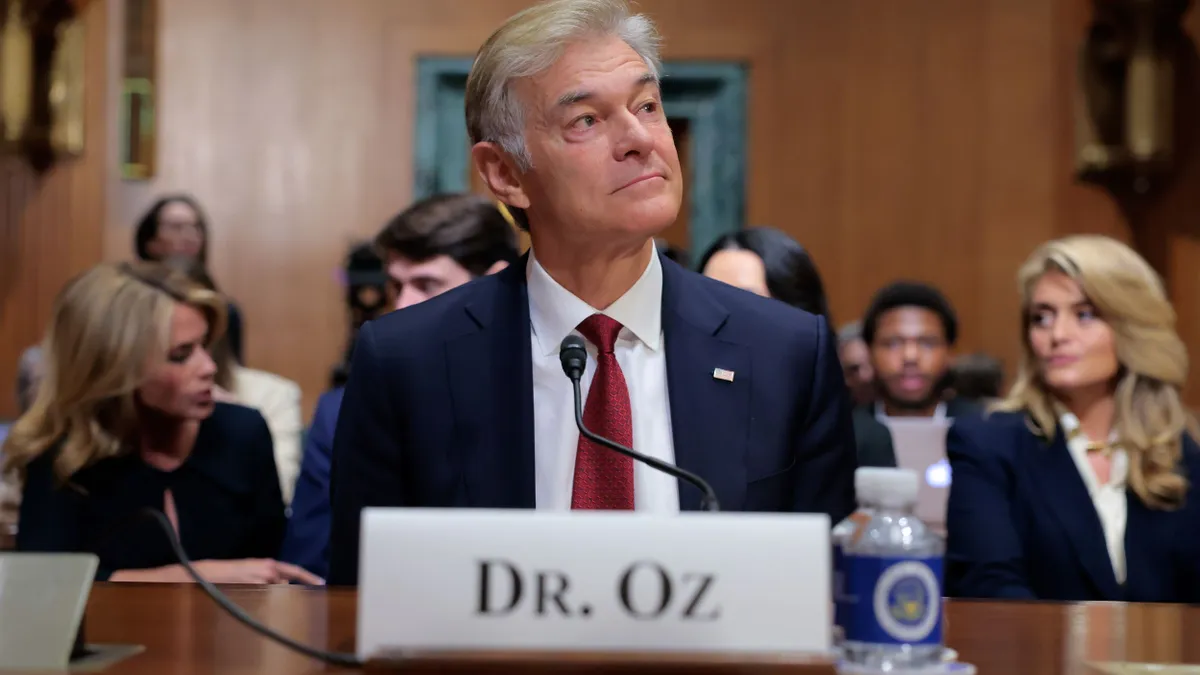
“This proposed rule focuses squarely on patient affordability by strengthening our utilization management tools, aligning drug payments with actual acquisition costs, and removing site-of-care disparities that have unnecessarily driven up costs for millions of seniors,” CMS Administrator Dr. Mehmet Oz said in a Thursday press release.
Still, provider groups decried the proposed changes, arguing they would disadvantage safety-net providers that receive steep discounts under 340B.
“The proposed OPPS rule from CMS takes an axe to critical funding that supports essential hospitals without concern for how it will affect the patients they serve,” Jennifer DeCubellis, the president and CEO of advocacy group America’s Essential Hospitals, said in a statement.
The 2027 Hospital Outpatient Prospective Payment System and Ambulatory Surgical Center rule proposes to increase pay for outpatient care by 2.4%, slightly less generous than the 2.6% rate update finalized last year.
The rule would request information from stakeholders about how hospitals post publicly available price data, an ongoing priority for the Trump administration. Additionally, if finalized, the rule would allow certain accrediting organizations to assess hospitals on their compliance with laws regarding emergency care.
Regulators propose slashing 340B payments
Medicare is proposing to pay billions of dollars less to hospitals participating in 340B, a decades-old drug discount program created to help hospitals that serve vulnerable patients buy afford expensive outpatient drugs.
Lawmakers, drugmakers and researchers have argued that 340B is spiraling out of control, a concern shared by the Trump administration, which says that Medicare pays hospitals too much for the drugs.
Medicare traditionally pays for drugs covered under the Part B benefit at a rate equal to the drug’s average sale price plus 6%. But when hospitals acquire drugs at a discounted price through 340B, they can receive Medicare reimbursements that well exceed the cost to purchase the drugs, research has shown.
340B is designed so that insurers reimburse hospitals at a higher rate for drugs than hospitals pay drugmakers to receive them. But the discrepancy in Medicare is too high, according to the CMS.
Regulators are now proposing to reimburse hospitals at the drug’s average sales price, minus 33.4%. Medicare says the proposal should reduce total drug spending by $5.7 billion in 2027 alone, including $1.15 billion in beneficiary drug payments during the first year.
Because the policy is required to be budget neutral, regulators are proposing to increase outpatient payments for non-drug services by an equivalent amount. That would actually create an uplift for non-340B providers, including for-profit hospitals, which would be “major beneficiaries” of benefits because they do not participate in the drug discount program, according to a Thursday research note from TD Cowen.
It’s the second time the Trump administration has attempted to promugulate policy reducing Medicare payments for 340B drugs. In 2017, the CMS finalized a policy reimbursing 340B drug discount payments at the average sales price minus 22.5%. But the Supreme Court struck the change down in 2022, determining it was unlawful because the government did not conduct a study of relevant hospitals’ drug acquisition costs.
The Supreme Court opinion forced the CMS to begin repaying hospitals back for the money they were withheld from 2018 to 2022.
This year, the CMS said they conducted a survey of some outpatient drugs that showed “significant disparities” between what hospitals pay for drugs through 340B and what they pay for drugs outside the program. In some instances, the CMS said beneficiary cost sharing was greater than the total price hospitals paid for drugs in 340B.
The CMS “likely feels they're in better standing now with an acquisition survey,” although the 340B policy will probably still be challenged, TD Cowen analysts said.
The Trump adminsitration has also attempted to reform 340B through other means. Last year, it tried unsuccessfully to allow drugmakers to pay discounts in the form of rebates instead of upfront discounts, in response to concerns about fraud and abuse in the program.
Hospitals — which are usually hostile to attempts to reform the 340B program — sued over the pilot, arguing the CMS announced it without the proper notice-and-comment rulemaking process. The HHS officially scrapped the program earlier this year.
CMS broadens site-neutral payments
The proposed rule also aims to broaden site-neutral payments, which would equalize reimbursement among hospital-owned outpatient departments and freestanding physician offices.
Under current policy, hospital outpatient departments receive higher reimbursement for providing the same services compared to other physician offices and ambuatory surgery centers. Critics say those policies incentivize hospital consolidation and drive up costs in Medicare.
“Medicare and patients should not be charged more for an imaging test solely because it is done in a hospital setting rather than a standalone clinic,” the CMS said in a press release.
The Trump administration has attempted to regulate site-neutral payments, including regulation it finalized last year to equalize reimbursements for drug administration services.
Now, Medicare is broadening site-neutral payments by proposing to pay physician offices and off-campus providers the same rate for imaging services without contrast.
If finalized, the rule would reduce Medicare Part B expenditures by about $260 million in the first year, regulators said.
Additionally, the CMS proposed to continue phasing out the inpatient only list, a list of which surgical procedures have to be furnished in hospitals. In 2027, the second of three years that it will phase out the list, Medicare proposes removing 638 services in a variety of clinical areas.
Regulators want more info on price transparency
As part of the proposed rule, the CMS is also issuing a request for information concerning hospital price transparency.
Hospitals have been required to post publicly available price data since 2021, in hopes that the information will empower customer choice and work to bring down subbornly high healthcare costs.
But compliance among hospitals has notoriously lagged. A report last year by Patient Rights Advocate found that many hospitals had stopped publishing actual prices in dollars and instead relied on estimated percentages and algorithms that were either unquantifiable or required an expert to interpret.
The RFI seeks input on how to standardize and strengthen data reporting requirements, including how to enhance the usefulness of consumer-facing displays.
CMS tightens up Botox, adds oversight to EMTALA
Medicare is also proposing to add prior authorization for outpatient botulinum toxin injection procedures, commonly known by the brand name Botox, as it says the volume of injections is increasing without “any explanations to justify it.”
Regulators say data and research show the injections, which can be used for cosmetic purposes and to treat migrains and muscle spasms, are increasing in volume at an unwarranted rate. Under the proposed rule, eight additional botulinum toxin injection codes would be required to undergo prior authorization before being administered to patients.
The CMS also said it would permit certain hospital accrediting organizations to assess compliance with the Emergency Medical Treatment and Labor Act, which requires all hospitals that participate in Medicare to stabilize patients and provide appropriate medical screenings.
Over 80% of hospitals are accredited by AOs, and giving them additional inspection powers would reduce duplicative state investigations and minimize operational disruptions at hospitals, regulators said.