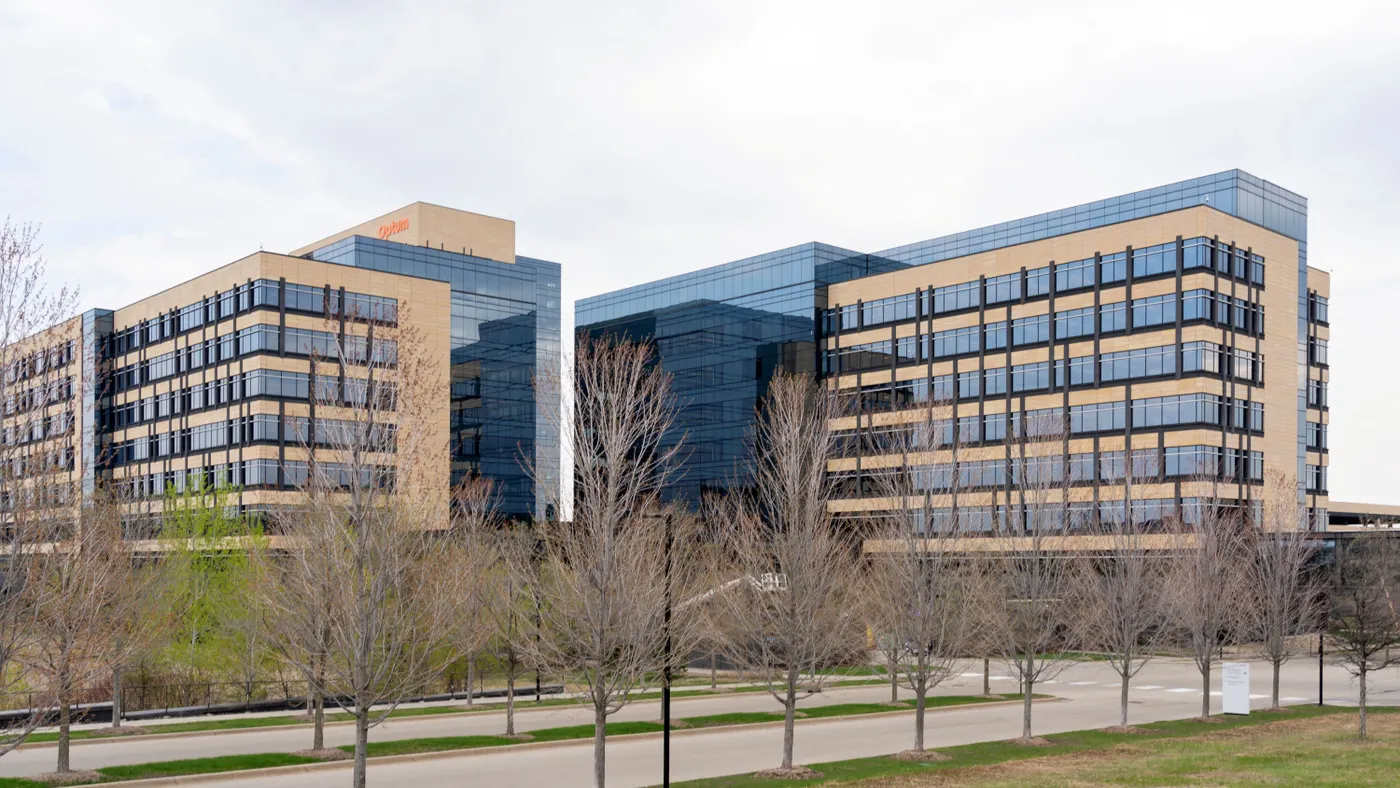
A Medicare Advantage network dispute between Optum and Humana in Washington state is pushing seniors into rival Medicare plans — including those owned by Optum’s corporate parent UnitedHealth — in what antitrust experts say could be one of the first high-profile instances of a provider making a network determination to harm a competitor of its insurance parent company.
In November, Washington seniors in Humana MA plans began receiving notices that Optum would no longer be in-network effective Jan. 1. The impending split has thrown certain markets in the Evergreen State into disarray.
Humana members found out their Optum doctors would be going out of network just before Medicare open enrollment for 2026, kicking off a cascade of coverage changes in areas where Optum has an outsized presence.
“It’s been disruptive,” said Marni Mills, a Medicare sales agent located in Mukilteo, Washington.
Mills said her affected Humana clients have all switched to the only other MA plan covering Optum that she sells: UnitedHealthcare.
“My goal as a broker is to keep my clients with their doctors. So we’re switching plans from Humana to whatever carrier is necessary in order for patients to stay with their doctors — that’s the most important thing,” Mills said.
Clashes between insurers and providers over contract terms are intensifying, and often leave patients caught in the middle. But this dispute, between two giants in the healthcare sector, highlights larger concerns about anticompetitive ripple effects from growing consolidation between health insurers and providers — and how they may be chipping away at payment integrity in the popular MA program covering 35 million seniors.
“Because [Optum] is the largest employer of providers, they pretty much often can do whatever they want. They can say to Humana, ‘Oh, not going to pay us what we want? Okay, bye.’ And that just drives people into the UnitedHealthcare product, which benefits the overall company,” Danielle Roberts, a Medicare insurance agent and founder of national brokerage Boomer Benefits, said.
Healthcare companies argue that owning both insurer and provider businesses results in better care coordination and operational efficiencies, lowering costs while improving health outcomes.
But the overlap between UnitedHealthcare and Optum is a key worry of federal regulators, who have recently taken greater notice of the sprawling conglomerates created after years of largely unchecked vertical integration. One major concern in mergers between providers and insurers is foreclosure — when a company is able to block competitors’ access to a healthcare market by exclusively dealing with its own businesses.
That looks a lot like what’s playing out in Washington, some experts said.
“This is something that has been a conceptual concern, and hasn’t necessarily been borne out, or we haven’t had good data about this being borne out,” said Chris Whaley, an associate professor of health services, policy and practice at Brown University’s School of Public Health.
But “this could be a case where the conceptual concern is actually affecting how patients are getting care,” Whaley said. “I think this is a top order concern for the Medicare program as well as for antitrust regulators.”

Optum and Humana at loggerheads
Notices to Medicare seniors sharing that Optum would no longer be in-network with Humana in 2026 sparked concern for many in Washington.
Sixty-three of Optum’s some 1,600 primary and specialty care clinics are in the state. Meanwhile, Humana is Washington’s second-largest MA payer after UnitedHealthcare, covering almost 120,000 seniors, according to CMS data.
Humana confirmed the contract dispute with Healthcare Dive, though the company stressed that discussions are ongoing and could still result in a deal.
“We are engaged in good-faith discussions and have put forward proposals that would place Optum at rates that are fair, reasonable and market-based,” Mark Taylor, Humana’s director of corporate communications, said over email. “Medicare beneficiaries deserve choice and a fair, competitive market. We are committed to advocating for these values.”
Optum did not fully respond to an emailed list of questions for this story. However, a spokesperson for the provider said Optum changed its relationships with MA carriers for 2026 as part of its commitment to “delivering affordable, high-quality care.”
It’s the latest in a flurry of recent contract disagreements between health insurers and providers, as providers seek higher rates, citing the rising costs of doing business, and insurers try to keep a handle on escalating spend.
Disputes involving MA plans are particularly intensifying, according to data from FTI Consulting. This year saw 46 contract disputes in the first three quarters alone, an acceleration from earlier in the decade that providers say stems from their refusal to accept below-market rates or onerous terms like oppressive prior authorizations.
But a few things differentiate this contract disagreement from others that have trickled into the public eye.
For one, Optum is owned by UnitedHealth, a colossus in the healthcare space with more than $400 billion in annual revenue. UnitedHealth provides health insurance to more than 50 million Americans through UnitedHealthcare and medical services in 20 states through Optum, its massive health services division.
Optum’s care delivery unit, Optum Health, is the largest physician enterprise in the U.S., with roughly 90,000 doctors. About 10% are directly employed, which gives the company uncommonly powerful leverage to negotiate higher rates in contract negotiations with insurers, experts say.
But the dispute is mostly atypical because of how Optum turning its back on Humana could benefit Optum’s sister company, UnitedHealthcare.
“You almost do a bit of a double take,” said Brown University’s Whaley. “You have an insurer having a network and contract dispute with a large group of providers through Optum. But then that same group of providers is owned by a competing insurer. The potential concern is that these contract decisions are not just based on payment for the services themselves, but potentially influenced by competition for MA members.”
The Optum spokesperson refuted that its network decisions are influenced by other considerations beyond its provider business.
“Optum’s relationships with any insurance plan are determined solely by Optum and local clinical operations based on how to best serve area patients and allow physicians to focus on what they are licensed and trained to do,” the spokesperson said. “We will continue supporting our Washington patients through this transition so they can maintain continuity of care by either choosing a different health plan or different provider.”
At the state level, it’s too early to say whether the Optum-Humana spat spurred a large number of Humana members to switch to other plans, including UnitedHealthcare. Open enrollment for 2026 Medicare plans ended Dec. 7, and it will be months until insurers start reporting enrollment figures.
But in breakups between payers and providers, patients — especially seniors — almost always side with their providers, according to Medicare agents.
The potential concern is that these contract decisions are not just based on payment for the services themselves, but potentially influenced by competition for MA members.

Chris Whaley
Associate professor of health services, policy and practice at Brown University’s School of Public Health
Roberts with Boomer Benefits estimated that just 2 in 10 seniors would stay with their insurer if their physicians were set to go out of network. The remaining 8 would switch insurers instead.
“If you have somebody with a lot of health conditions, which are more prevalent the older you get, those people are a lot less likely to want to leave their doctor behind,” Roberts said. In this case, “if [Humana members] want to keep those doctors, they’re going to be driven mostly to UnitedHealthcare plans,” she said.
Humana said it would not comment on possible membership movement. But the insurer plans to cover Optum care at in-network rates for affected MA members through the beginning of April, according to a notice of the network change reviewed by Healthcare Dive.
The notice says the temporary coverage period is to minimize disruptions to care, but it could also be a sign that Humana is thinking about member retention.
Seniors already on MA will have another opportunity to switch their coverage during a separate open enrollment period, which runs from Jan. 1 through March 31. Theoretically, if a Humana member changed plans during open enrollment this fall to keep Optum in network — and Optum and Humana reach a contract agreement before March 31 — that member could then switch back to Humana, without any disruption to their access to Optum.
Still, if any enrollment changes stick, they could further entrench UnitedHealthcare’s dominance in Washington’s Medicare market. The insurer covers more than one-third of the state’s MA enrollees, according to a report from the American Medical Association last year.
But it’s more important to look at the impact on local markets where Optum is a major provider, according to multiple antitrust experts.
For example, Medicare brokers serving Spokane County — where Optum has no clinics — are aware of the network spat, but it doesn’t come up in their conversations with clients, according to Charles Fletcher, a broker in the county.
“I know it’s an issue, but the Optum stuff hasn’t impacted me,” Fletcher said.
But notably, the county where Optum has the most dominant control of primary care in the entire U.S. is in Washington. If you drive five hours west from Spokane, you’ll come across a region where the Humana-Optum split seems to be turning the Medicare market upside down.

‘Optum is around here everywhere’
Tucked beside the Puget Sound in western Washington, Snohomish County lies under a near-constant sheet of clouds from the Pacific Ocean’s marine layer, blanketing its lush evergreen forests, rocky saltwater beaches and rolling hills of farmland.
Snohomish is the third most populous county in Washington state, with about 840,000 residents and growing. It’s an attractive option for people moving to the Pacific Northwest, with its natural beauty and small-town charm paired with easy access to Seattle a short drive to the south.
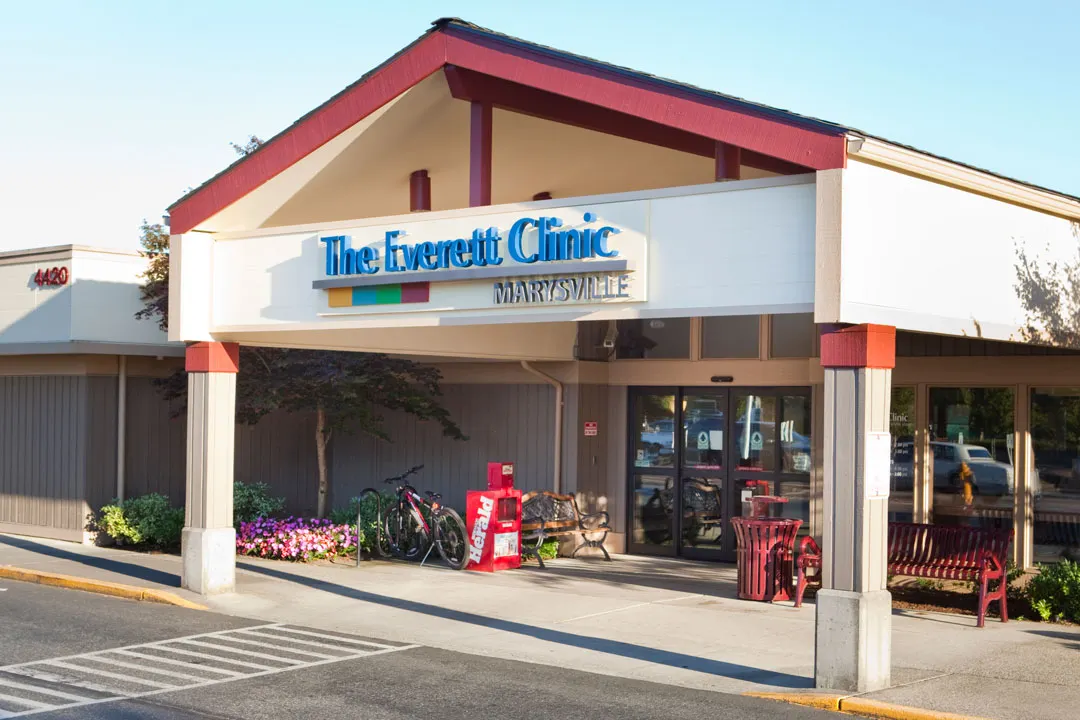
Snohomish also looked attractive to Optum. In the late 2010s, the provider entered the county through a quick one-two punch of acquisitions — the Everett Clinic through its larger buy of DaVita Medical Group in 2017, and the Polyclinic through a standalone acquisition in 2018.
Optum emerged from the deals as a force to be reckoned with.
By 2023, Optum controlled almost 45% of Snohomish’s primary care market, according to a first-of-its-kind study of insurer provider ownership published this summer. In comparison, Optum holds about 2.7% of the primary care market nationwide.
And of Optum’s primary, specialty and walk-in clinics in Washington state, 38 — more than half — are in Snohomish alone.
The company’s dominance in Snohomish means it’s difficult for residents in the area to find other physicians — and creates a significant incentive for those facing the loss of in-network access to switch plans, experts say.
Notices from Optum and Humana sharing the network change with affected patients caused significant hullabaloo. Over November and early December, Medicare brokers were inundated with calls from worried seniors faced with shopping for a new MA plan. Some held informational meetings for seniors to come, ask questions and learn about alternate options, according to two seniors who attended such events.
They learned there was only one real alternative for commercial shoppers looking for comprehensive primary care. One broker, who asked to remain anonymous for fear of tainting business relationships, changed their voicemail message in the days leading up to the end of open enrollment, sharing that option for seniors who weren’t able to reach them on the phone.
“I am so sorry that Optum has left Humana but we will get it all figured out. I write UnitedHealthcare plans as well, so we can get you transferred over to a couple plans that look fairly similar,” the broker said in the message heard by Healthcare Dive on Dec. 5.
Sandy Koffron, a 74-year-old living in rural Snohomish town Stanwood, switched from Humana to UnitedHealthcare to retain access to Optum in 2026.
It was a difficult decision, she said. Koffron and her husband Louis, 79, have been Humana MA members for seven years, and love the coverage. Humana covered their bills when Koffron went to the emergency room. It covered their bills when she needed gallbladder surgery. It covered their bills when Louis fought a bout of sepsis, a dangerous immune response that can follow an infection.
But if Koffron hadn’t signed up for UnitedHealthcare, she and her husband would have to become patients at the closest non-Optum doctor’s office, a 20-mile drive away in Mount Vernon. It’s a daunting prospect, and one that frightened her when she received notice of the coverage change.
“It has been very stressful. I don’t want to get a new doctor. And Optum is convenient for us,” Koffron said. “Truthfully, Optum is around here everywhere.”
UnitedHealth’s tightening grip
UnitedHealthcare is similarly dominant in Snohomish’s Medicare market, suggesting that resources may have been targeted into that particular county to give the companies’ parent, UnitedHealth, immense sway, experts say.
UnitedHealthcare controlled almost 49% of Snohomish’s MA market following the MA open enrollment period this April, according to an analysis of Medicare data by Healthcare Dive.
The runner-up? Humana, which holds 25% — roughly half of UnitedHealthcare’s share, and a percentage that could shrink if Humana loses members to UnitedHealthcare next year.
UnitedHealthcare has cemented its hold on the Snohomish MA market
UnitedHealthcare has held the largest share of Snohomish’s MA market for at least the past decade. In 2016 — the year before Optum’s proposed acquisitions of the Everett Clinic and the Polyclinic were announced — UnitedHealthcare controlled almost 36%.
UnitedHealthcare’s extensive presence in Snohomish may have made the county an attractive area to also invest in Optum, said Loren Adler, the associate director of the Brookings Institution’s Center on Health Policy.
It’s a “clear potential win” for UnitedHealth, he said. “If United can steal a bigger and bigger market share, then they can hike up premiums and take bigger profits there.”
UnitedHealth did not respond to questions about its growth strategy and market control in Snohomish.
But insurers tend to pursue vertical consolidation in areas where Medicare seniors are also prevalent, according to a study Adler authored this summer. Buying up doctor’s offices in those locations provides an opportunity to also expand their profits in MA, Adler explained.
In the privatized Medicare program, the government pays private health insurance companies a fixed rate per enrollee. The goal is to incentivize insurers to better manage care and control costs, hopefully saving Medicare money while improving members’ health.
But that payment structure also introduces significant opportunities for gaming. MA adjusts payments to plans higher or lower based on an enrollees’ health status. As a result, insurers are incentivized to exaggerate how sick their members are to garner higher payments, a practice called upcoding.
Exaggerating gets easier when you employ the doctor examining your members, experts say. Research has found that upcoding increases with vertical integration: Provider ownership is associated with risk scores that are 16% higher than in traditional Medicare, compared to an average of 6% among all other MA plans, according to a study published in 2020.
If United can steal a bigger and bigger market share, then they can hike up premiums and take bigger profits.
Loren Adler
Associate director, Brookings Institution’s Center on Health Policy
Vertical integration also allows insurers to sidestep rules meant to prevent them from restricting members’ medical care in order to profit.
In MA, plans must spend at least 85% of their members’ premiums on medical costs, reflected in a metric called the medical loss ratio, or MLR. But by steering patients toward owned providers, an insurer can essentially pay itself for providing the service — enabling the company to keep a greater share of members’ premiums by translating them into revenue in another division.
The insurer can then report those premiums were spent on patient care, driving its MLR into acceptable bounds even though those premiums remained in-house.
UnitedHealth did not respond to questions regarding its vertical integration strategy, including whether it’s driven by the potential to game Medicare payment systems and spending requirements.
But “this vertical integration enables regulatory evasion,” said Hayden Rooke-Ley, a senior healthcare fellow at the American Economic Liberties Project who studies consolidation between insurers and providers.
“We’ve seen how central risk adjustment is to United’s playbook. That, and other potential regulatory constraints like MLR requirements, can be gamed when you see this kind of integration,” Rooke-Ley said.
‘We cannot do anything’
Snohomish is a concerning vignette of what can happen in highly concentrated markets when an insurer and a provider disagree on rates, but the provider’s parent company wins whether it stays in or leaves that insurer’s network, according to antitrust experts.
Tim Smolen, a manager in the Consumer Protection Division of Washington’s Office of the Insurance Commissioner, said his agency is aware of pernicious effects from vertical consolidation in the state but doesn’t have the same tools to address it as federal regulators.
“We’re very concerned about this kind of integration and the way that the plans are using this leverage that they have,” Smolen said. “But in terms of our statutory authority, we cannot do anything to regulate their behavior.”
UnitedHealth is currently facing criminal and civil investigations by the Department of Justice over concerns that the company is profiteering from its control over the healthcare industry, including through the relationship between UnitedHealthcare and Optum.
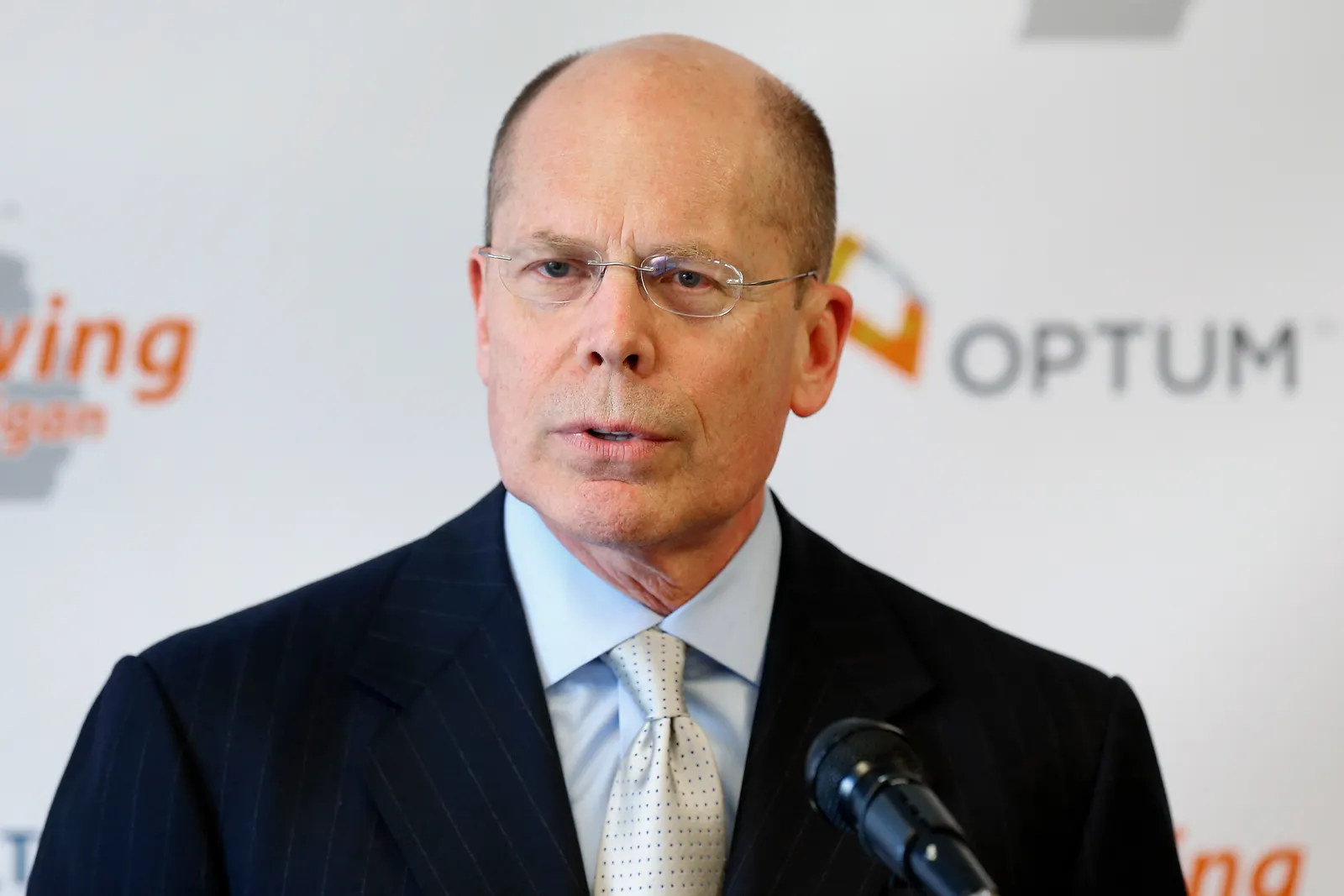
Regulatory scrutiny has added onto a sea of recent troubles for UnitedHealth, including a tsunami of medical costs shrinking the profitability of its health insurance division. The MA market is currently undergoing a contraction as major payers scale back offerings, rework plan designs and take other steps to improve margins.
UnitedHealthcare expects to lose roughly 1 million MA members next year as a result, Tim Noel, the insurer’s CEO, said on a third quarter earnings call in October.
As such, it’s interesting timing for a move that, inadvertently or not, looks set to bump the payer’s membership, even minimally. There’s also the chance that Optum could lose revenue if a contract agreement isn’t reached and patients who remain with Humana stop going to its clinics in the Pacific Northwest.
But UnitedHealth wouldn’t be doing this if it thought it would lead to lower profits, experts said.
“Most practices can’t operate with just one insurer’s patients. But the risk of foreclosure here is higher the more dominant of a position they have. So it’s logical that you’re going to see this in areas like Snohomish County,” Brookings’ Adler said.
It’s unclear whether similar dynamics are playing out in other counties where Optum has a sizable presence, such as Contra Costa County, California, where Optum controls more than 40% of the primary care market; or Clark County, Nevada, where Optum controls almost 36%.
Optum was close to going out of network with Humana MA plans for 2026 in Texas as well, but the two companies reached terms before the contract’s expiration at the end of December, according to broker sources, which Humana confirmed.
Optum and Humana may still be able to reach such an agreement in Washington, even if negotiations bleed into 2026. But even if they do, the contract dispute has already forced Snohomish seniors — torn between loyalty to their physicians and a desire to stay with the Medicare carrier they trust — to make difficult decisions.
Koffron, the senior in Stanwood, was saddened but not surprised when her broker told her that Optum and UnitedHealthcare are owned by the same company.
“At that point you’re thinking ‘Okay, it’s not about us any more,’” Koffron said. “I always felt like Humana was about us. They did the best for us — they paid the bills.”
Though Koffron finds comfort in knowing she’ll be able to keep her doctors next year since she switched to UnitedHealthcare, she’s worried about dealing with a new insurance company. In particular, Koffron’s husband needs his blood checked every two months due to his artificial heart valve. She doesn’t know whether that’ll be covered by their new UnitedHealthcare plan. But leaving Optum wasn’t an option.
“When you get older you don’t like change,” Koffron said. “But I made the decision that I had to change. I didn’t feel like I had a choice.”
Visuals Editor Shaun Lucas contributed to this story.