Dive Brief:
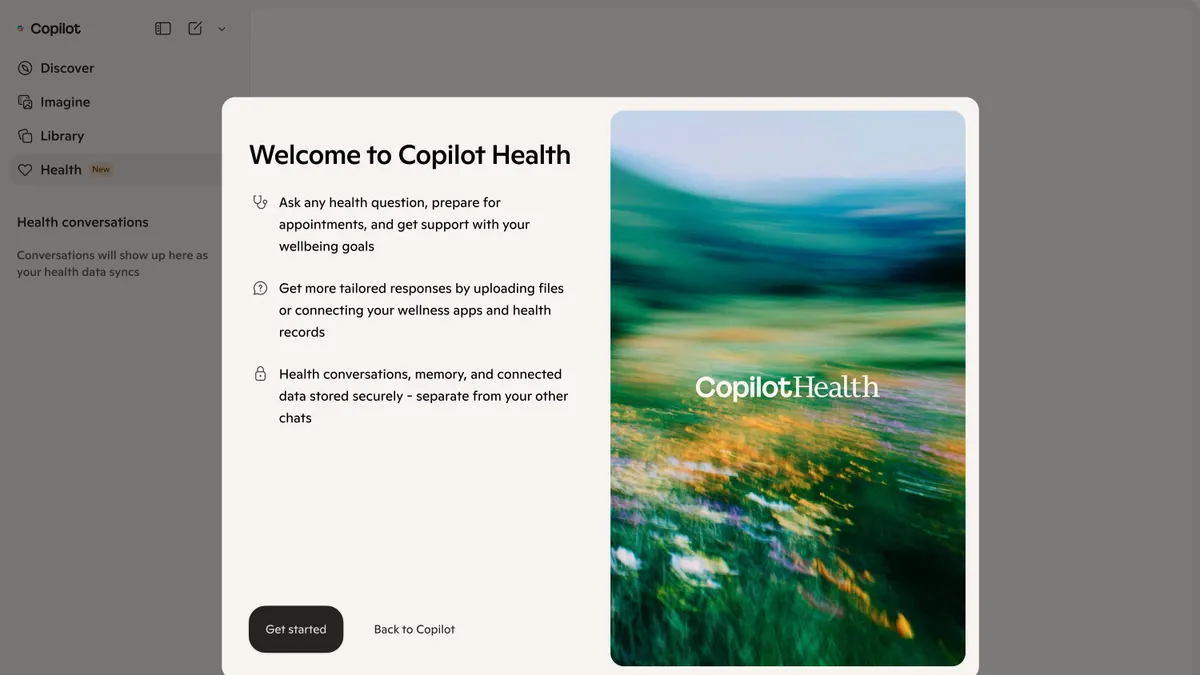
- Microsoft is launching its own health-specific artificial intelligence chatbot, the latest technology giant to release an AI tool dedicated to answering consumers’ health questions.
- Copilot Health is a separate tab in Microsoft’s AI assistant where users can upload their medical records, health histories and data from wearables and connected devices. The chatbot can then draw on their health information to answer questions and provide guidance, Microsoft said.
- “We firmly believe that we’re on the path to medical super intelligence,” Dr. Dominic King, vice president of health at Microsoft AI, said during a press briefing at the 2026 HIMSS conference in Las Vegas. “And by that we mean the ability to combine both the breadth of knowledge that a general physician or a GP or a family doctor has, and the deep expertise of a specialist.”
Dive Insight:
Microsoft’s health chatbot comes after several other tech firms have released their own AI assistants geared toward health queries. OpenAI released ChatGPT Health in January, a similar offering that allows users to connect their medical data to help them handle tasks like understanding recent test results and preparing for doctor’s appointments.
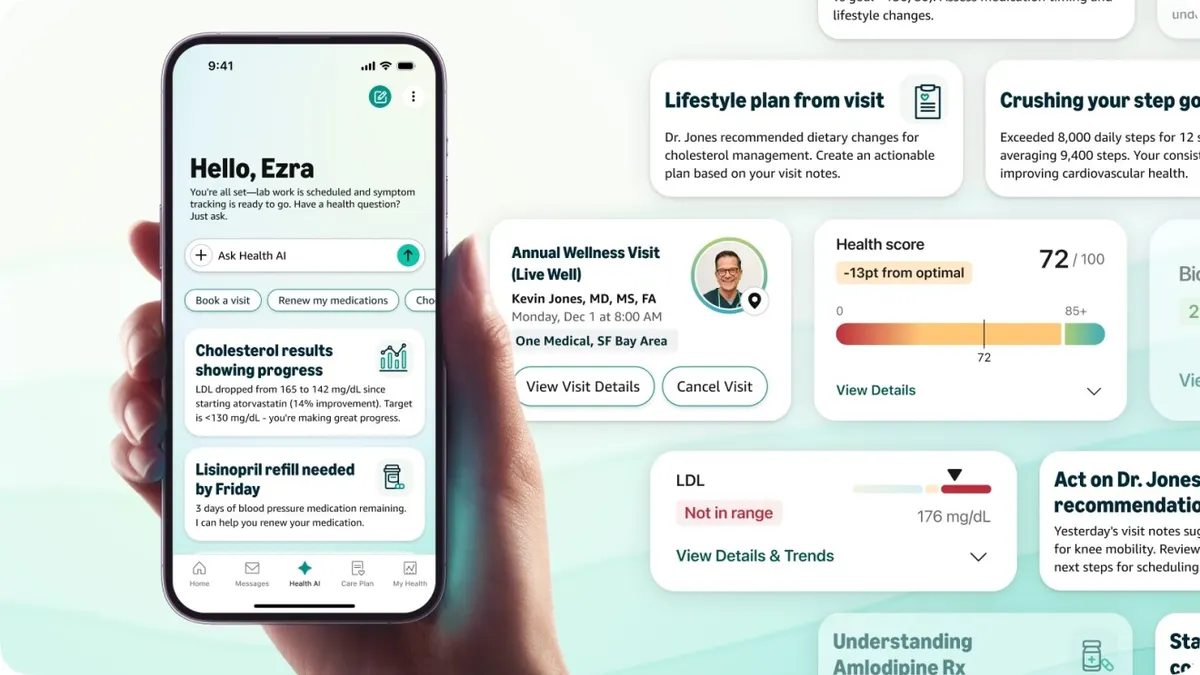
Another AI developer, Anthropic, also rolled out functionality for consumers to upload health data so the AI could offer insights on their care. Amazon rolled out a dedicated chatbot for members of its primary care chain One Medical in late January, and earlier this week said the tool would roll out to all U.S. customers.
A specific tool for health makes sense given how frequently users are already turning to AI for guidance, tech companies say. Microsoft’s products already handle 50 million health queries each day, including questions about health concerns like knee pain or where to find an open urgent care clinic, the company said in a Thursday press release.
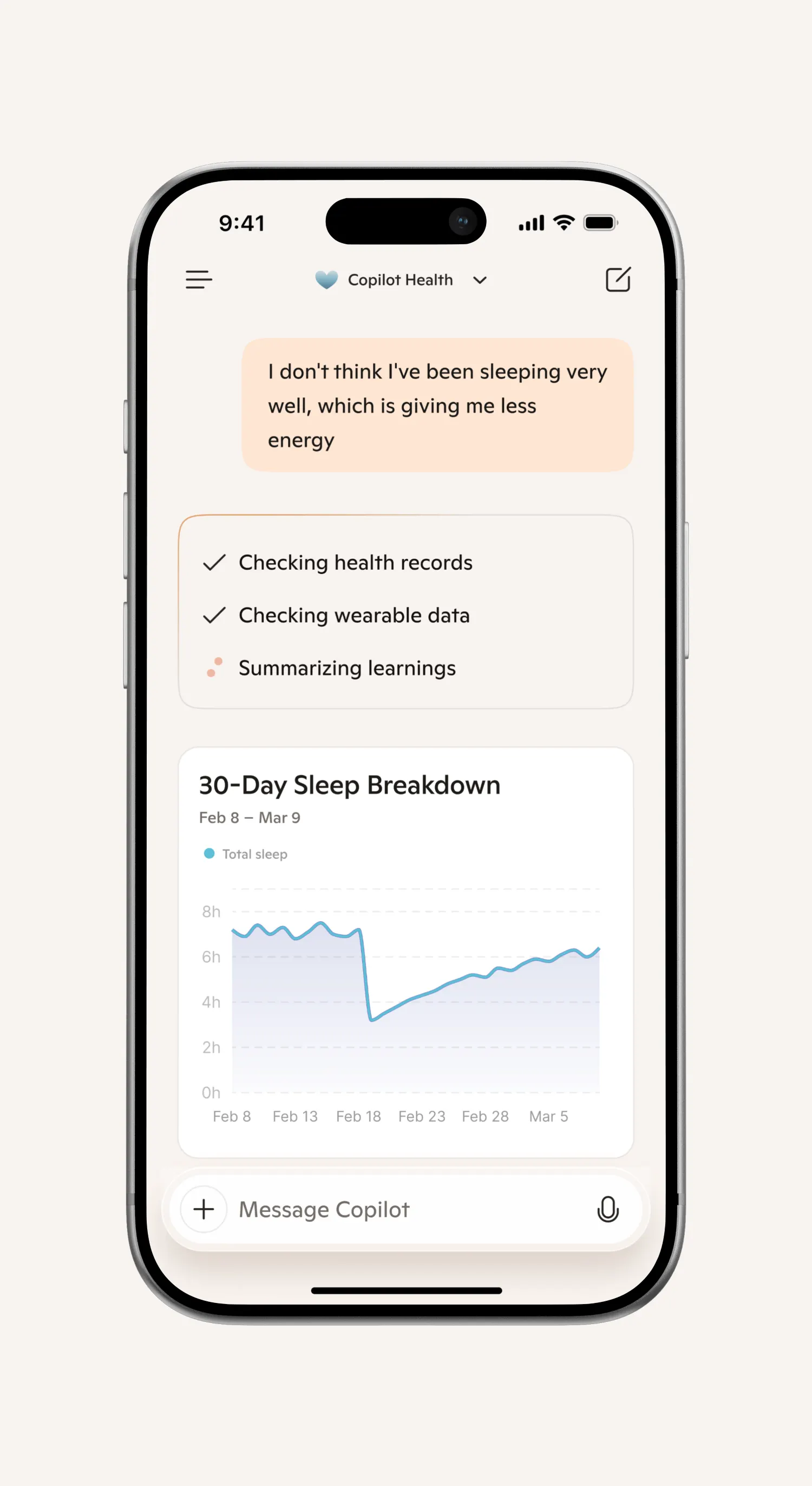
The new tool allows users to upload health-related conversations from Microsoft’s AI chatbot, but information from Copilot Health won’t flow back to the general use AI, King said.
Consumers can also connect their medical records, either by manually logging into their provider portals or through HealthEx, a company that aggregates medical data for users through direct connections with providers and data exchange frameworks like the Trusted Exchange Framework and Common Agreement.
Additionally, users can add data from wearable devices, like the Oura ring, Apple HealthKit and Fitbit.
Data stored in Copilot Health is subject to additional privacy controls, including encryption when information is being stored and when it’s transmitted from one location to another. Users can also delete their data whenever they choose, King said.
“This is my data, I can delete it,” he said. “You may go to different hospitals and primary care practices, and they may have a record that you’re on one medication that you’re no longer on. [...] That can be deleted and removed from my record.”
Still, safety and accuracy remains a concern for AI experts and researchers, given the technology could give misleading or inaccurate responses. One study published last month found OpenAI’s consumer health chatbot frequently underestimated the severity of serious health concerns, like recommending a user with impending respiratory failure see a doctor within 24 to 48 hours rather than going to the emergency room.
Those kinds of triage errors are a serious concern for Microsoft, King said. The company has a “multi-layered” approach to evaluation and safety, and Copilot Health was developed with the technology giant’s internal clinical team with support from an external panel of more than 230 physicians across 24 countries. Still, the tool isn’t a substitute for medical advice, the company said.