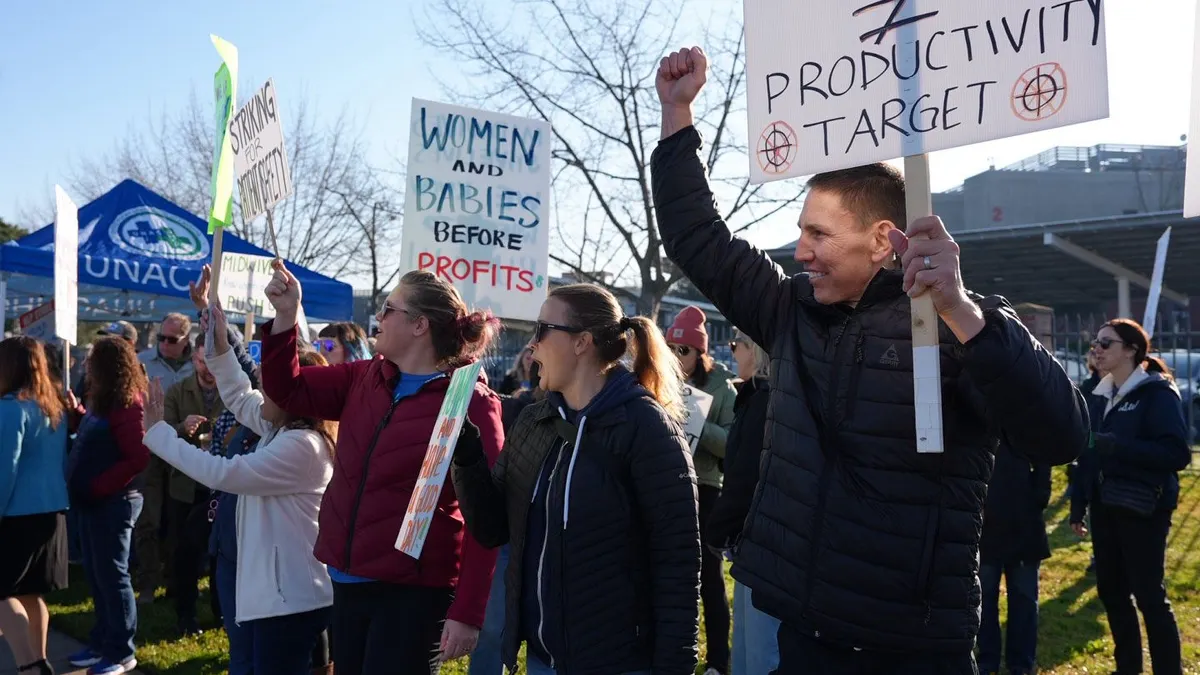
Thirty-one thousand Kaiser Permanente nurses and other healthcare professionals in California and Hawaii ended a major strike Tuesday after about a month on the picket lines.
In a statement Monday, the workers’ union, the United Nurses Associations of California/Union of Health Care Professionals, said “significant movement” at the bargaining table over the past two days prompted leaders to end the strike.
“Returning members to their patients and their livelihoods is the clearest path to securing a final agreement and building on the progress achieved during the strike,” the UNAC/UHCP said.
The union had reached agreements on issues that were key to members, including staffing, workload and safety, Charmaine Morales, president of UNAC/UHCP, told Healthcare Dive Tuesday.
Kaiser said in a statement that UNAC/UHCP leadership had accepted the health system’s offer of across-the-board wage increases of 21.5%, which it initially proposed in early October.
“Our bargaining with UNAC/UHCP and each of the Alliance of Health Care Unions continues at local tables,” Kaiser said. “We are continuing to make progress and remain optimistic about reaching contract agreements soon.”
UNAC/UHCP wanted to pin down the 21.5% wage increase, so Kaiser wouldn’t back away from the proposal, Morales said.
“Based on the behaviors we had seen with the employer, with them being regressive or reneging on things that they had agreed to, we wanted to lock in what the employer’s last proposal was,” she said.
Workers in Southern California will return to their posts over three days, depending on role, according to a plan released by Kaiser. Employees in Hawaii should go back to their normal schedules tomorrow through the rest of the week. Many roles at locations in Northern California will return at their next scheduled shift, but certified registered nurse anesthetists will work with managers to determine their next shift.
The work stoppage was the largest open-ended strike of nurses and other healthcare professionals in U.S. history, according to the UNAC/UHCP. Another strike at Kaiser Permanente in 2023 included 75,000 workers, but lasted three days.
The latest strike, which affected more than two dozen hospitals and clinics, began in late January after months of contract negotiations between the union and Kaiser. Workers called for increased staffing and wages, which they argued haven’t kept pace with rising costs of food, housing and healthcare.
The union also accused the health system of unfair labor practices for allegedly walking away from the negotiating table in December and attempting to bypass the national bargaining system.
Kaiser argues the strike was unnecessary, as the union was pushing for “unrealistic and unsustainable” wage hikes of up to 63%. The health system also pointed toward the coalition approach to bargaining, where local unions band together to negotiate national contracts, as a challenge.