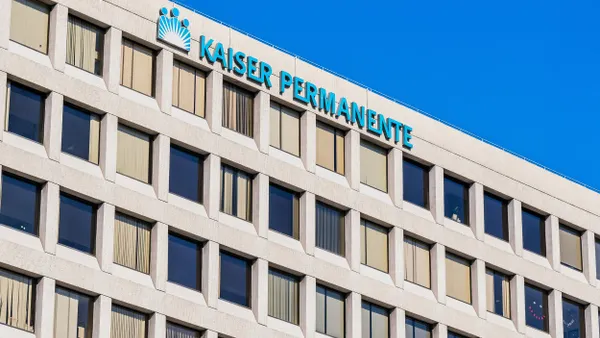
Thirty-one thousand Kaiser Permanente nurses and healthcare workers in California and Hawaii are set to strike Monday after months of contentious labor negotiations.
The work stoppage affects more than two dozen hospitals and clinics, according to the United Nurses Associations of California/Union of Health Care Professionals, the union that represents the nurses, pharmacists, physician assistants and other professionals in both states.
Workers are calling for increased staffing and wages, which the union argues haven’t kept up with the rising costs of housing, food and healthcare. The union also accused the health system of unfair labor practices for allegedly walking away from the negotiating table and attempting to bypass the national bargaining system.
“We’re striking because Kaiser has committed serious unfair labor practices and because Kaiser refuses to bargain in good faith over staffing that protects patients, workload standards that stop moral injury, and the respect and dignity that Kaiser caregivers have been denied for far too long,” Charmaine Morales, president of UNAC/UHCP, said in a Sunday statement.
Hospitals and medical offices will remain open during the strike, according to Kaiser. But some pharmacies in Hawaii and Southern California will close, and the health system may need to cancel some elective surgeries and non-urgent appointments. Some appointments may be shifted to virtual care, Kaiser said.
The work stoppage comes a scant three months after another strike at Kaiser over the same contract. Tens of thousands of workers represented by the UNAC/UHCP launched a five-day strike in October, shortly after the workers’ contract with the health system expired on Sept. 30.
Kaiser and the UNAC/UHCP have been working on a contract for more than 7 months, the health system said.
Now, negotiations between Kaiser and the union have stalled since December as management refuses to return to the bargaining table, according to the UNAC/UHCP.
The union argues Kaiser has prioritized expansion projects — like the health system’s acquisition of Pennsylvania-based health system Geisinger in 2024 — over wage increases and improved staffing.
However, Kaiser says it’s offered the Alliance of Health Care Unions, of which the UNAC/UHCP is a part, wage hikes of more than 21% over the four years of the contract, as well as minimum rate increases and tentative changes to staffing and scheduling.
Alliance employees at Kaiser earn about 16% more on average compared with similar roles at other healthcare organizations, Kaiser said.
The health system has pointed to the coalition approach to bargaining, where local unions band together to negotiate national contracts, as a challenge. While there has been limited progress on economic issues at the national table since the contract expired, 29 out of 53 bargaining units have reached tentative agreements on issues at local tables, according to a Thursday statement from Kaiser.
“This open-ended strike by UNAC/UHCP is unnecessary when such a generous offer is on the table,” the health system said on Sunday. “The strike is designed to disrupt the lives of our patients — the very people we are all here to serve.”