Dive Brief:
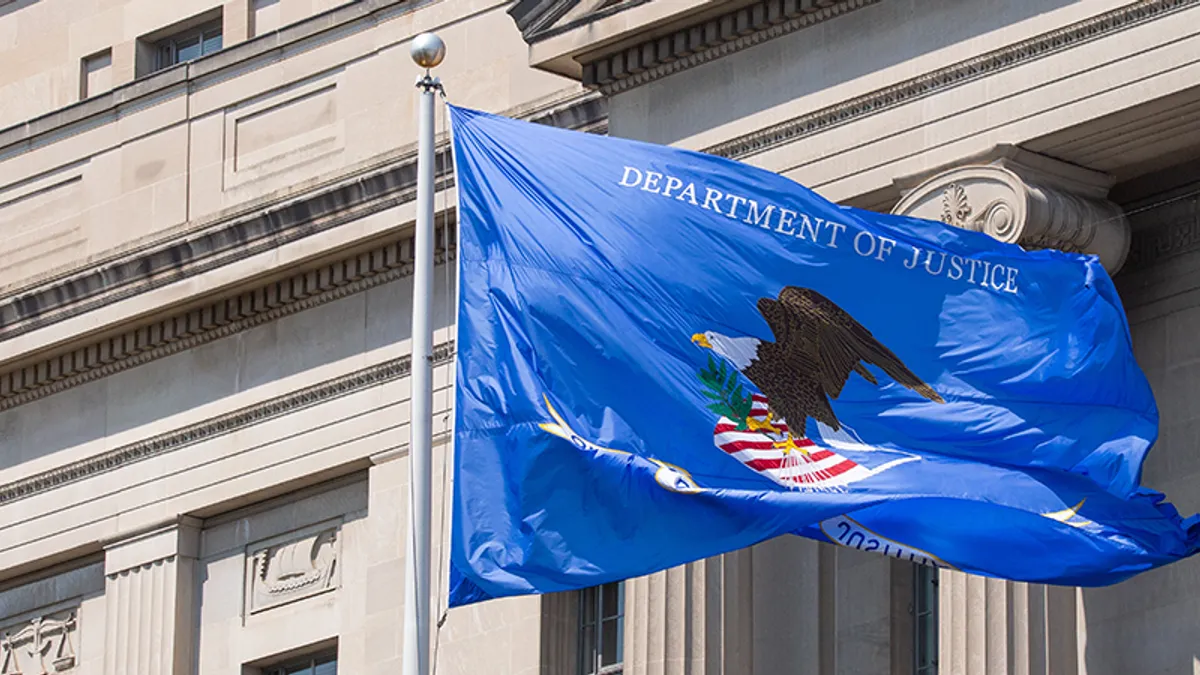
- Healthcare fraud settlements under the False Claims Act totaled over $5.7 billion for the 2025 fiscal year ended Sept. 30, the highest amount ever and more than triple last year’s total, the Department of Justice said Friday.
- The FCA settlements fueled $6.8 billion in total judgments across industries, the highest amount in a single year.
- In healthcare, settlements involved federal programs like Medicare, Medicaid and Tricare, the program for active and retired service members and their families. The Justice Department said it also expanded its enforcement in cases involving managed care, prescription drugs and medically unnecessary care.
Dive Insight:
The False Claims Act imposes penalties on those who defraud U.S. government programs. Defendants found liable can be subject to treble damages — three times the government’s damages, plus a penalty that’s tied to inflation.
The FCA also allows private citizens, or whistleblowers, to file lawsuits on behalf of the government. Whistleblowers can receive a portion of settlements: In 2025, whistleblowers received over $262 million for successful healthcare fraud lawsuits, according to data from the DOJ.
Healthcare has historically made up a majority of settlements in the FCA as federal health spending grows. Still, settlements were outsized in 2025 compared to 2024, when healthcare judgments totaled $1.7 billion.
Several of the settlements announced involved instances of fraud that occurred over a decade ago. Settlements may not be reached until many years down the road as cases make their way through court and both parties attempt to reach an agreement, according to Rachael Jones, principal at law firm McKool Smith and former deputy chief of the criminal division in the U.S. attorney general’s office in the northern district of Texas.
Whistleblowers may be driving some of the increase, as more citizens are incentivized to file suit as settlements circulate in the news landscape and on social media, according to Jones. A record-breaking 1,297 whistleblower cases were filed last year, after another high of 980 cases in 2024, according to the DOJ.
In healthcare specifically, whistleblowers may be more willing to come forward, according to Jones.
“When you find out the marketing schemes of the pharmaceutical companies or that doctors are doing something that’s not in the best interest of the patient ... The motivation to go after that is really high, because you can identify with the people,” Jones said.
Big healthcare settlements in managed care last year included those with New York-based Medicare Advantage insurer Independent Health, which agreed to pay up to $98 million to resolve allegations it submitted invalid diagnostic codes for reimbursement. Seoul Medical Group, its subsidiary Advanced Medical Management and its former president and majority owner agreed to pay over $60 million to settle allegations it submitted false diagnostic codes for spinal conditions to increase its MA payments.
In prescription drugs, the government settled with CVS’ long-term care pharmacy services provider Omnicare for $949 million over allegations it dispensed drugs to elderly and disabled people in assisted living facilities without valid prescriptions. It also inked a $450 million settlement with drug manufacturer Teva Pharmaceuticals over claims it engaged in kickback schemes.
In future years, more FCA settlements could emerge from cases involving big-name drugs or procedures that draw the most money, according to Jones. Novel procedures and drugs could also be a target.