Dive Brief:
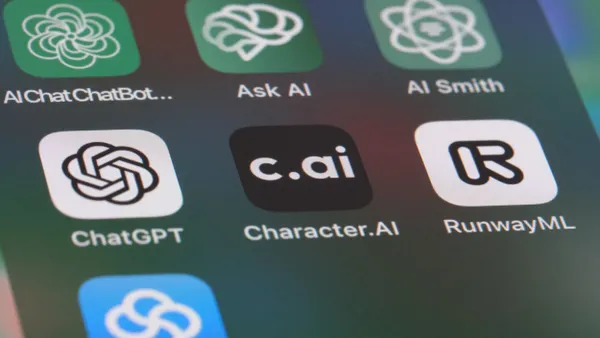
- EHR giant Epic Systems Corp will soon launch its own app store—a company-branded iTunes or Google Play Store for healthcare apps—aimed at creating an independent marketplace for apps related solely to healthcare, according to a report in the Wisconsin State Journal.
- The revelation came not from a press release, but through public statements made by Mark Bakken, co-founder and former CEO of Nordic Consulting, which works frequently with Epic. He was at a luncheon meeting of the Wisconsin Innovation Network when he revealed the plans, which were later confirmed by an Epic spokesperson.
- "Let's say you want to create an app for the iPhone. Apple has automated that online. As long as you play by all the rules, they'll publish it," Bakken told the Journal, explaining that the company will be "publishing a road map about how to work with Epic. Once they officially launch this, then it'll be very, very easy. It will really open the floodgates for anyone that knows Epic to really get their product on the market quickly and in front of Epic's customers. So the distribution channel is huge."
Dive Insight:
Some healthcare media have reported that the move to create an app store might help get Epic out of the doghouse for being too proprietary with their technology. One outlet even ran a piece that linked the opening of the app store to Epic possibly trying to get a major Department of Defense EHR contract. The logic thread was that the DoD is adamant about interoperability, and Epic's reputation for having a closed system might take it out of the running.
That might be a stretch.
True, a handful of healthcare industry figures have publicly stated that Epic is no more a closed system than any other company's EHR solution, and that the company has done far more for the mission of interoperability than for which they get credit. Also, the company's APIs are all built as open-source code available at open.epic.com for anyone to build upon, as promoted on the front page of Epic's website.
But an open API doesn't turn a proprietary platform into a free-for-all, nor does an app store. This latest move is significant for the reasons stated by Bakken, but not necessarily because Epic will prove that it's open to building a truly interoperable EHR. Despite its apparent willingness to walk the interoperability path, most observers agree that it still has a ways to go. Rolling out an app store may be a sexy move, it doesn't move the needle on interoperability.