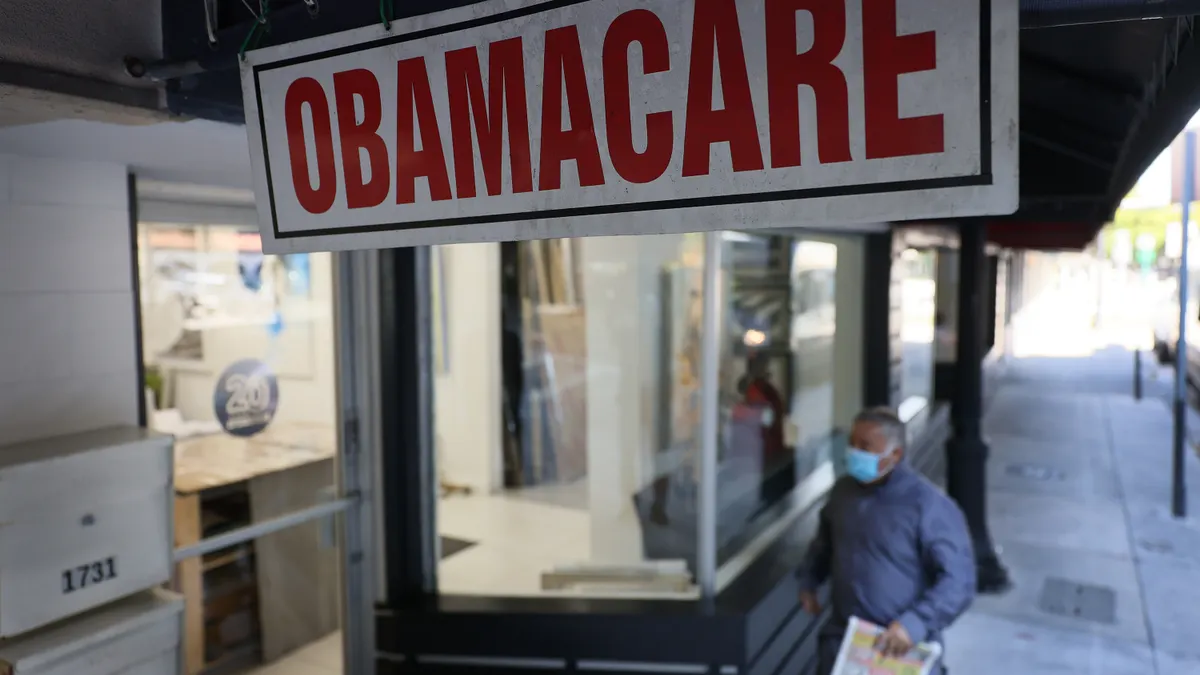
More generous subsidies for Affordable Care Act plans officially lapsed on Wednesday, despite a monthslong battle in Congress over a potential extension.
The subsidies’ fate was set in stone after lawmakers departed for the holidays without taking action to prevent the expanded financial assistance, which has helped millions of Americans afford insurance since the coronavirus pandemic, from sunsetting.
Congress could still bring them back in the new year, an option backed by Democrats, who argue resuscitating the enhanced subsidies is the only near-term measure to shield ACA enrollees from sharp increases in the cost of their healthcare.
Without the aid, about 22 million ACA enrollees will see the amount they pay for coverage rise, and about 4 million Americans are expected to become uninsured.
Congress has pledged to reconvene on healthcare affordability when lawmakers return to Washington on Jan. 6. Republicans in particular are in the hot seat to act, given public support for the enhanced ACA subsidies could punish the party in November’s midterm elections.
A handful of moderate Republicans joined with Democrats in the House before the break to back a discharge petition forcing a vote on a three-year extension of the tax credits. Voting on the bill should be one of the House’s first orders of business in January.
But even if it passes the House, an extension faces an unclear fate in the Senate. A similar extension failed to reach the 60-vote threshold to pass in December. Republicans generally oppose preserving the subsidies, pointing to the steep cost to taxpayers and incidences of fraud in the exchanges.
President Donald Trump has also made no secret of his distaste for keeping the more generous subsidies in place, maligning them as a handout for insurance companies.
Without action, the ACA will “just repeal itself automatically because nobody’s going to want to use it. Too expensive," Trump said in an interview with NBC News on Dec. 18.
Many in the GOP have washed their hands of ACA subsidy debate, instead backing other options they say will make healthcare more affordable, like funneling federal dollars to tax-advantaged savings accounts or expanding alternative coverage options like association health plans or individual coverage health reimbursement arrangements.
Some of those policies — like depositing the value of enhanced subsidies into a health savings account or requiring a small monthly premium for fully subsidized plans — would worsen healthcare affordability and enrollment, according to a survey of experts by the Cornell Health Policy Center.
Without the subsidies, out-of-pocket premiums are set to more than double on average this year, according to estimates from health policy research group the KFF. That breaks down to more than $1,000 per person annually. And almost three-fifths of marketplace enrollees say they won’t be able to afford a $300 increase to their healthcare costs, according to a recent survey from the group.
Sans quick action from Congress, with each passing day “more and more ACA Marketplace enrollees are going to drop their health insurance when faced with eye-popping increases in their premium payments,” Larry Levitt, the executive vice president for health policy at KFF, wrote last month.
Still, early enrollment in ACA plans has remained high, despite the back-and-forth over the subsidies. Some 5.8 million people signed up for ACA coverage in the first month of open enrollment for 2026, an increase on a year-over-year basis.
Experts note there’s still plenty of time for enrollments to flag. There’s 15 days left for consumers to shop for ACA plans in most states. And anecdotal evidence suggests the affordability issue may be pushing people into less comprehensive coverage, with state ACA exchanges and health insurance brokers reporting stronger consumer interest in cheaper but less robust bronze plans, along with bare-bones coverage offered outside of the exchanges like short-term health insurance.
Still, supporters of a clean subsidy extension argue it’s not too late for Congress to act. An extension could be made after sign-ups close and made retroactive to the start of the year, or could be paired with a new special enrollment period.
An extension would come with its own set of difficulties, given Washington and state governments would have to operationalize the change and communicate it to consumers, many of which may have already left the ACA exchanges behind.
Still, it’s an outcome that the healthcare industry is begging for. Health insurers are bracing for a mass exodus of ACA members next year, though payers have secured steep premium increases to try to prevent membership shifts from impacting their bottom lines.
Hospitals and doctors are perhaps the most at risk: According to one estimate, U.S. providers will lose more than $32 billion in revenue this year without the expanded financial assistance.