WASHINGTON — The CMS innovation center is exploring more mandatory payment models as the Trump administration brainstorms how to get more providers to participate in value-based care, health officials said Tuesday.
“Mandatory models are going to have to be part of the equation,” CMMI Director Abe Sutton said at a conference hosted by value-based care advocacy group Accountable for Health.
The CMMI tests ways of injecting more value-based care into federal programs through its models, which can be mandatory or voluntary. Mandatory models require all eligible participants — usually providers — to take part. Participants generally can’t exit the model before the testing period is up.
That’s opposed to voluntary models, in which accountable care organizations or other actors can opt into participation.
Historically, the healthcare industry has been wary of mandatory models, leery of being forced to assume financial risk. However, voluntary models come with risk adjustment issues. Providers that aren’t generating savings tend to leave while providers that are tend to stay, threatening the overall success of the model.
The CMMI started trialing more mandatory models during the first Trump administration, a direction that continued under President Joe Biden. Now, the second Trump administration is once again reiterating its support of expanded mandatory tests.
“We are open to more mandatory, and thinking through things actively that are in mandatory things,” Sutton said.
The CMMI proposed three mandatory models in 2025 — the highest number in a single year, according to the director, and one-third of all the models proposed.
One model is focused on improving chronic disease prevention by incentivizing specialists to coordinate better with primary care doctors, while two more are focused on reducing drug costs.
The CMMI has been pushing forward mandatory models as healthcare remains largely entrenched in fee-for-service payment structures, despite years of efforts from industry stakeholders. The stickiness of fee-for-service is concerning for value-based advocates, given research that paying for volume instead of value incentivizes overutilization and drives healthcare costs up.
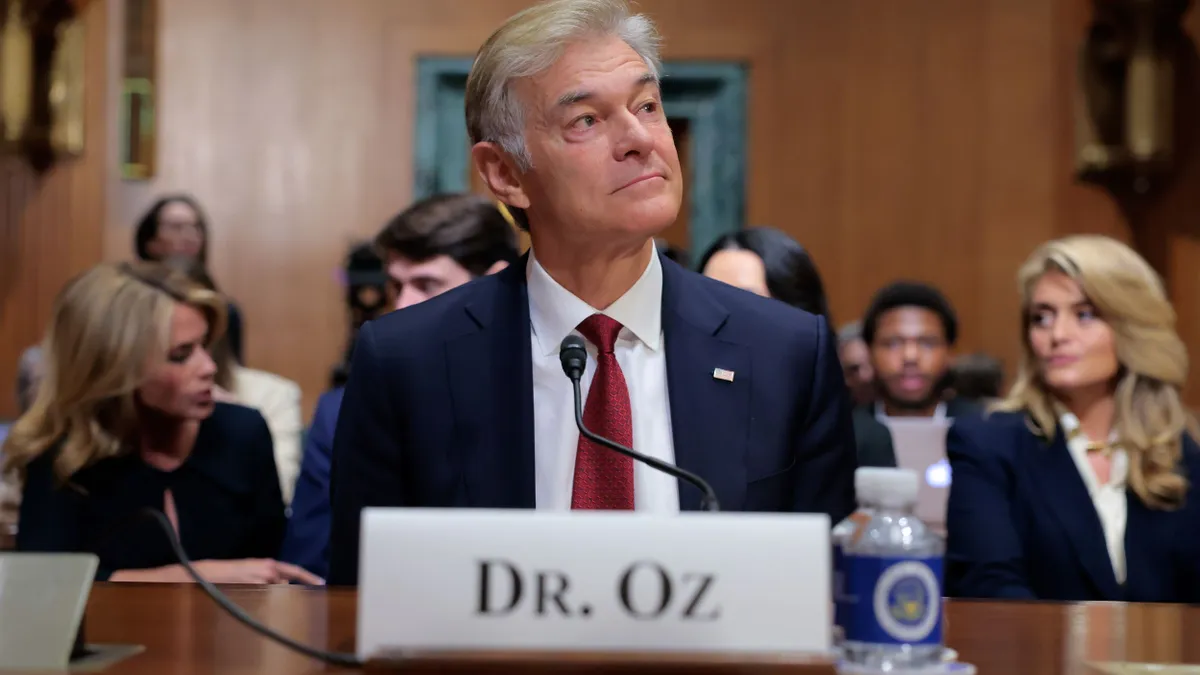
“Why hasn’t [value-based care] grown faster?” CMS Administrator Dr. Mehmet Oz said at the Accountable Care for Health event.
The CMS is focused on generating more interest in accountable care models, especially among lower quality providers that historically have avoided participation, the administrator said.
During the event, Oz fawned over the CMMI, calling the division a “sandbox of the organization where a lot of the really cool ideas are germinated,” a “remarkable treasure trove for our government” and a “nuclear reactor of good ideas.”
The innovation center was created by the Affordable Care Act to tests ways to inject more value into federal healthcare programs. However, research has found that CMMI hasn’t always generated savings for the federal government, sparking ire from lawmakers. In addition, few of the agency’s models have been expanded, a fact that irks accountable care groups that often invest heavily in their performance only to see a model expire, or its thresholds for success change.
So far, only four out of the CMMI’s roughly 50 models have been selected for expansion. Still, Sutton defended the CMMI’s record, arguing that the bar should be high.
“For all the knocks that different people have had on the center over the years, you cannot say we have tried to certify too many models,” Sutton joked. “We have a high standard. I would like to pursue certification on more models ... but I think having that standard is a good thing.”