Dive Brief:
- The CMS rolled out $10 billion in rural health funding to states last week in the first distribution of federal dollars meant to keep rural hospitals afloat amid the Trump administration’s cuts to healthcare funding.
- States, which submitted applications for funding in November, received an average of $200 million for 2026 to expand rural care access, strengthen workforces, and modernize facilities and technology, according to the CMS. A new Office of Rural Health Transformation inside the agency will oversee the program, which will allocate a total of $50 billion to states through 2030.
- Half of the funding for 2026 was distributed equally to all 50 states, while the remaining amounts were allocated at the CMS’ discretion based on states’ rurality and proposed plans for the funds. Texas, Alaska and California received the most money, while New Jersey, Connecticut and Rhode Island received the least.
Dive Insight:
The Rural Health Transformation program was a last minute add-on to President Donald Trump’s “One Big Beautiful Bill,” created in order to win over a handful of Republican holdouts who worried the spending package passed into law last summer included too many cuts to the Medicaid safety-net insurance program.
The rollout of the fund was quick: The program was announced in July and applications opened in September. Weeks before applications were due, experts told Healthcare Dive the broad intention of the funds left more questions than answers about the program. Moreover, the $50 billion tranche is inadequate in the face of other cuts in the GOP’s budget bill — one estimate pegs the losses to rural hospitals as a result of the package at $137 billion over the next decade.
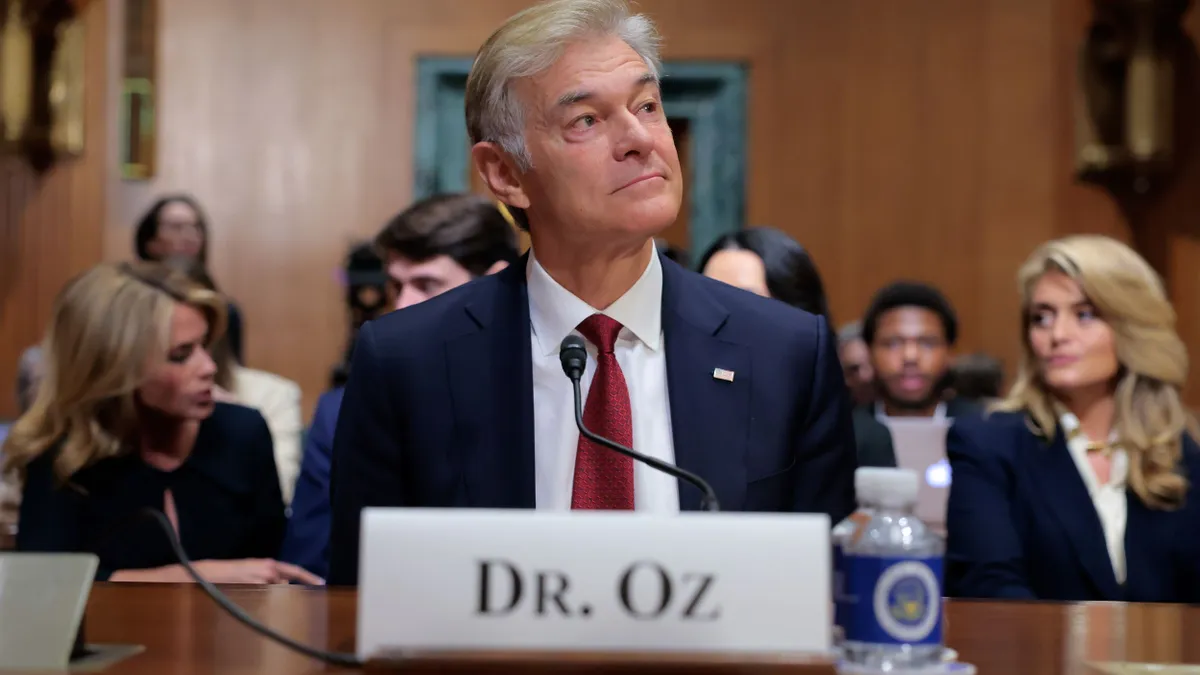
Still, the Trump administration touted the program last week, with CMS Administrator Dr. Mehmet Oz calling the awards an “extraordinary milestone for rural health” in a statement.
To successfully receive funding, states must have submitted plans to the CMS tied to one of the fund’s five goals: promoting preventive care and chronic disease management, improving rural providers’ efficiency and financial sustainability, recruiting and retaining rural healthcare workers, developing more flexible and value-based payment models, and improving access to technology like digital health tools.
States do not have to allocate money only to hospitals in order to receive funding, according to the CMS. States are also not allowed to send money to hospitals to pay directly for clinical services that could be reimbursed by another form of health coverage.
Texas received $281 million for 2026, the most of any state. In an abstract for its funding application, the state said it would use the money to add more than 1,000 rural health professionals, develop wellness and nutrition programs, and “elevate technology” in rural health.
New Jersey, by contrast, received the smallest award of any state, at $147 million. The state has few rural counties, but said in its application it would use the money to support rural health recruitment, fund essential behavioral health providers and encourage regional technology partnerships.
Rural healthcare access has been steadily declining in the U.S. More than 100 rural hospitals have closed in the past decade, and more than one-third of all rural hospitals are at risk of closing, according to the nonprofit Center for Healthcare Quality and Payment Reform.
Medicaid cuts in the “Big Beautiful Bill” are expected to have a significant impact on providers caring for rural and underserved communities, which generally rely more heavily on reimbursement from the program.