Dive Brief:
- Amazon is expanding access to its health-focused artificial intelligence chatbot, the technology giant said Tuesday.
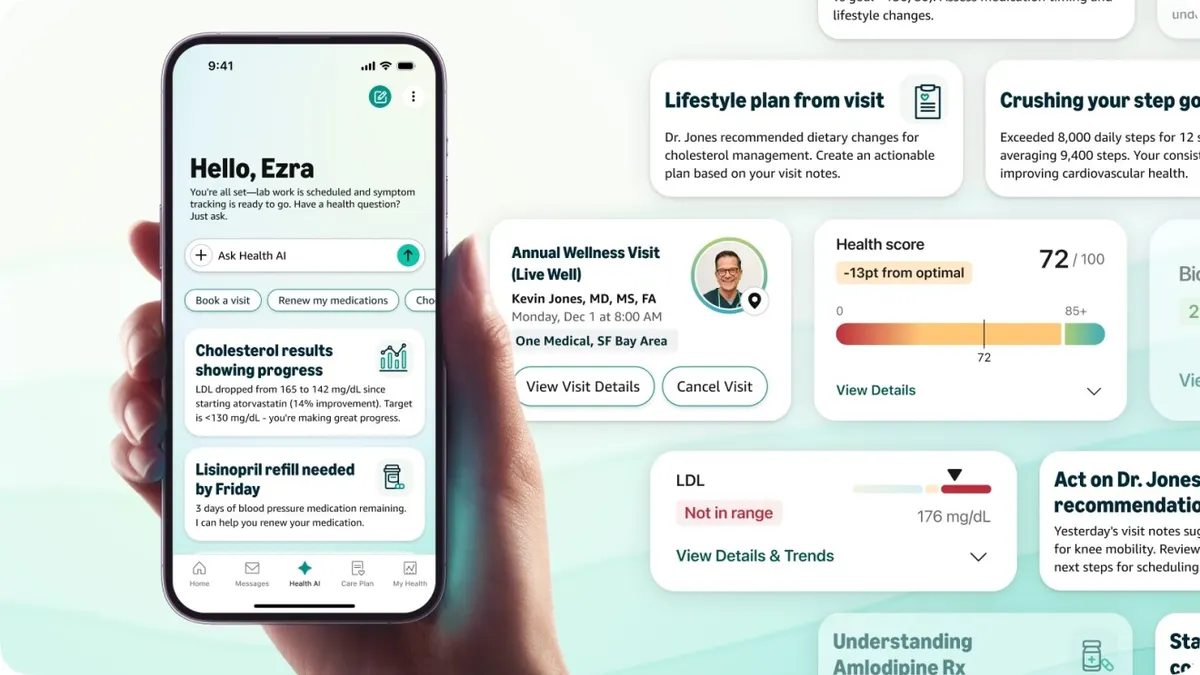
- The Health AI assistant first launched for members of Amazon’s primary care chain One Medical in January. The tool allows users to connect their health information and ask questions about their health, symptoms and potential treatments.
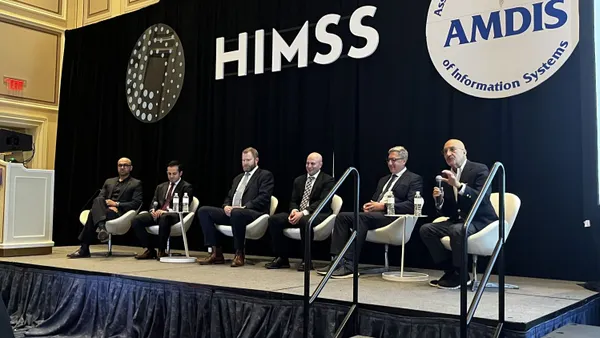
- Now, the tool is rolling out to all U.S. consumers. “The desire to ask questions of an AI agent is enormous,” Dr. Andrew Diamond, chief medical officer at Amazon One Medical, told Healthcare Dive at the HIMSS conference Tuesday. “It is clearly the fastest way for people to get their basic health questions answered. And even basic is almost putting it too simply. They’re getting pretty in-depth questions answered.”
Dive Insight:
Amazon’s expanded offering comes as the market for dedicated health chatbots is heating up. OpenAI launched ChatGPT Health in January, a similar tool that allows users to connect their medical records and data from connected devices and ask the AI questions about their health.
Another major AI firm, Anthropic, also rolled out functionality for consumers to upload health data so the AI could offer insights on their care.
Amazon’s offering first rolled out to One Medical members, allowing them to connect their health records from the primary care chain. The tool can walk users through recent test results, provide health guidance and help them book appointments with a provider.
Now, the tool will be widely available in the U.S., Amazon said. The technology giant has connections to all major regional health information exchanges, so users can connect their health records to the Health AI assistant, Diamond said.
And if users need to speak with a provider, the tool can link them to Amazon’s pay-per-visit telehealth service. One Medical can also refer patients to specialty care through the primary care provider’s health system partners, Amazon said.
That ability to send users to providers could be a competitive boost for Amazon in an increasingly crowded field of AI assistants, Diamond said.
“That’s really what we are hoping is the unique advantage there. It’s the ability to precisely connect people to an actual primary care network, a national primary care network with both virtual and in-person care options,” he said.
Plus, helping patients determine when they need to see a provider about a medical issue is an important question for users, Diamond said.
Still, triage can be a challenge for AI tools. Research published last month found ChatGPT Health often underestimated the severity of serious cases, like recommending a patient going into respiratory failure see a doctor within 24 to 48 hours instead of going to the emergency room.
Amazon tested the Health AI assistant with hundreds of thousands of synthetic clinical scenarios to ensure its performance, Diamond said. Additionally, the company is using a “large language model as a judge” — an AI that oversees the assistant that can flag concerning responses.
The tool also will direct customers to a provider if it's uncertain about a recommendation instead of offering potentially incorrect guidance, Amazon said.